How to Identify aCommon Nighthawk
Chordeiles minor · 8.7–9.4 in (22–24 cm)
Male vs. female
Male
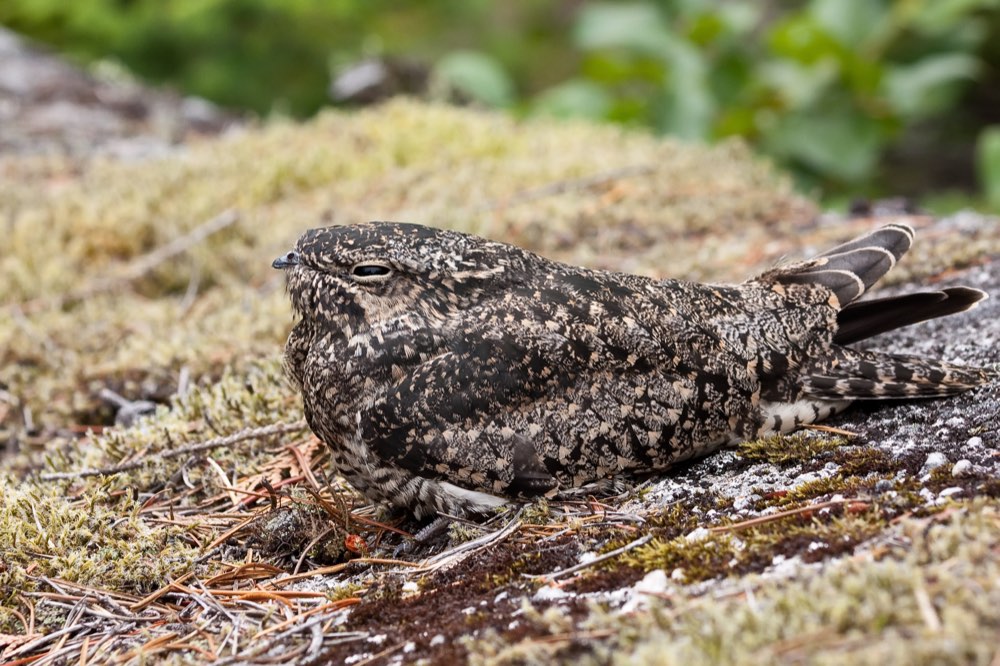
Cryptically mottled gray, brown and black with long pointed wings crossed by a bold white bar, and a white throat.
Female
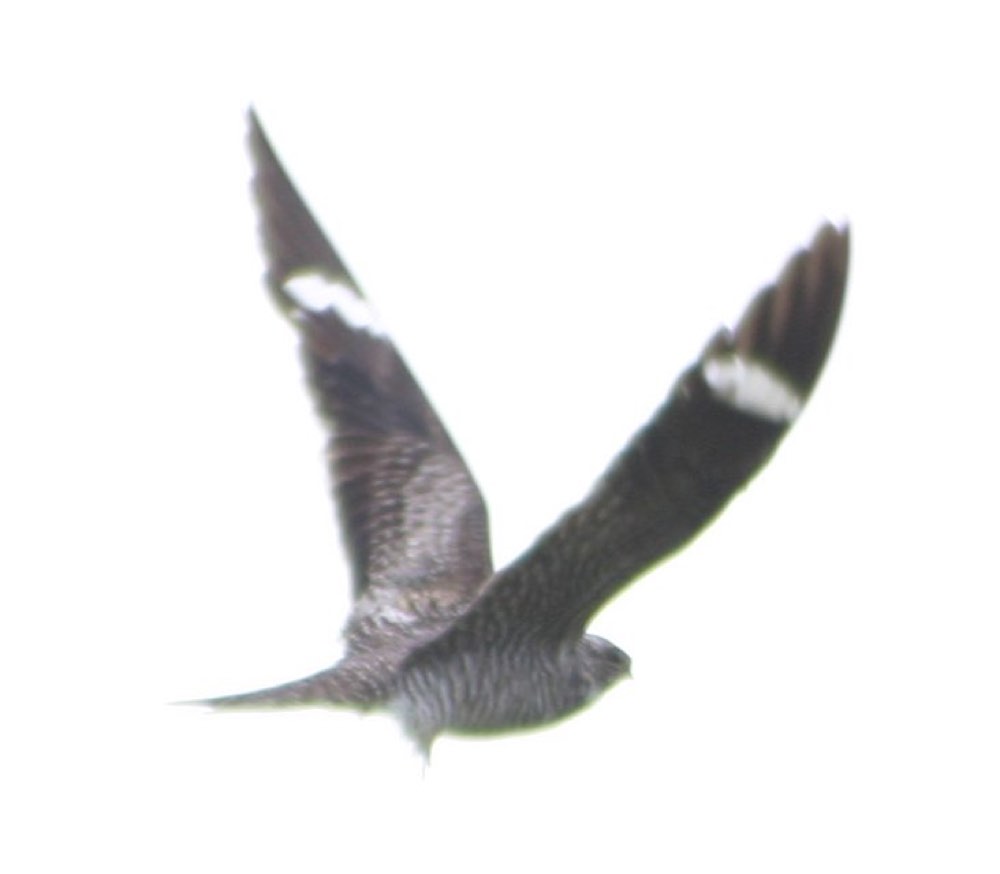
Similar but with a buff throat and no white tail band.
Male photo: Gavin Keefe Schaefer / Wikimedia, CC BY 2.0 · Second photo: Albuttlee at en.wikipedia / Wikimedia, CC BY 2.5
Field marks
- White bar across each long pointed wing
- Erratic, bounding, bat-like flight at dusk
- Tiny bill on a very wide mouth
- Perches lengthwise along a branch, not across it
Similar species
What it sounds like
A nasal, buzzy "peent" given repeatedly in flight, plus a booming roar from diving males.
Behaviour that gives it away
The male dives steeply and pulls up sharply, and air rushing through his wing feathers produces a deep booming roar.
Habitat & range
Open country, forest clearings, gravel roads and flat gravel rooftops in towns.
When you'll see it
A summer visitor that arrives to breed in North America.
What it eats
Flying insects scooped up in a huge gaping mouth.
Did you know?
It is not a hawk and barely nocturnal — it hunts at dusk and dawn, and lays its eggs on bare gravel with no nest at all.
Spot one yourself?
Point your camera at any bird and Aviarist identifies it in seconds — then logs it to your life list.
Get Aviarist on Google Play
More backyard birds


Other apps we make