How to Identify aMississippi Kite
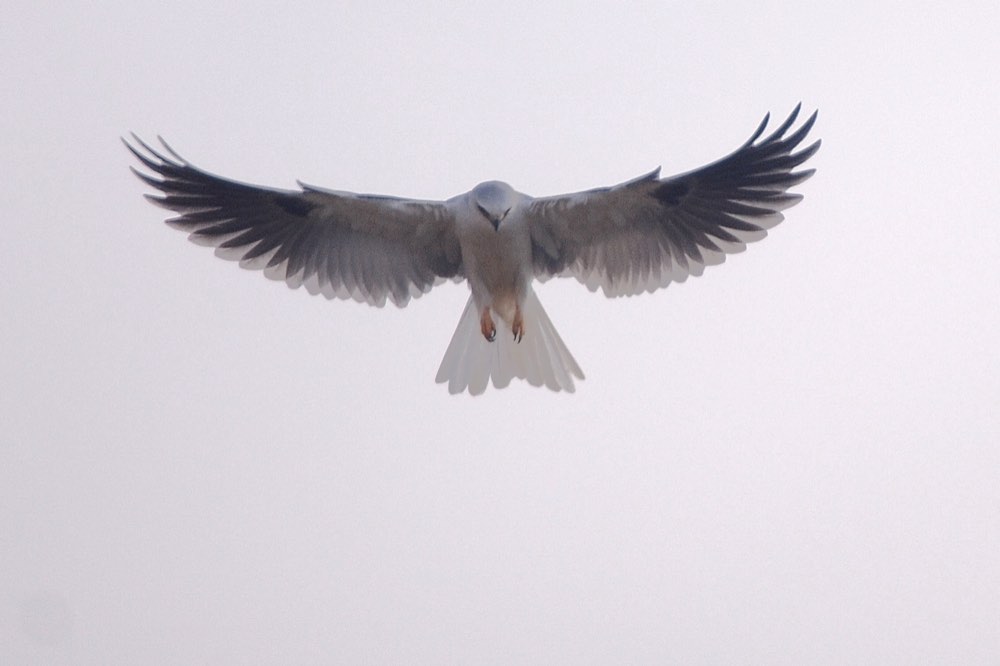
Ictinia mississippiensis · 13.4–14.6 in (34–37 cm)
Male vs. female
Male
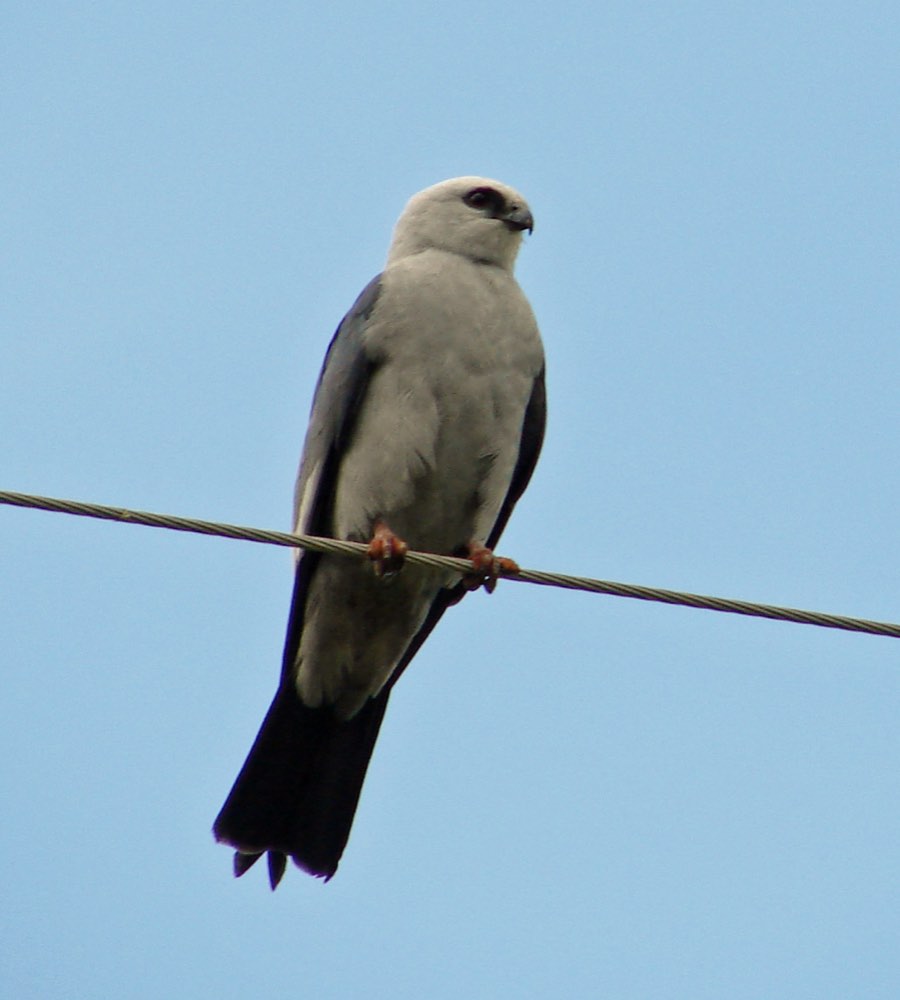
Soft gray body with a very pale, almost white head, dark wings and a black tail; red eye. Sexes look alike.
Female
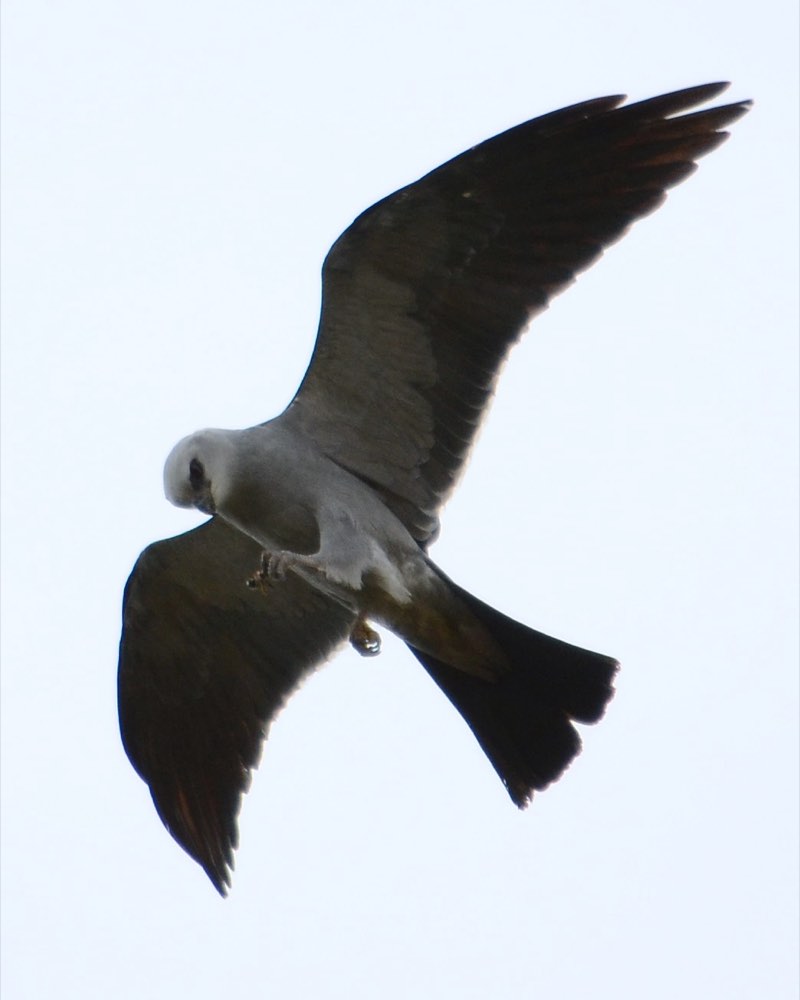
Like the male but slightly darker on the head and underparts.
Male photo: Rescuechick / Wikimedia, CC BY 3.0 · Second photo: Steven Paultanis / Wikimedia, CC BY-SA 4.0
Field marks
- Pale whitish head against a gray body
- Long pointed falcon-like wings
- Solid black square-tipped tail
- Buoyant, floating flight with little flapping
Similar species
What it sounds like
A high, thin, two-note whistle — "phee-phew" — descending at the end.
Behaviour that gives it away
Catches and eats large insects in mid-air without landing, holding the prey in one foot while flying.
Habitat & range
Riverside woodland, shelterbelts, and increasingly town parks and golf courses in the South.
When you'll see it
A summer visitor that arrives to breed in southeastern and central North America.
What it eats
Large flying insects — cicadas, dragonflies, grasshoppers — plus small vertebrates.
Did you know?
It eats on the wing, holding a cicada in one foot and tearing at it in flight without ever perching.
Spot one yourself?
Point your camera at any bird and Aviarist identifies it in seconds — then logs it to your life list.
Get Aviarist on Google Play
More backyard birds


Other apps we make