How to Identify aBank Swallow
Riparia riparia · 4.7–5.5 in (12–14 cm)
Male vs. female
Male
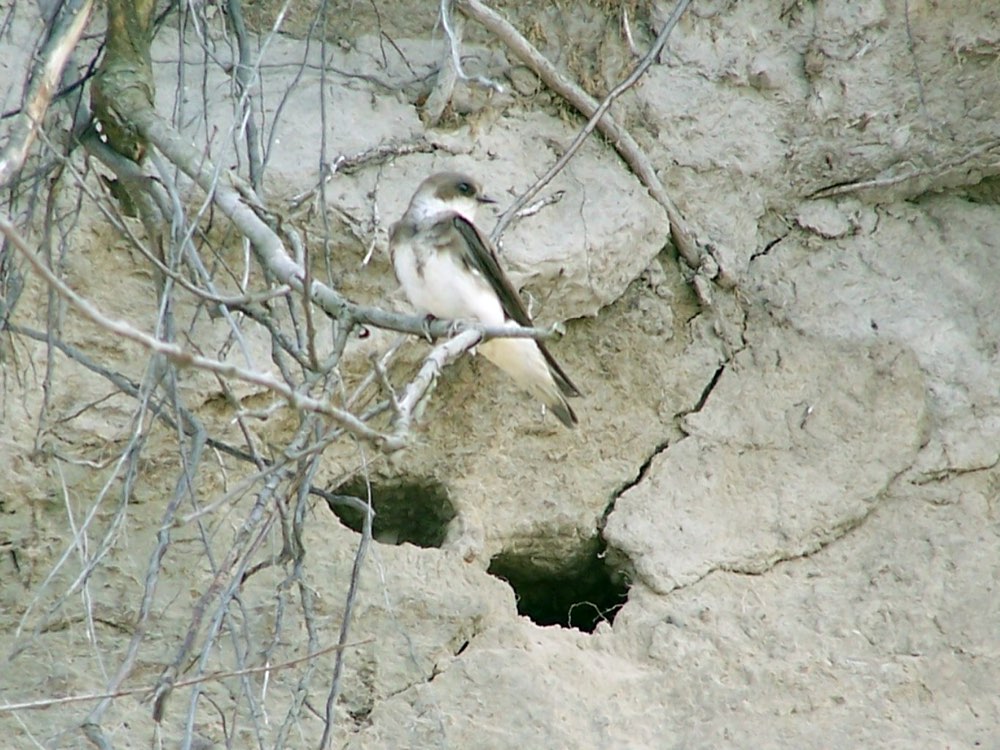
Uniform mud-brown above, white below with a distinct brown breast band, and a slightly notched tail. Sexes look alike.
Female
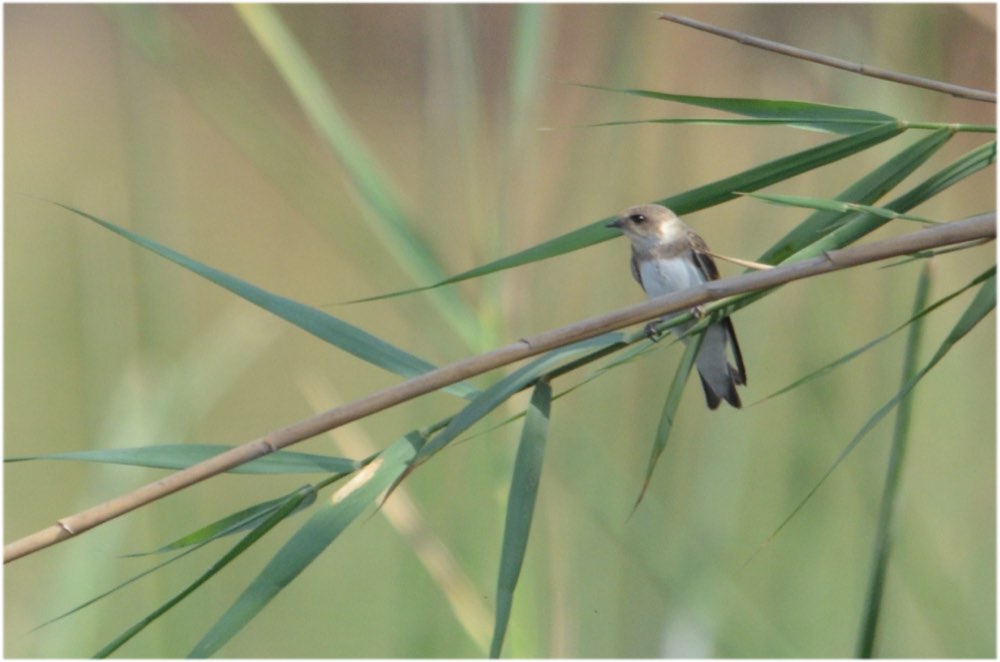
Identical to the male in the field.
Male photo: Ejdzej / Wikimedia, CC BY-SA 3.0 · Second photo: Hatem Moushir / Wikimedia, CC BY-SA 3.0
Field marks
- Clean brown band across a white chest
- Very small with quick fluttery wingbeats
- Plain brown upperparts with no gloss
- Nests in colonies of holes in sandy banks
Similar species
What it sounds like
A dry, buzzy, grating chatter given constantly around the colony.
Behaviour that gives it away
Digs a nesting tunnel up to three feet into a vertical sand bank, and colonies can hold hundreds of holes.
Habitat & range
Sand and gravel banks along rivers, lakes, quarries and road cuts.
When you'll see it
Depending on where in North America you are, it is a summer visitor that arrives to breed and a passage migrant, seen mainly in spring and autumn.
What it eats
Flying insects caught low over water and open ground.
Did you know?
It digs its own nest burrow up to three feet into a vertical bank, using its bill, feet and wings.
Spot one yourself?
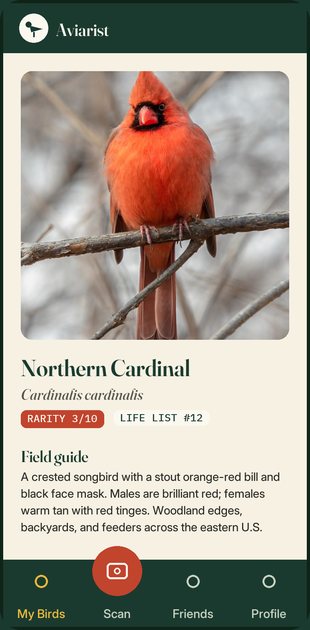
Point your camera at any bird and Aviarist identifies it in seconds — then logs it to your life list.
Get Aviarist on Google Play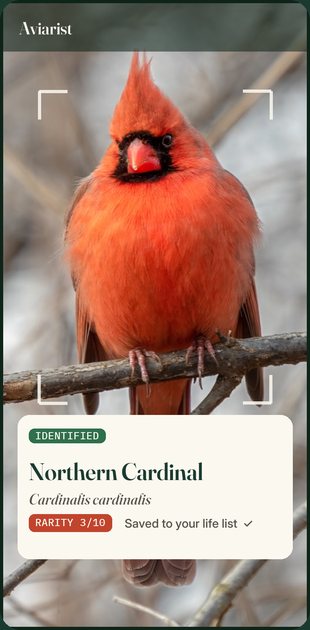
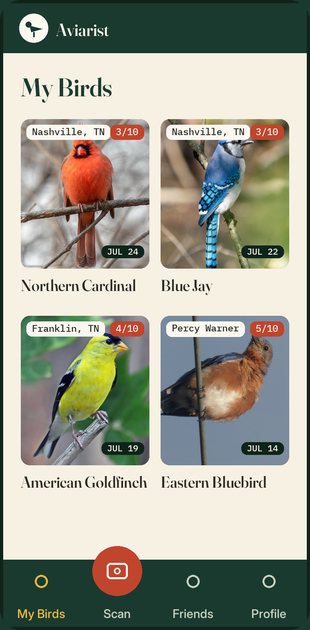
More backyard birds


Other apps we make