How to Identify aVesper Sparrow
Pooecetes gramineus · 5.1–6.3 in (13–16 cm)
Male vs. female
Male
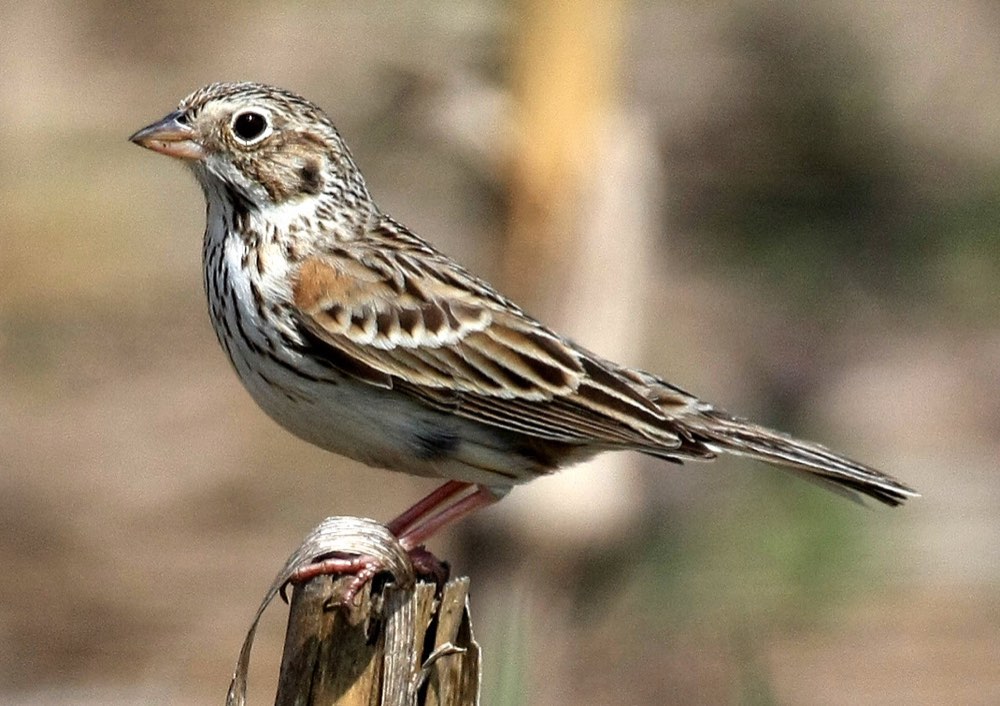
Brown and streaked overall with a fine white eye-ring, a small rusty shoulder patch and white outer tail feathers flashing in flight. Sexes look alike.
Female
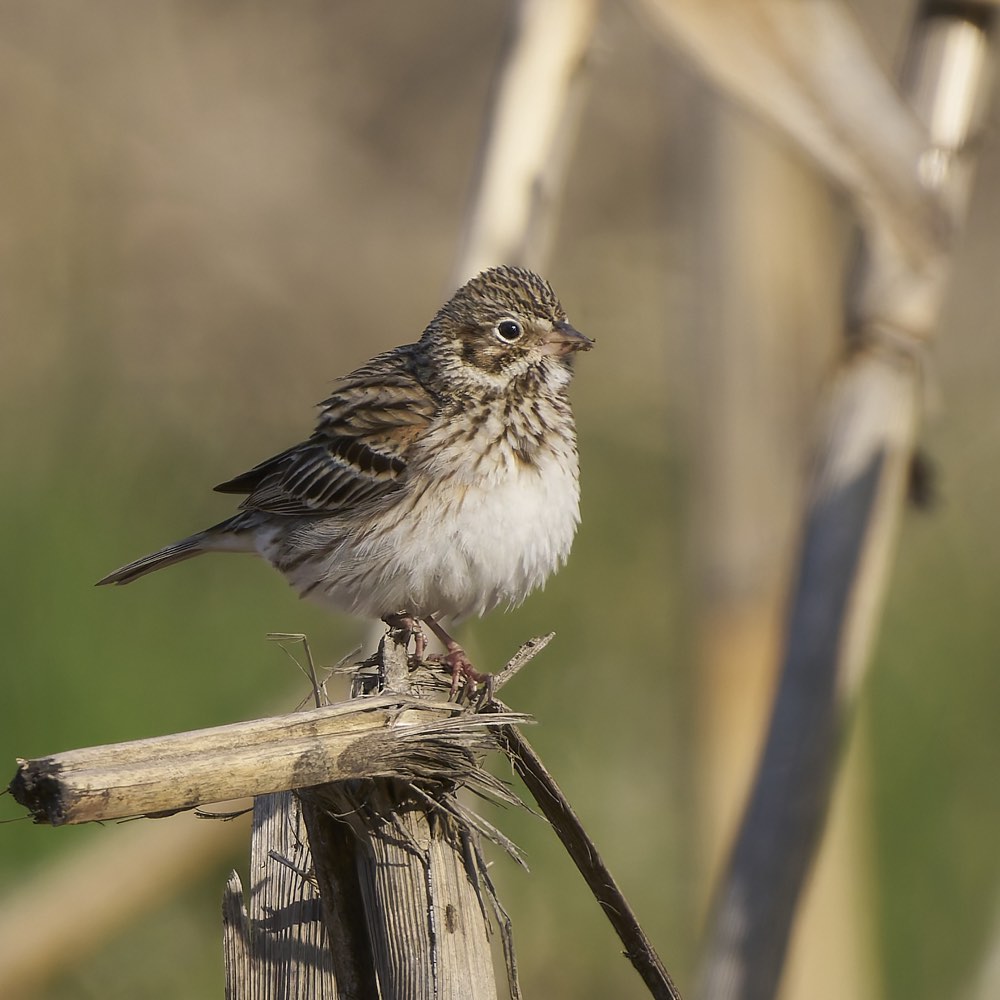
Identical to the male in the field.
Male photo: Tim from Ithaca / Wikimedia, CC BY 2.0 · Second photo: Paul Danese / Wikimedia, CC BY-SA 4.0
Field marks
- White outer tail feathers, obvious as it flushes
- Thin complete white eye-ring
- Chestnut shoulder patch, often hidden
- Streaked chest with no central spot
Similar species
What it sounds like
A rich musical song beginning with two long low whistles then breaking into descending trills.
Behaviour that gives it away
Named for its habit of singing most persistently in the late evening, after most grassland birds have fallen quiet.
Habitat & range
Grasslands, sagebrush, farm fields and dry weedy roadsides.
When you'll see it
Depending on where in North America you are, it is a summer visitor that arrives to breed and a passage migrant, seen mainly in spring and autumn.
What it eats
Seeds and insects taken from bare ground.
Did you know?
It gets its name from its evening singing, which the naturalist John Burroughs thought sounded best at vespers.
Spot one yourself?
Point your camera at any bird and Aviarist identifies it in seconds — then logs it to your life list.
Get Aviarist on Google Play
More backyard birds
.jpg)

Other apps we make