How to Identify aBohemian Waxwing
Bombycilla garrulus · 6.3–7.5 in (16–19 cm)
Male vs. female
Male
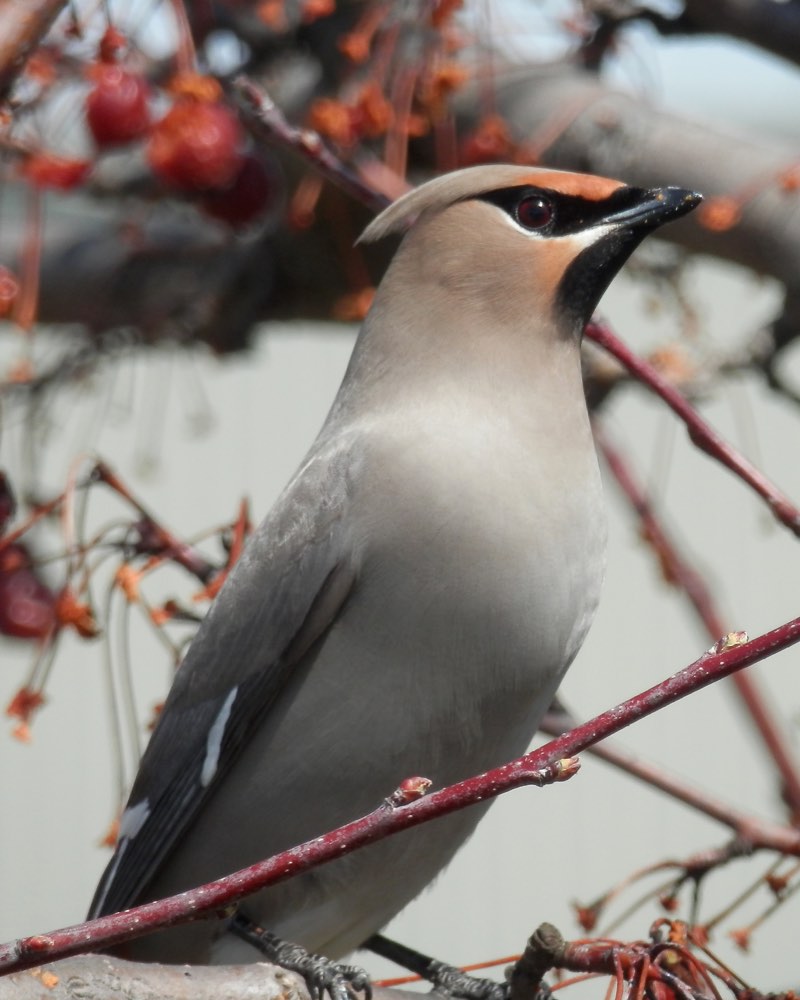
Soft gray-brown with a crest, black mask, cinnamon face, rusty undertail coverts, and white and yellow wing markings. Sexes look alike.
Female
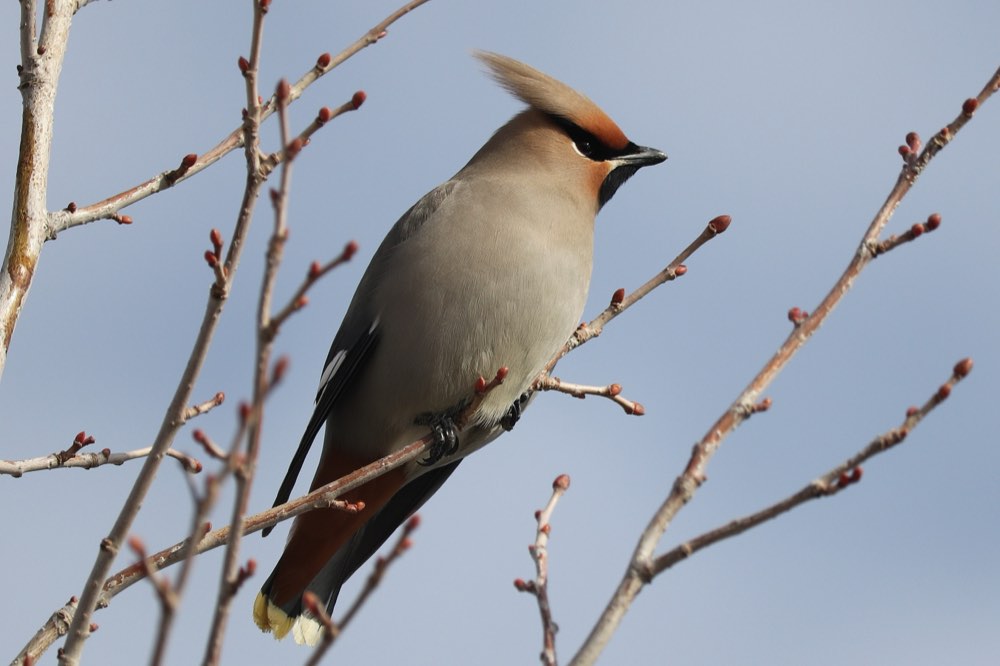
Identical to the male in the field.
Male photo: Ryan Hodnett / Wikimedia, CC BY-SA 4.0 · Second photo: PyroChameleon / Wikimedia, CC BY-SA 4.0
Field marks
- Rusty-cinnamon undertail coverts, white in a Cedar Waxwing
- Bold white and yellow marks along the folded wing
- Grayer and larger than a Cedar Waxwing
- Yellow tail tip and a sleek crest
Similar species
What it sounds like
A buzzy, rough, trilled "sirrr", lower and harsher than a Cedar Waxwing’s thin hiss.
Behaviour that gives it away
Descends on fruiting trees in flocks of hundreds, strips them completely in a day or two, and moves on.
Habitat & range
Boreal forest in summer; wherever fruiting trees remain in northern towns in winter.
When you'll see it
A winter visitor in northern, western and central North America.
What it eats
Berries and fruit, especially mountain ash and crabapple; insects in summer.
Did you know?
Its name reflects its wandering, gypsy-like winter movements, appearing in a town one year and not again for a decade.
Spot one yourself?
Point your camera at any bird and Aviarist identifies it in seconds — then logs it to your life list.
Get Aviarist on Google Play
More backyard birds
_02.jpg)

Other apps we make