How to Identify aCommon Goldeneye
Bucephala clangula · 15.8–20.1 in (40–51 cm)
Male vs. female
Male
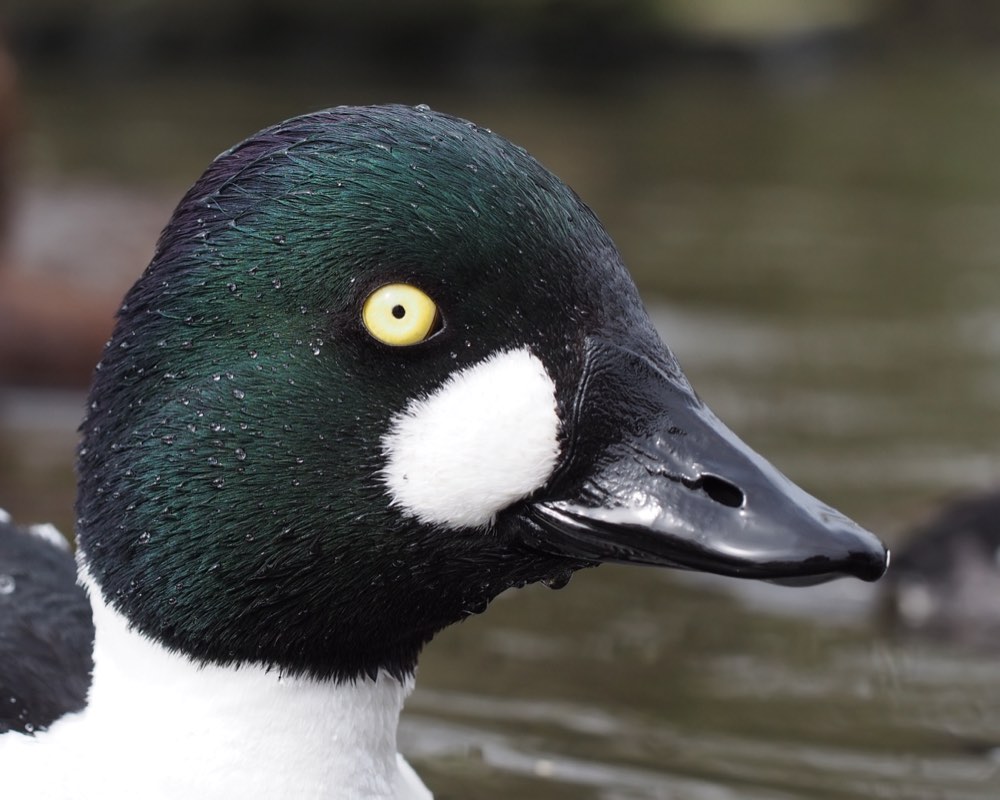
Blackish head glossed green with a circular white cheek spot, white body and black back; brilliant yellow eye.
Female
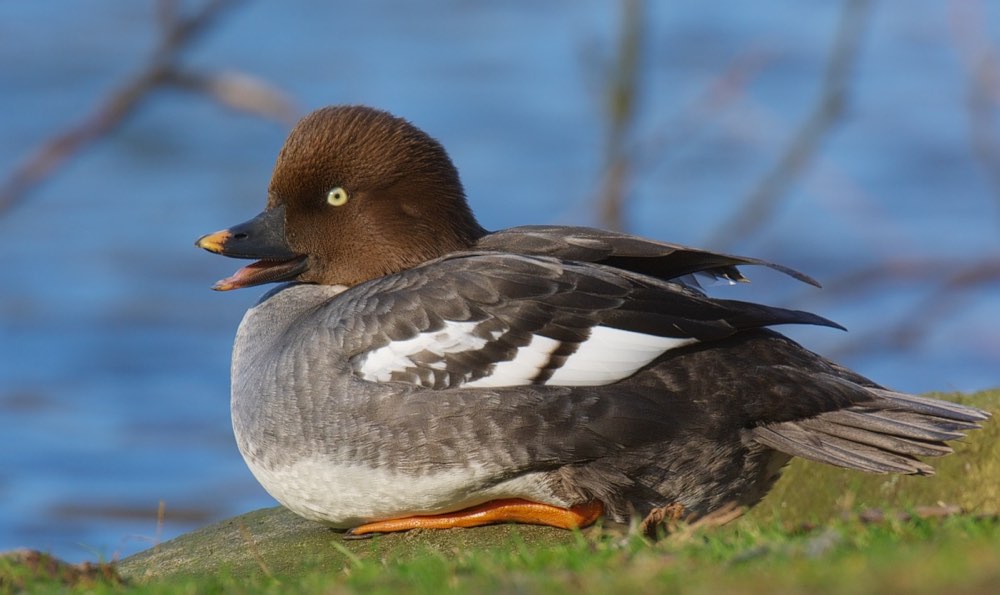
Gray body with a chocolate-brown head and a dark bill usually tipped yellow.
Male photo: Francis C. Franklin / Wikimedia, CC BY-SA 3.0 · Female photo: https://www.flickr.com/photos/sbern/ / Wikimedia, CC BY 2.0
Field marks
- Round white spot between the eye and the bill on the male
- Triangular peaked head
- Bright golden-yellow eye
- Wings whistle audibly in flight
Similar species
What it sounds like
Mostly silent; a nasal peent from displaying males, plus the loud whistling of the wings.
Behaviour that gives it away
Its wings produce a loud ringing whistle in flight, which is how it earned the old hunters’ name whistler.
Habitat & range
Boreal forest lakes in summer; large lakes, rivers and coastal bays in winter.
When you'll see it
Depending on where in North America you are, it is a winter visitor and a passage migrant, seen mainly in spring and autumn.
What it eats
Aquatic invertebrates, crustaceans and small fish taken on dives.
Did you know?
It nests in tree cavities, and the ducklings leap to the ground within a day or two of hatching.
Spot one yourself?
Point your camera at any bird and Aviarist identifies it in seconds — then logs it to your life list.
Get Aviarist on Google Play
More backyard birds

-_female.jpg)
Other apps we make