How to Identify aRuddy Duck
Oxyura jamaicensis · 13.8–17 in (35–43 cm)
Male vs. female
Male
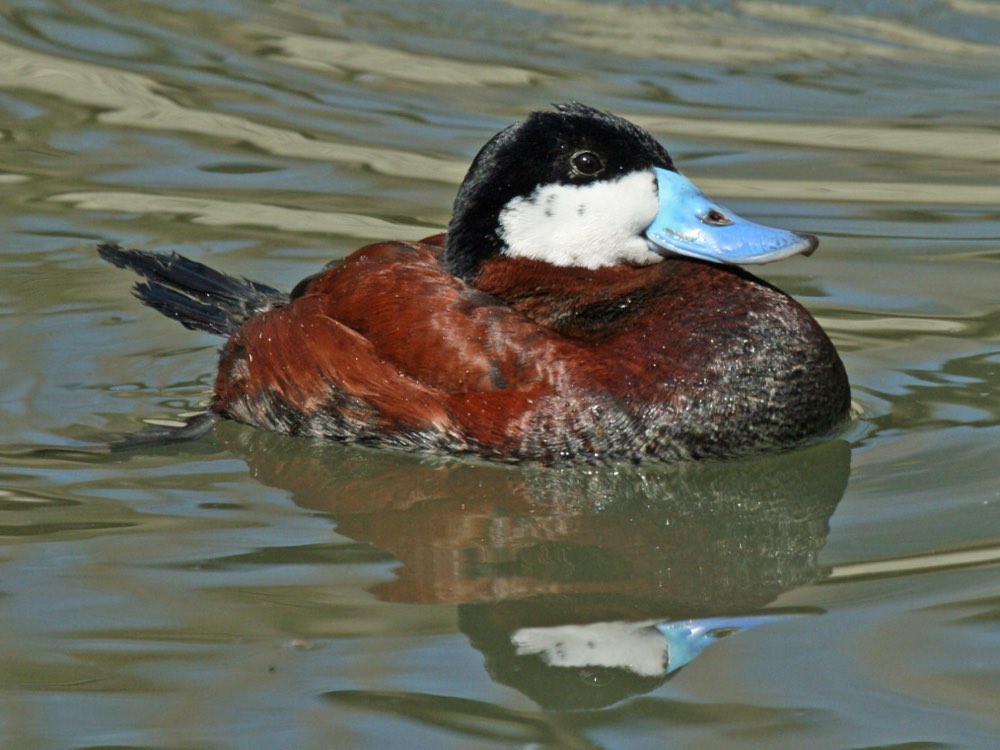
Rich chestnut body, black cap, bright white cheeks and a startling sky-blue bill in breeding plumage; dull gray-brown in winter.
Female
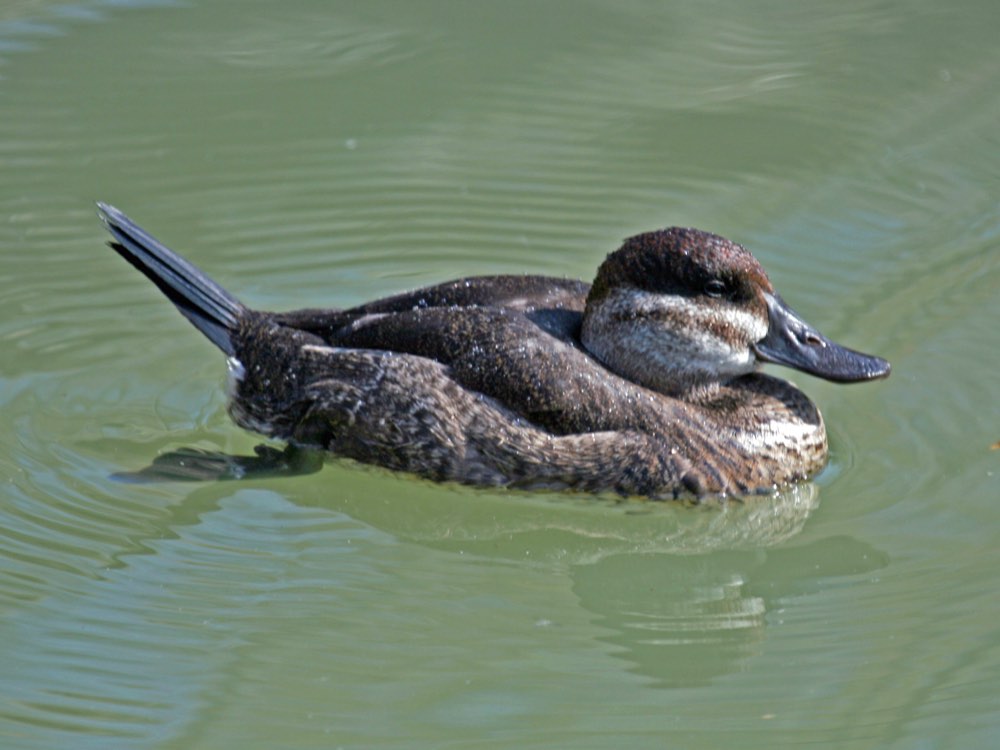
Gray-brown with a dark cap and a single dark line across a pale cheek.
Male photo: Dick Daniels (http://carolinabirds.org/) / Wikimedia, CC BY-SA 3.0 · Second photo: Dick Daniels (https://carolinabirds.org/) / Wikimedia, CC BY-SA 3.0
Field marks
- Stiff tail often held straight up like a wren’s
- Bright blue bill on the breeding male
- Bold white cheek patch
- Very compact, big-headed shape
Similar species
What it sounds like
Silent apart from the male’s courtship display, a series of ticking taps ending in a belch-like note.
Behaviour that gives it away
The male drums his bill rapidly against his chest, forcing out a ring of bubbles, then finishes with a strangled call.
Habitat & range
Marshes and ponds with dense vegetation; winters on lakes, reservoirs and coastal bays.
When you'll see it
Depending on where in western, central and eastern North America you are, it is present all year and a winter visitor.
What it eats
Midge larvae and other aquatic invertebrates, plus seeds.
Did you know?
It lays the largest eggs relative to body size of any duck — a clutch can outweigh the female that laid it.
Spot one yourself?
Point your camera at any bird and Aviarist identifies it in seconds — then logs it to your life list.
Get Aviarist on Google Play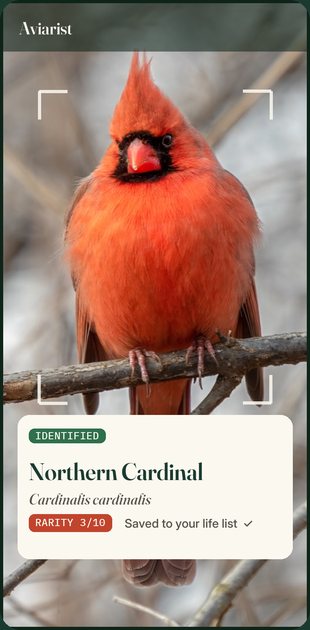
More backyard birds
_RWD2.jpg)
_RWD3.jpg)
Other apps we make