How to Identify aGreat Kiskadee
Pitangus sulphuratus · 9.8 in (25 cm)
Male vs. female
Male
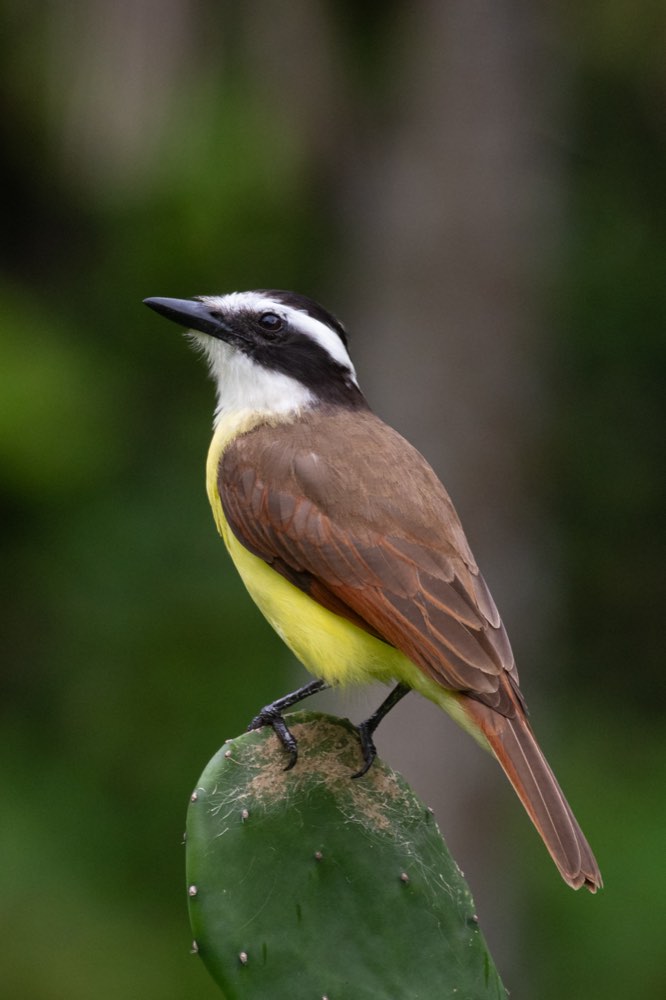
Bright yellow underparts, rufous-brown wings and tail, and a black head crossed by a broad white eyebrow and white throat. Sexes look alike.
Female
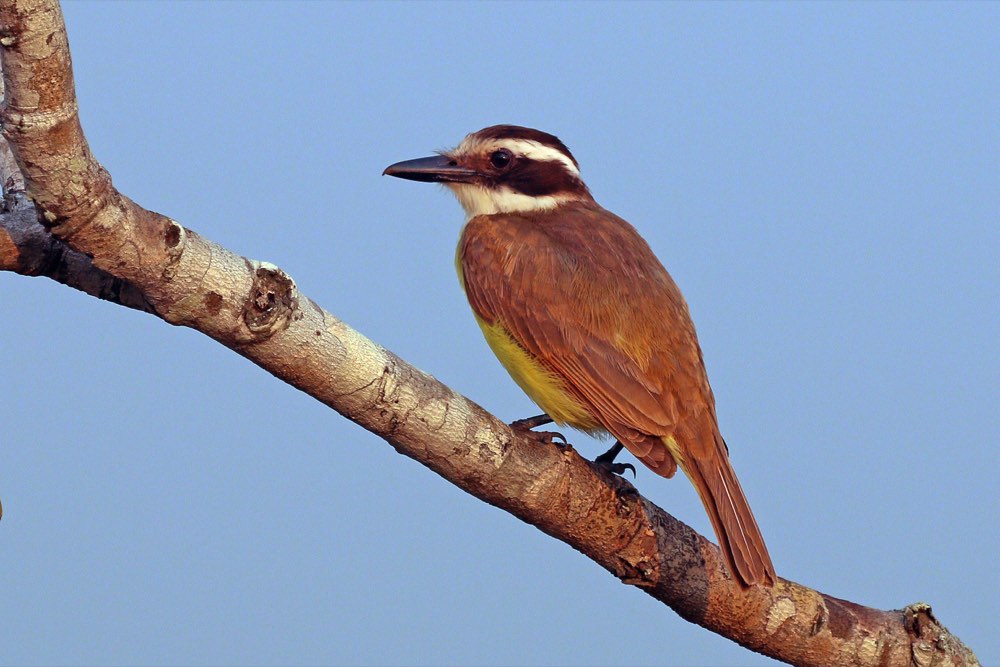
Identical to the male in the field.
Male photo: Hobbyfotowiki / Wikimedia, CC0 · Second photo: Charles J. Sharp / Wikimedia, CC BY-SA 4.0
Field marks
- Bold black-and-white striped head
- Rufous-brown wings and tail
- Heavy black bill
- Very loud and conspicuous
Similar species
What it sounds like
A loud, ringing, three-note "kis-ka-dee" — the bird announces its own name repeatedly.
Behaviour that gives it away
Hunts far beyond insects, plunging into water for small fish and tadpoles like a tiny kingfisher.
Habitat & range
Riverside woodland, ponds, thorn forest and towns of south Texas.
When you'll see it
Present all year in southwestern North America.
What it eats
Insects, small fish, tadpoles, lizards and fruit.
Did you know?
It regularly dives into water for small fish, which almost no other flycatcher does.

Spot one yourself?
Point your camera at any bird and Aviarist identifies it in seconds — then logs it to your life list.
Get Aviarist on Google Play

More backyard birds
,_Costa_Rica.jpg)
.jpg)
Other apps we make