How to Identify aPinyon Jay
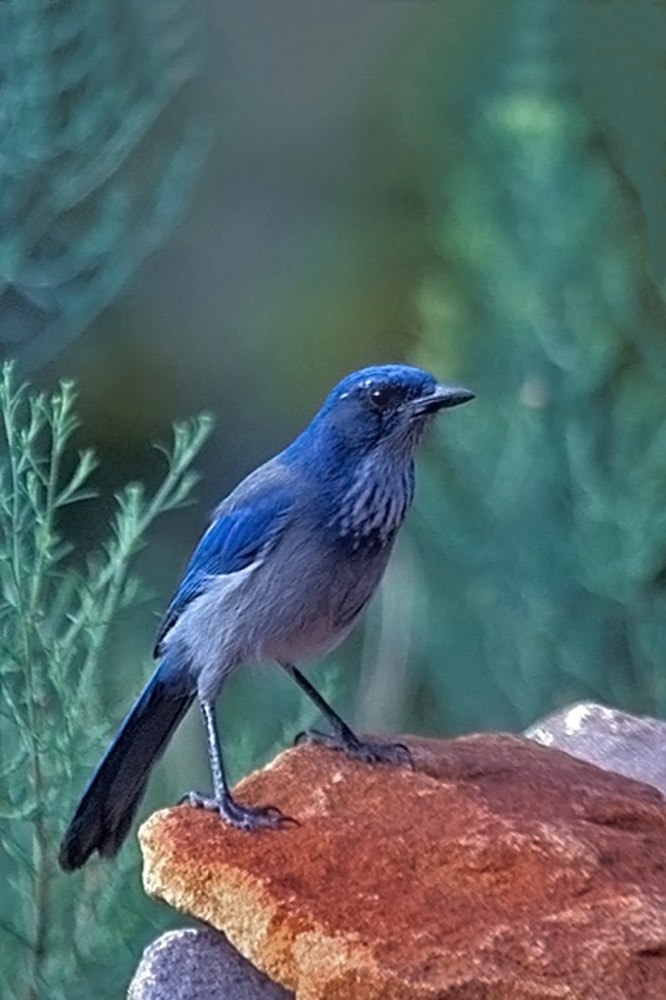
Gymnorhinus cyanocephalus · 10.2–11.4 in (26–29 cm)
Male vs. female
Male
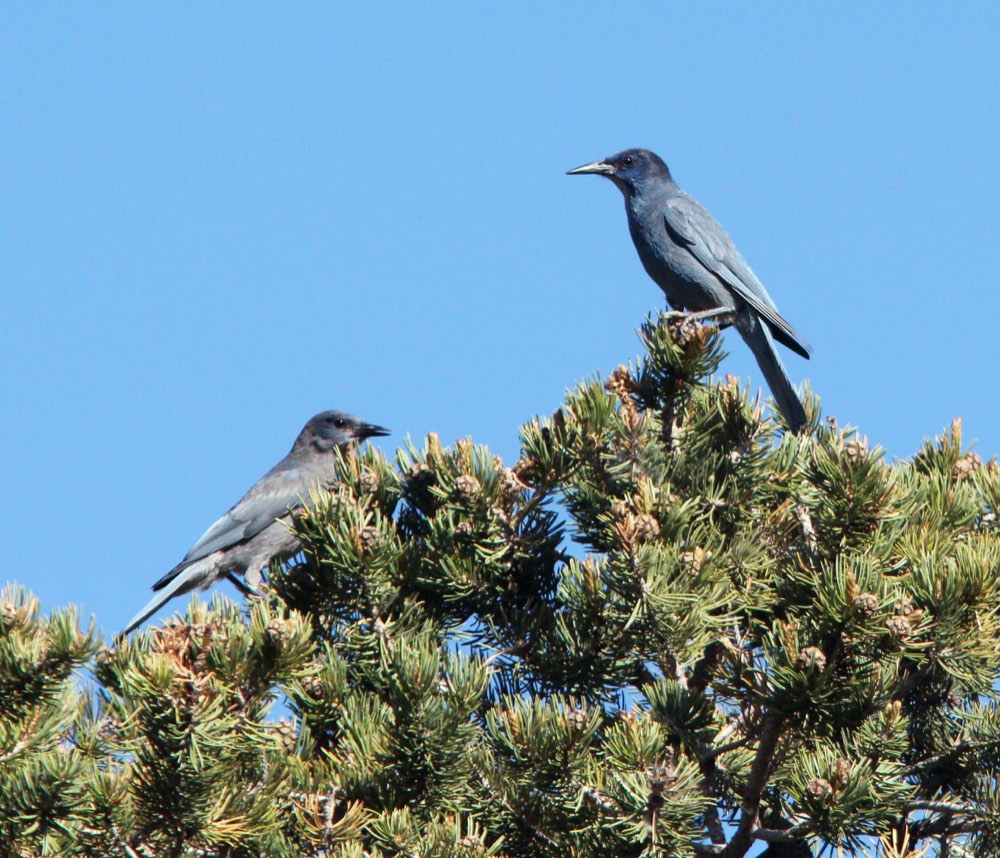
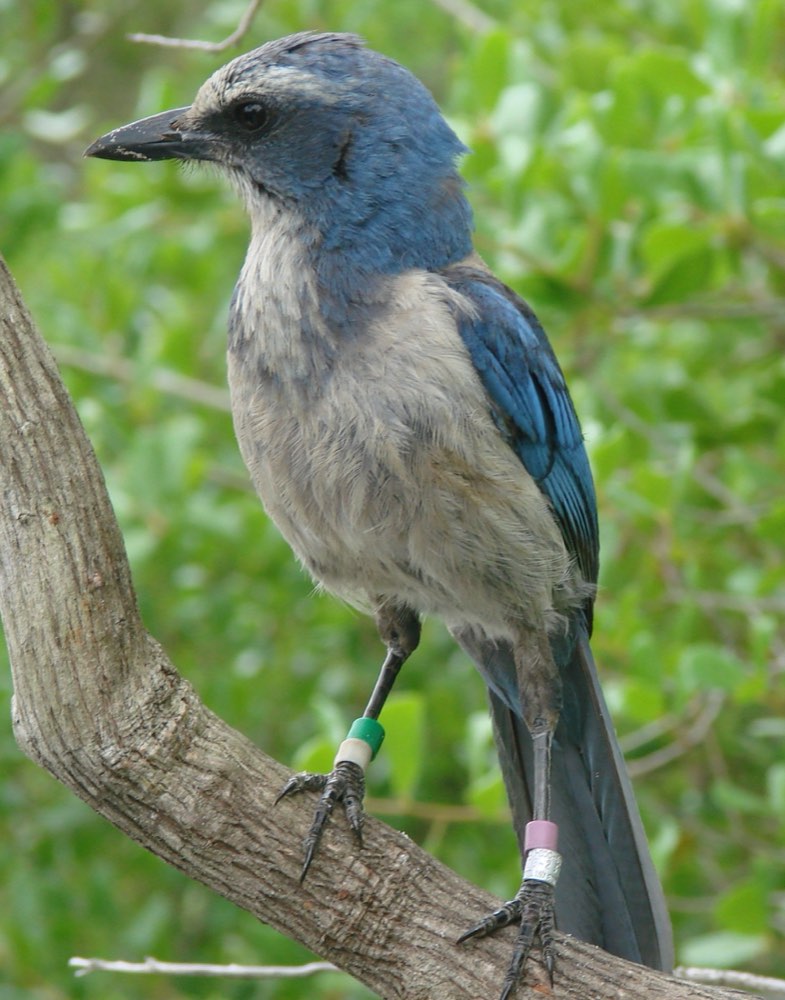
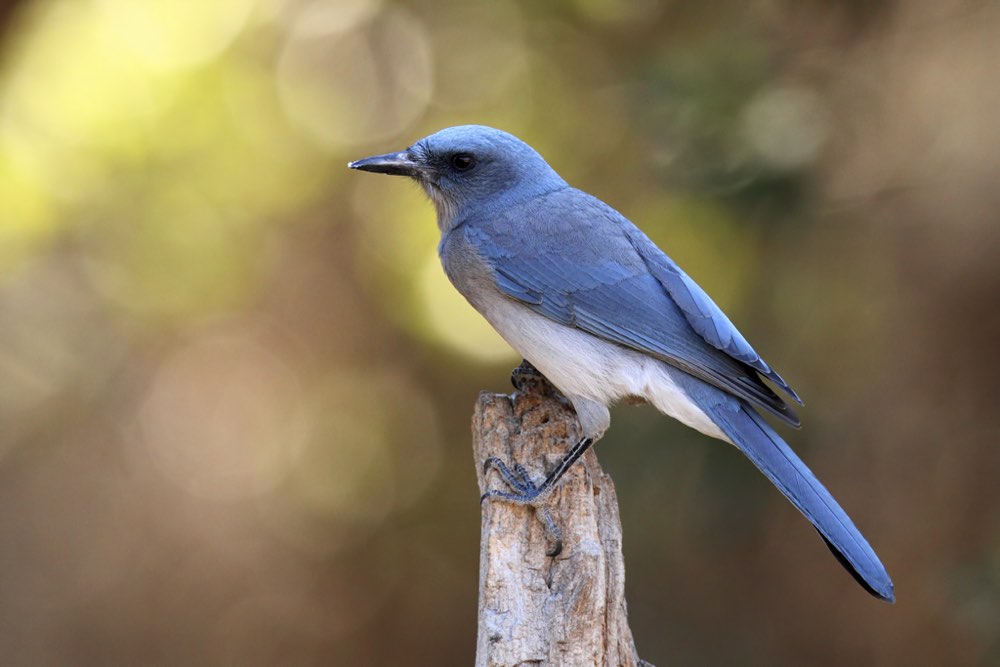
Uniform dull grayish-blue with a slightly paler throat, a long spike-like bill and a notably short tail. Sexes look alike.
Female
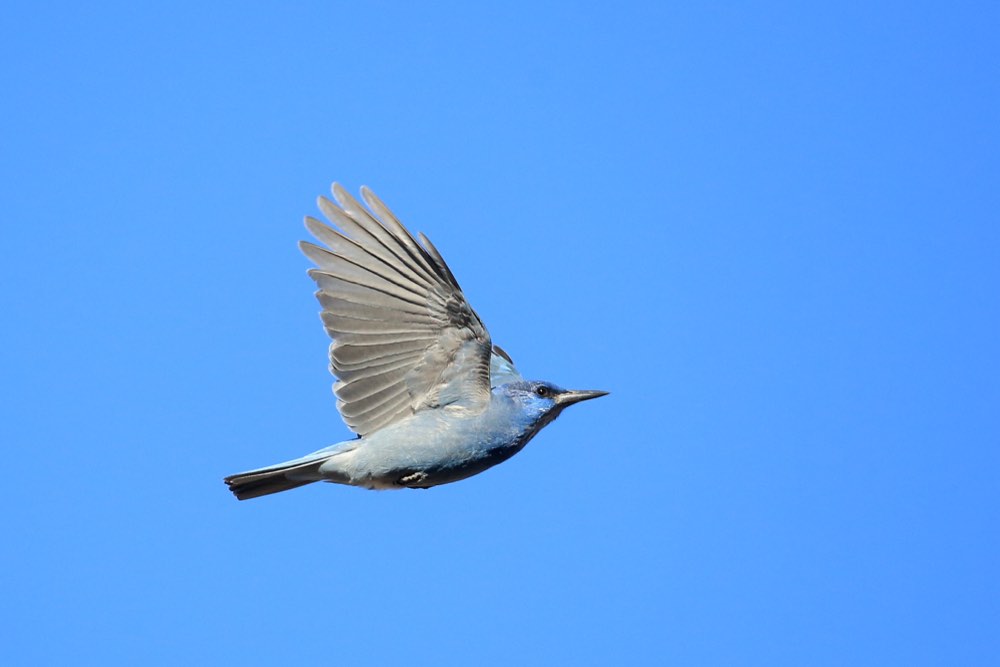
Identical to the male but slightly duller.
Male photo: ALAN SCHMIERER from near Patagonia, AZ, USA / Wikimedia, CC0 · Second photo: Seabamirum from Ithaca / Wikimedia, CC BY 2.0
Field marks
- Uniform dusty blue with no white or black markings
- Short tail giving a crow-like silhouette
- Long, straight, sharply pointed bill
- Almost always in large flocks
Similar species
What it sounds like
A high, nasal, laughing "kaw-kaw" and rolling calls given constantly by the flock.
Behaviour that gives it away
Caches millions of pinyon seeds as a flock, and its nesting is timed to the pine crop rather than the calendar.
Habitat & range
Pinyon-juniper woodland and adjacent pine forest in the interior West.
When you'll see it
Present all year in western and southwestern North America.
What it eats
Pinyon pine seeds above all, plus insects and berries.
Did you know?
A single flock can cache over four million pinyon seeds in a season, and the trees depend on the jay to plant them.
Spot one yourself?
Point your camera at any bird and Aviarist identifies it in seconds — then logs it to your life list.
Get Aviarist on Google Play
More backyard birds


Other apps we make