How to Identify aMountain Quail
Oreortyx pictus · 10.2–11.4 in (26–29 cm)
Male vs. female
Male
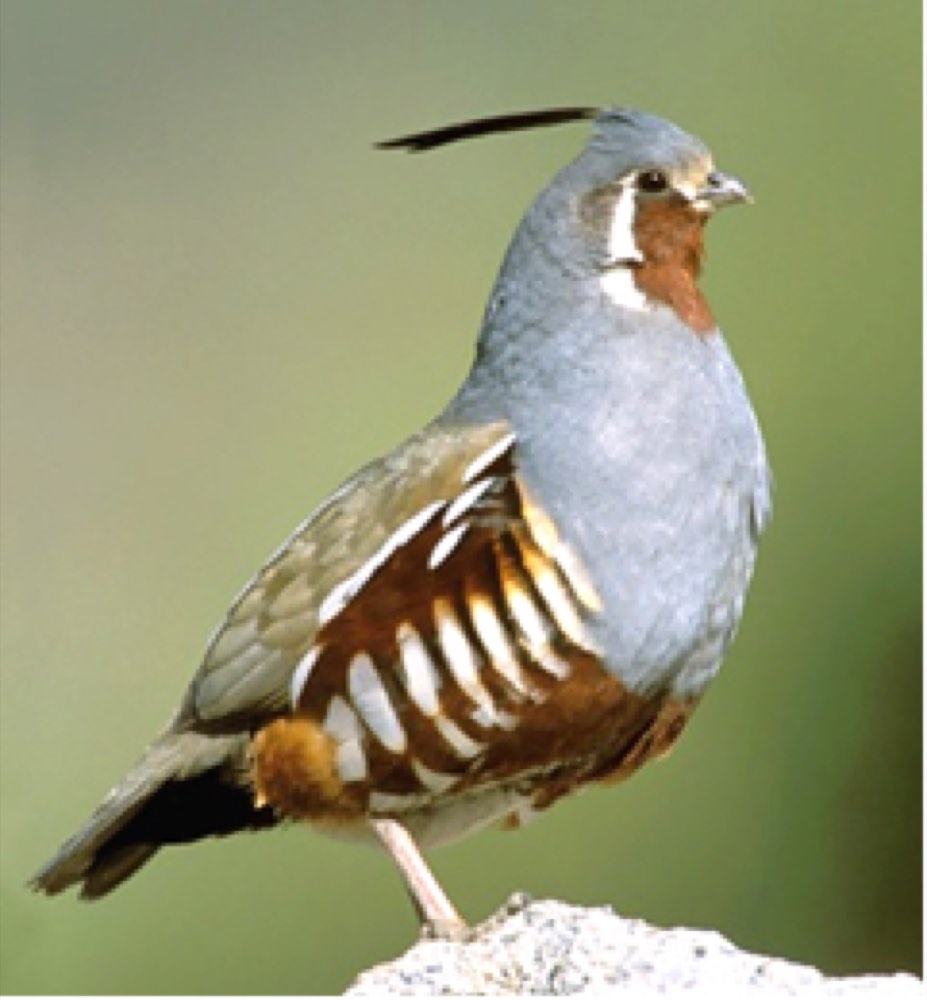
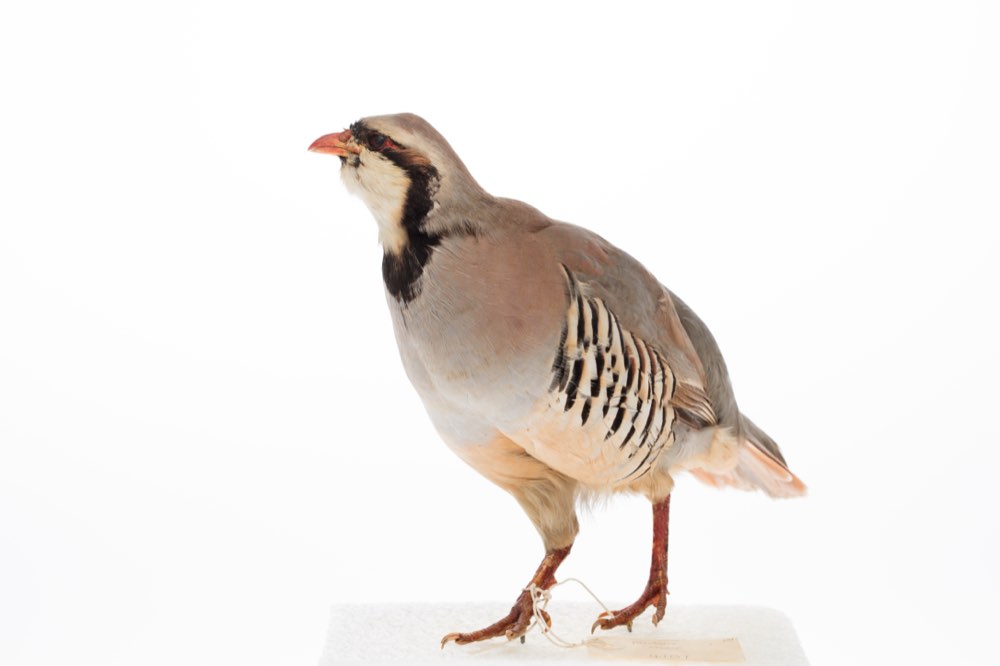
Blue-gray chest, chestnut throat outlined white, chestnut flanks boldly barred white, and two long straight head plumes. Sexes look alike.
Female
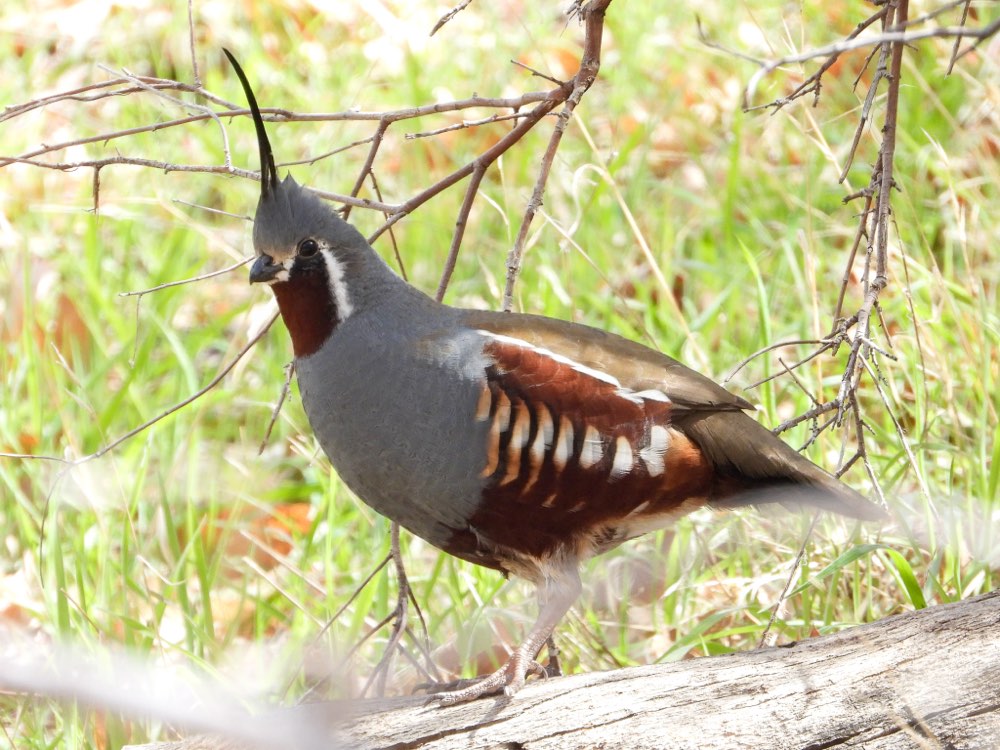
Identical to the male but with shorter plumes.
Male photo: U.S. Fish & Wildlife Service - Pacific Region's / Wikimedia, CC BY 2.0 · Second photo: James M. Maley / Wikimedia, CC BY 4.0
Field marks
- Two long straight plumes held upright, not curled forward
- Chestnut throat patch bordered in white
- Bold white bars across chestnut flanks
- Largest quail in North America
Similar species
What it sounds like
A loud, clear, far-carrying single whistled "kyork", repeated at intervals.
Behaviour that gives it away
Migrates on foot rather than by flight, walking up and down mountainsides with the seasons.
Habitat & range
Mountain brushland, chaparral and conifer forest edges in the Far West.
When you'll see it
Present all year in western North America.
What it eats
Seeds, bulbs, acorns, berries and insects.
Did you know?
It performs its seasonal migration entirely on foot, walking thousands of feet up and down the mountains each year.
Spot one yourself?
Point your camera at any bird and Aviarist identifies it in seconds — then logs it to your life list.
Get Aviarist on Google Play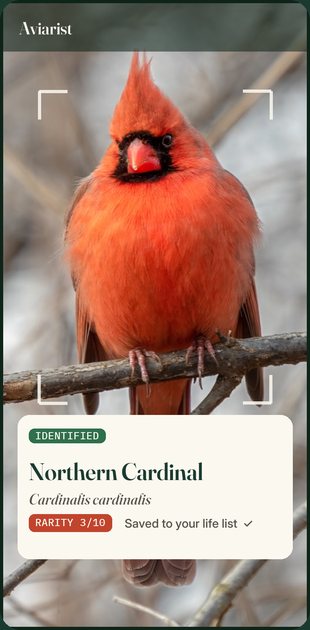
More backyard birds


Other apps we make