How to Identify aRed-naped Sapsucker
Sphyrapicus nuchalis · 7.5–8.3 in (19–21 cm)
Male vs. female
Male
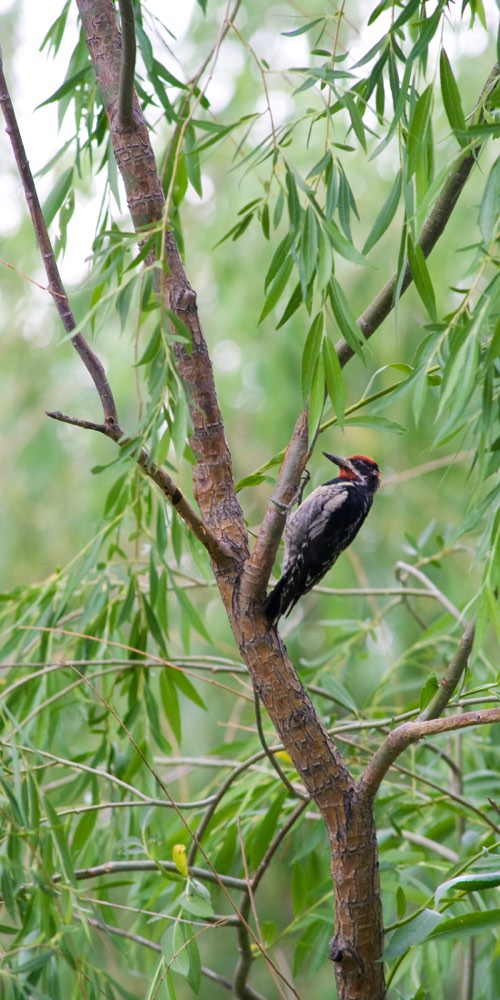
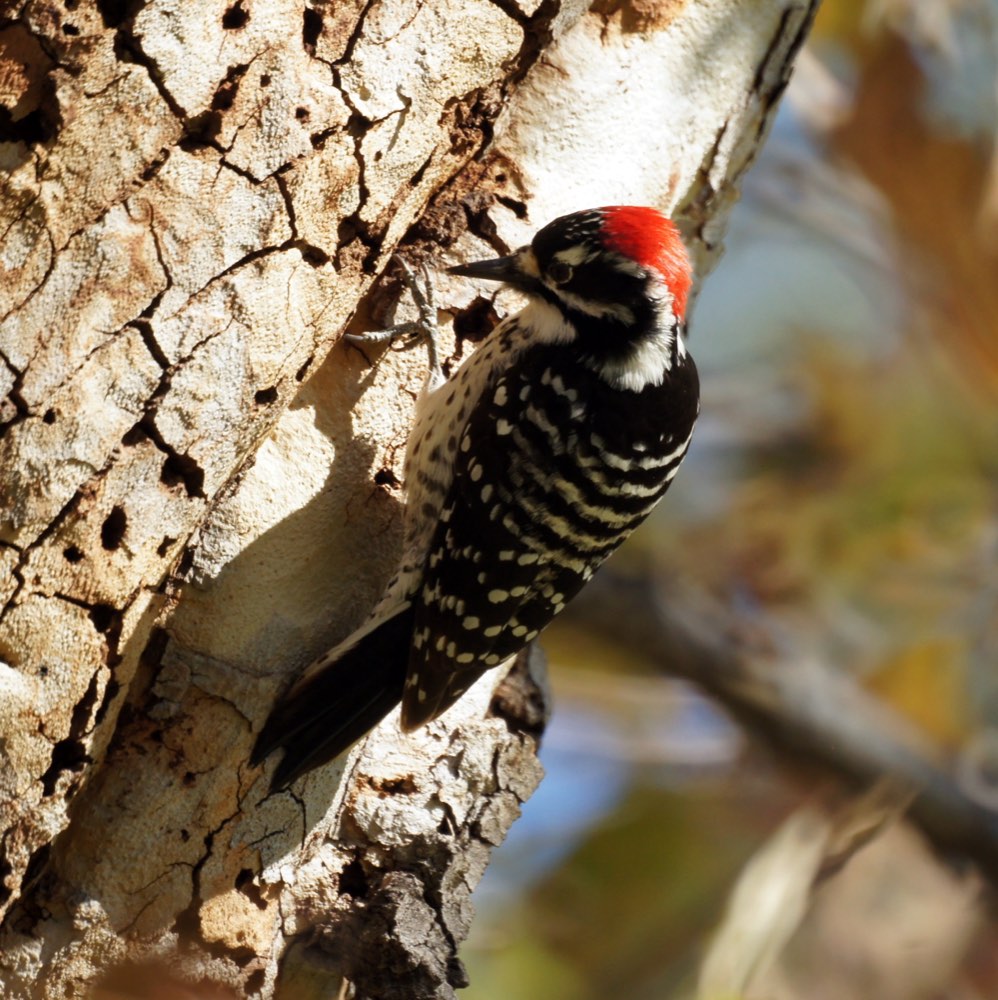
Black-and-white barred back, red crown, red throat fully outlined in black, and a red patch on the nape; long white wing stripe.
Female
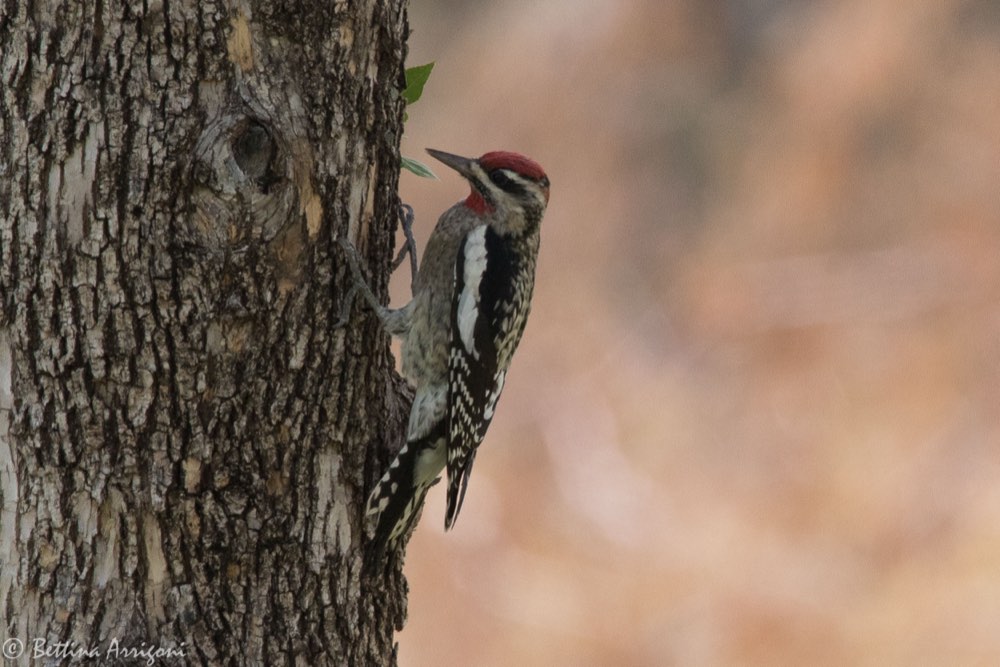
Similar but with a white chin below the red throat patch.
Male photo: Calibas / Wikimedia, CC BY-SA 3.0 · Female photo: Bettina Arrigoni / Wikimedia, CC BY 2.0
Field marks
- Red patch on the nape, absent in the Yellow-bellied
- Long white slash down the folded wing
- Black chest crescent
- Neat rows of sap wells drilled in bark
Similar species
What it sounds like
A nasal cat-like mewing and an irregular stuttering drum.
Behaviour that gives it away
Maintains orderly rows of sap wells and defends them, and hummingbirds time their arrival in the Rockies to these wells.
Habitat & range
Aspen groves, willow thickets and mixed mountain forest of the West.
When you'll see it
Depending on where in western North America you are, it is a summer visitor that arrives to breed and a passage migrant, seen mainly in spring and autumn.
What it eats
Tree sap, insects caught in it, and some fruit.
Did you know?
Broad-tailed Hummingbirds arrive in the Rockies before any flowers bloom, and survive on this sapsucker’s wells until they do.
Spot one yourself?
Point your camera at any bird and Aviarist identifies it in seconds — then logs it to your life list.
Get Aviarist on Google Play
More backyard birds

_Slaughter_Ranch_AZ_2017-09-27_14-18-47_(37710660332).jpg)
Other apps we make