How to Identify aNorthern Shrike
Lanius borealis · 9.4–10.6 in (24–27 cm)
Male vs. female
Male
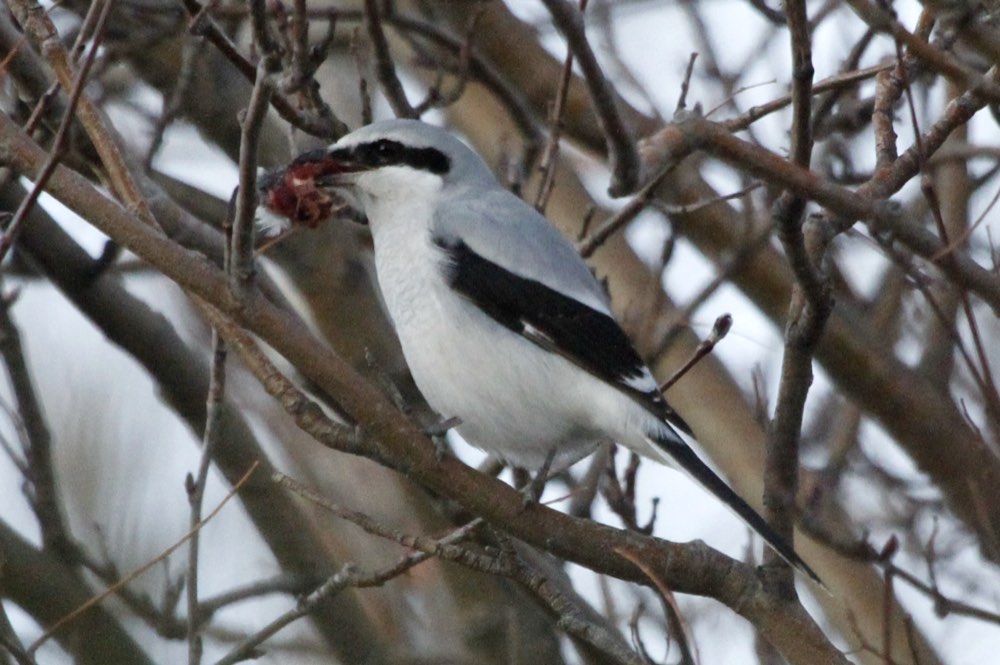
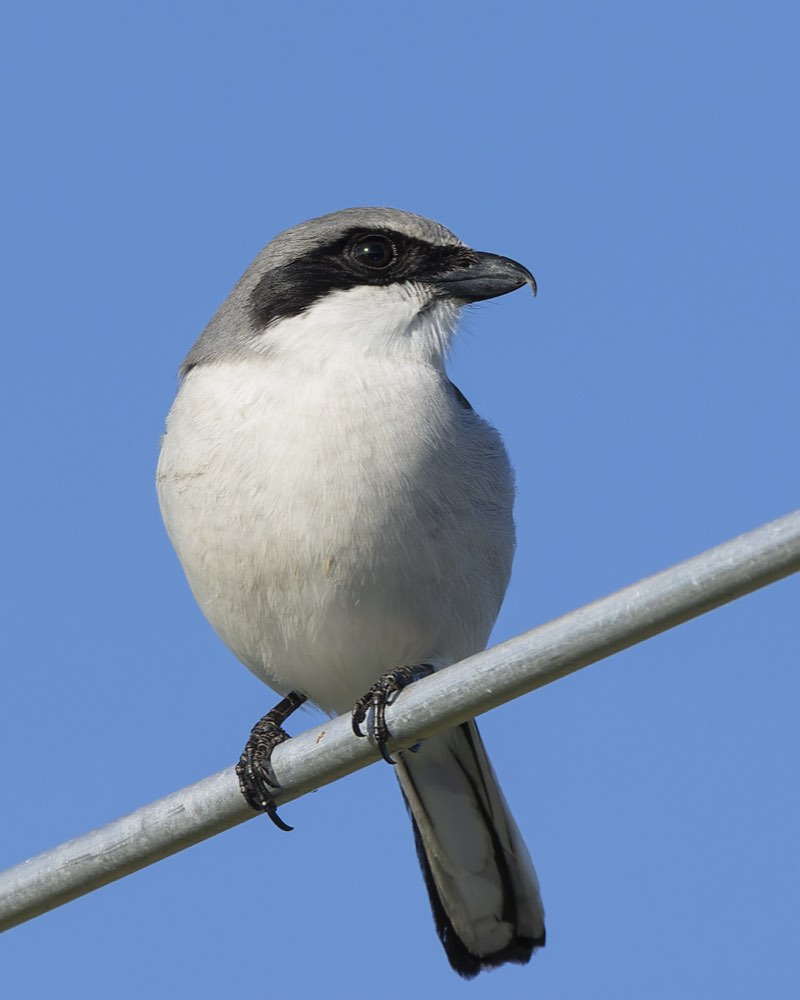
Pale gray above, whitish and faintly barred below, with a narrow black mask, black wings and tail, and a hooked black bill. Sexes look alike.
Female
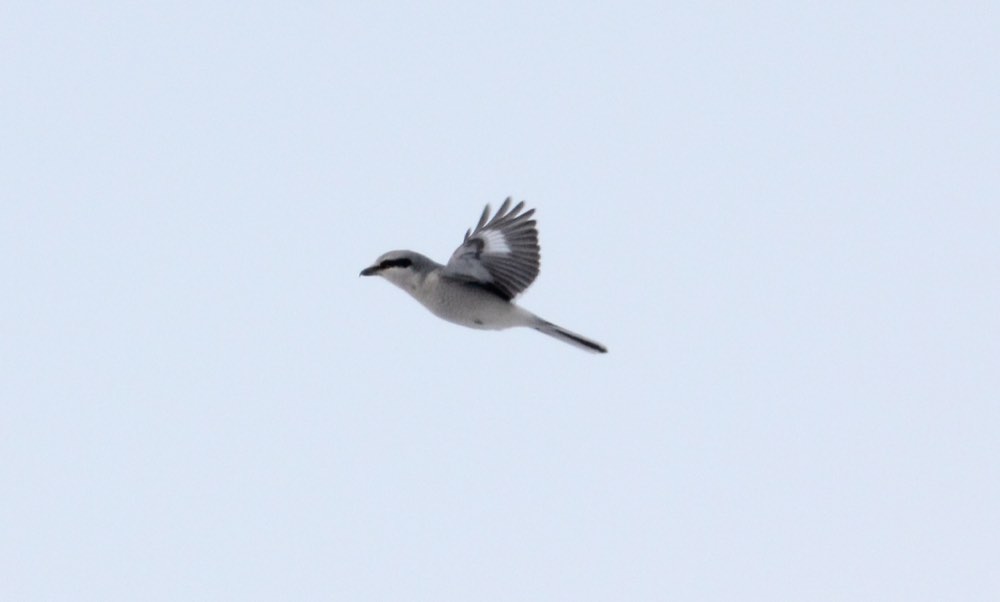
Identical to the male, averaging slightly browner.
Male photo: Paul Hurtado / Wikimedia, CC BY-SA 2.0 · Second photo: Dominic Sherony / Wikimedia, CC BY-SA 2.0
Field marks
- Hooked bill, unlike any other gray songbird
- Narrow black mask that does not cross above the bill
- White wing patches flashing in flight
- Perches conspicuously on treetops and wires
Similar species
What it sounds like
A harsh grating shriek, plus a surprisingly musical warbling song in late winter.
Behaviour that gives it away
Impales prey on thorns and barbed wire to hold it while feeding, since it lacks the strong talons of a raptor.
Habitat & range
Open country, fields, marsh edges and scrub in winter; boreal forest edge in summer.
When you'll see it
A winter visitor in North America.
What it eats
Small birds, mammals and insects, killed with a bite to the neck.
Did you know?
Lacking a raptor’s grip, it wedges prey onto thorns and barbed wire to butcher it — earning shrikes the name butcherbird.
Spot one yourself?
Point your camera at any bird and Aviarist identifies it in seconds — then logs it to your life list.
Get Aviarist on Google Play
More backyard birds

.jpg)
Other apps we make