How to Identify aLewis's Woodpecker
Melanerpes lewis · 10.2–11 in (26–28 cm)
Male vs. female
Male
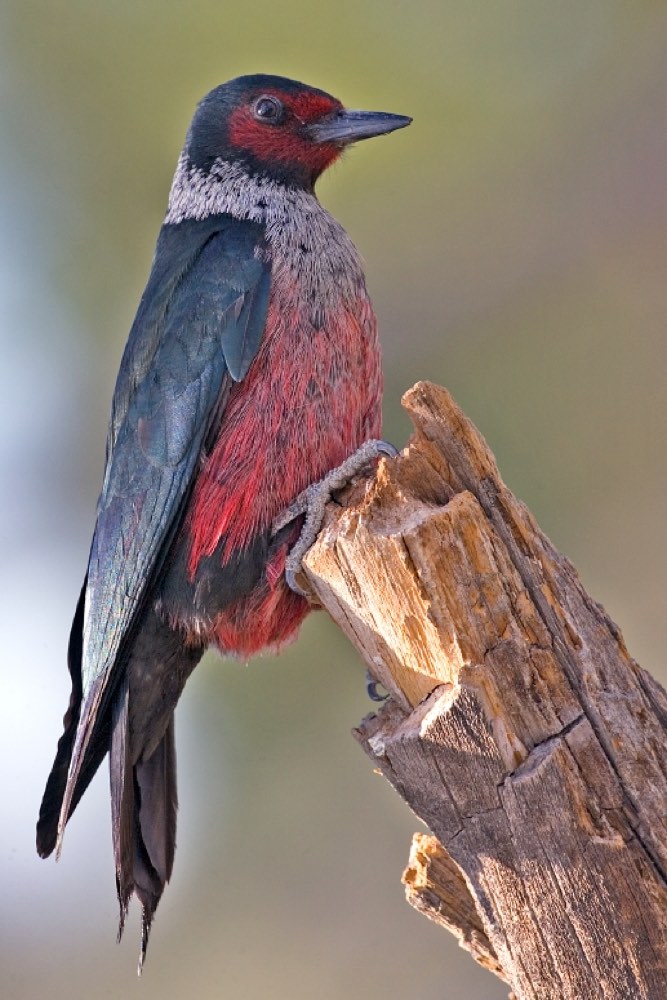
Iridescent dark green above, with a deep red face, silvery-gray collar and chest, and a rosy-pink belly. Sexes look alike.
Female
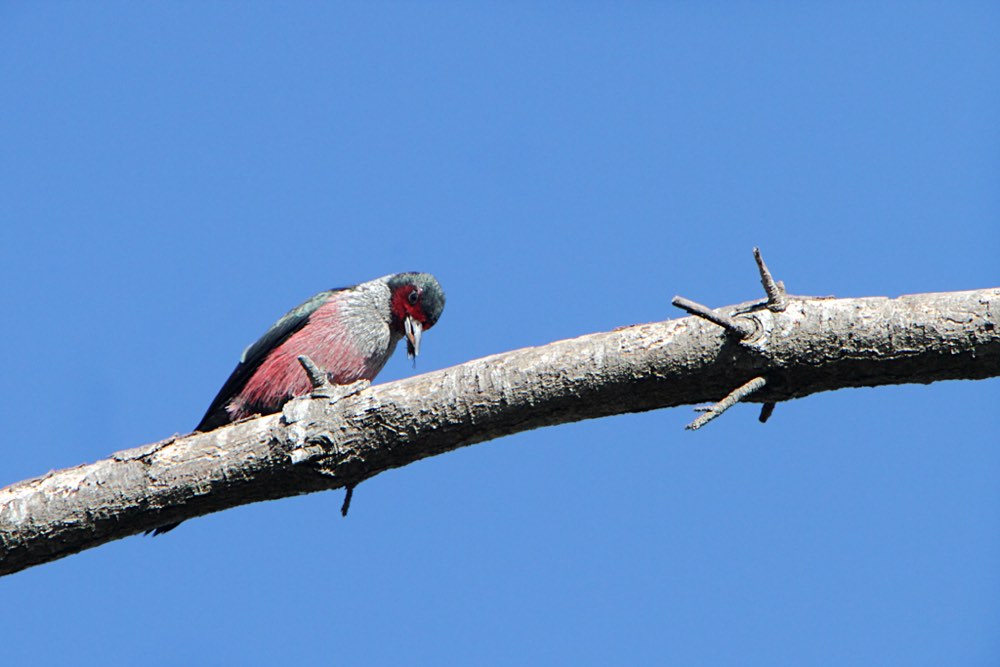
Identical to the male in the field.
Male photo: http://www.naturespicsonline.com/ / Wikimedia, CC BY-SA 3.0 · Second photo: Alan Vernon / Wikimedia, CC BY 2.0
Field marks
- Rosy-pink belly, unique among woodpeckers
- Dark oily-green back with no barring or white patches
- Gray collar across the chest
- Steady flapping flight, not undulating
Similar species
What it sounds like
Mostly quiet; a harsh churring and a series of squeaky notes near the nest.
Behaviour that gives it away
Catches insects in mid-air like a flycatcher and flies with steady crow-like flaps rather than the usual woodpecker bounce.
Habitat & range
Open pine forest, burned woodland, cottonwood groves and orchards in the West.
When you'll see it
Depending on where in western North America you are, it is present all year and a summer visitor that arrives to breed.
What it eats
Flying insects caught on the wing, plus acorns and fruit stored in bark crevices.
Did you know?
Named for Meriwether Lewis, who collected it on the expedition, it flies and feeds more like a flycatcher than a woodpecker.
Spot one yourself?
Point your camera at any bird and Aviarist identifies it in seconds — then logs it to your life list.
Get Aviarist on Google Play
More backyard birds

_with_bug_in_it%27s_bill.jpg)
Other apps we make