How to Identify aSage Thrasher
Oreoscoptes montanus · 7.9–8.7 in (20–22 cm)
Male vs. female
Male
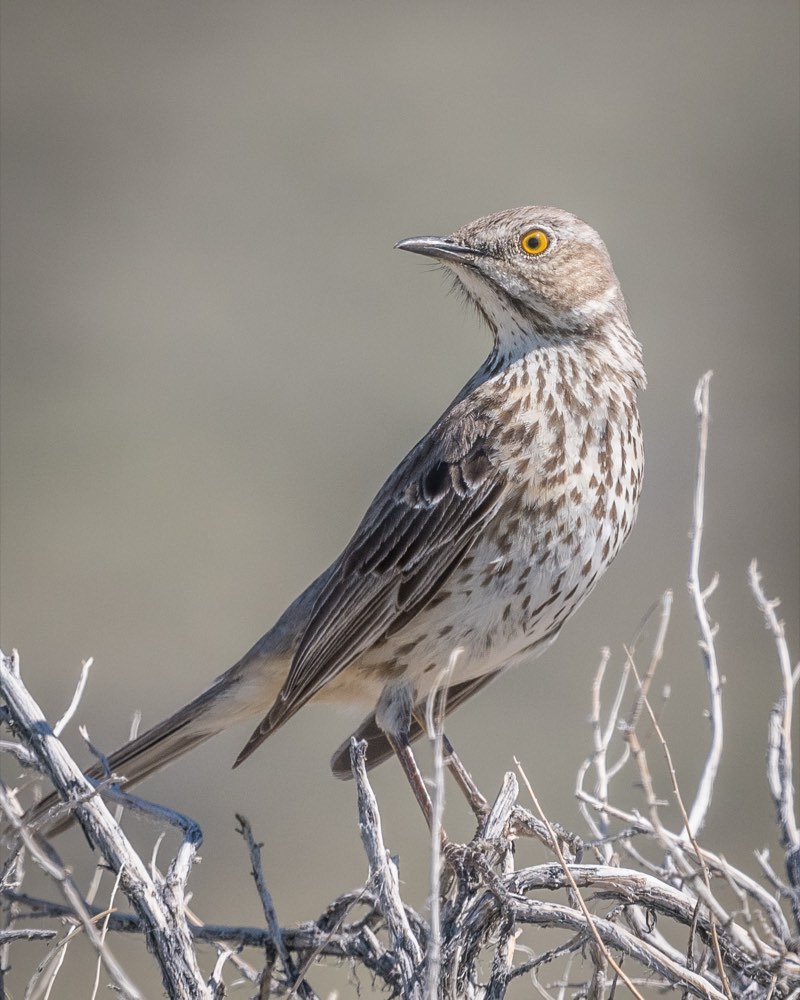
Gray-brown above, whitish below with neat arrow-shaped streaks, pale yellow eyes and white tail corners. Sexes look alike.
Female
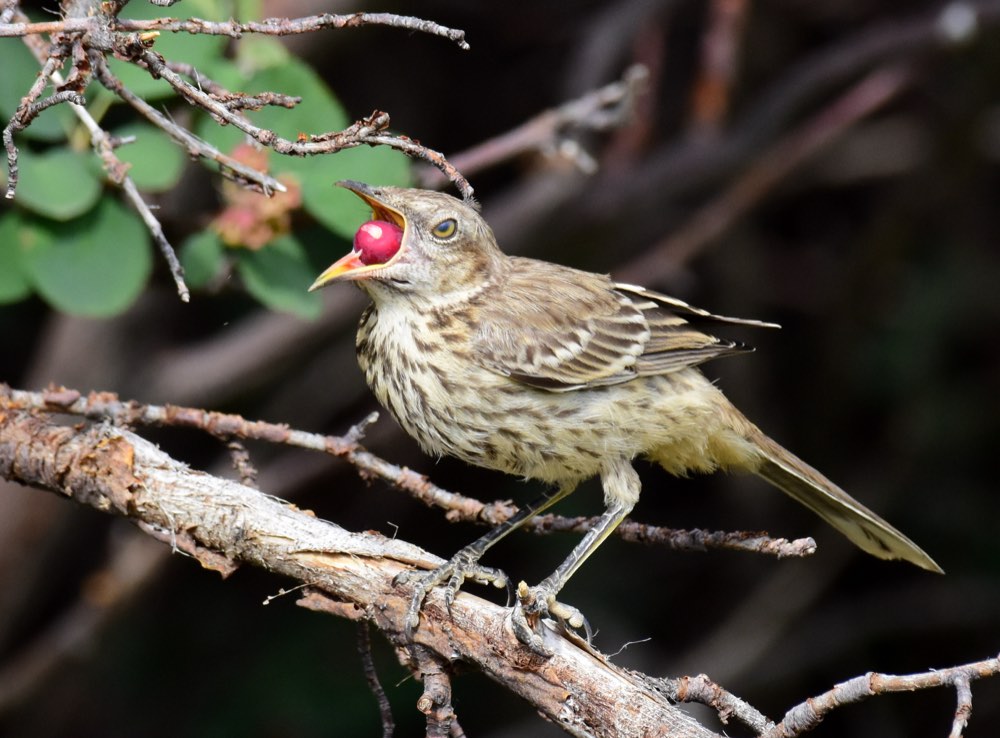
Identical to the male in the field.
Male photo: Becky Matsubara from El Sobrante, California / Wikimedia, CC BY 2.0 · Second photo: USFWS Mountain Prairie / Wikimedia, Public domain
Field marks
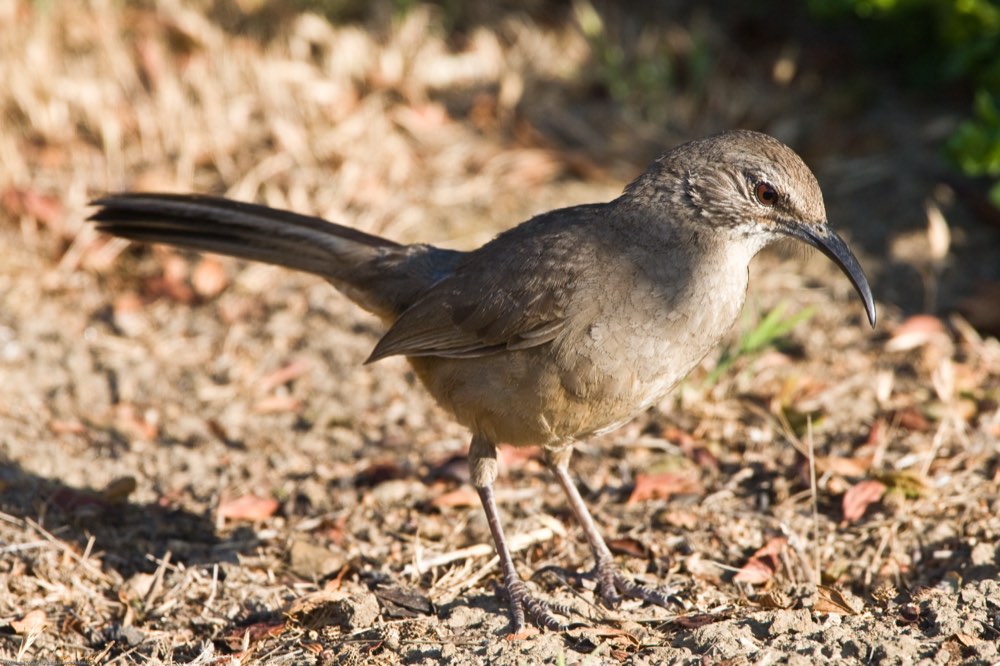
- Short straight bill, unlike the long curved bill of other thrashers
- Crisp dark streaking on a pale chest
- Pale yellow eye
- White corners on the tail tip
Similar species
What it sounds like
A long, rambling, warbling song of clear phrases, delivered from the top of a sagebrush.
Behaviour that gives it away
Depends almost entirely on unbroken sagebrush, so it disappears wherever that habitat is cleared or burned.
Habitat & range
Sagebrush plains and shrub-steppe of the Great Basin and interior West.
When you'll see it
Depending on where in western North America you are, it is a summer visitor that arrives to breed and a passage migrant, seen mainly in spring and autumn.
What it eats
Insects, especially grasshoppers and beetles, plus berries.
Did you know?
It is a sagebrush obligate — where the sagebrush goes, so does the bird, which is why it is declining with the shrub-steppe.
Spot one yourself?
Point your camera at any bird and Aviarist identifies it in seconds — then logs it to your life list.
Get Aviarist on Google Play
More backyard birds
.jpg)
.jpg)
Other apps we make