How to Identify aRed Crossbill
Loxia curvirostra · 5.5–7.9 in (14–20 cm)
Male vs. female
Male
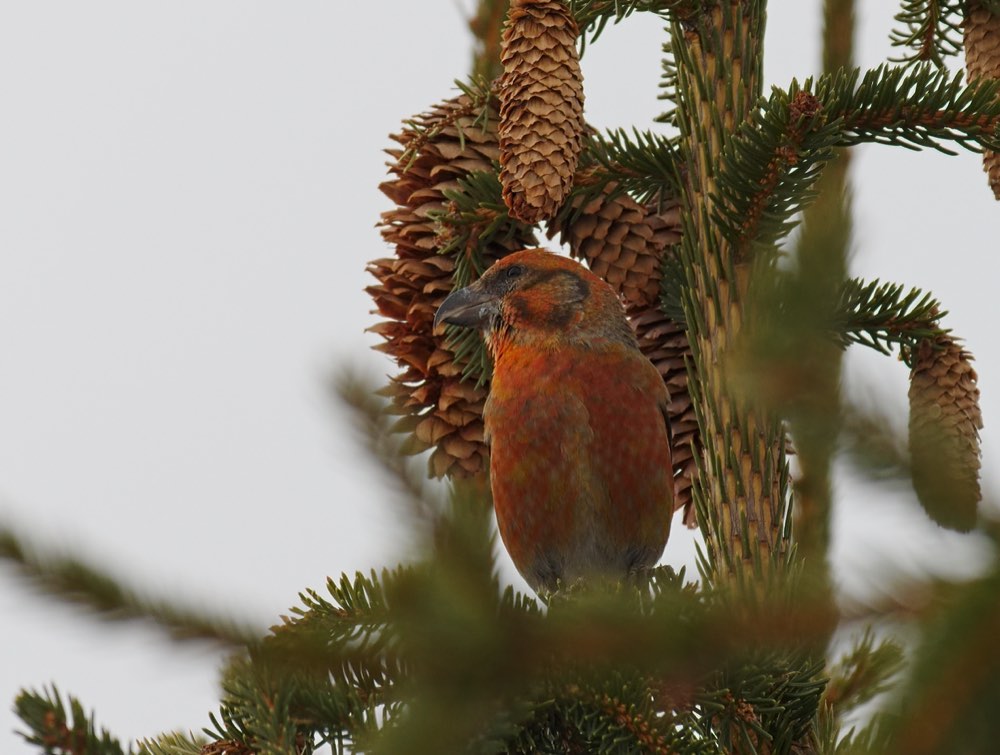
Brick-red to orange overall with darker wings and tail, and a heavy bill whose tips cross over each other.
Female
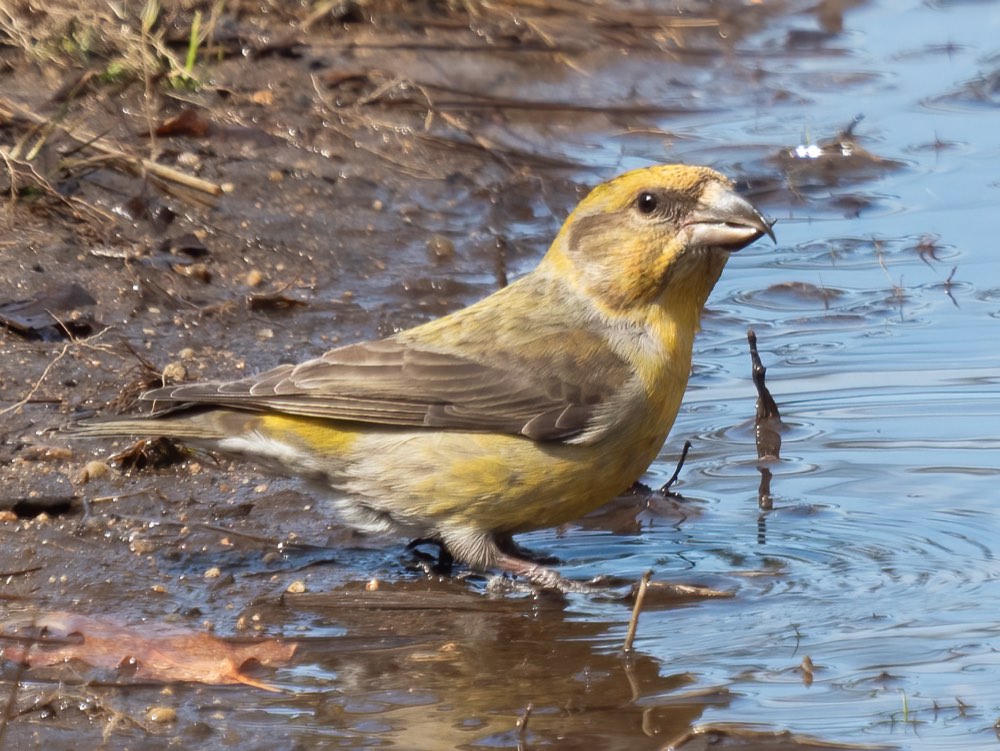
Olive-yellow to grayish-green with the same crossed bill.
Male photo: Andreas Eichler / Wikimedia, CC BY-SA 4.0 · Female photo: Rhododendrites / Wikimedia, CC BY-SA 4.0
Field marks
- Bill tips visibly crossed
- Large head and short forked tail
- No wingbars
- Clings sideways and upside-down on cones
Similar species
What it sounds like
A hard, sharp "kip-kip-kip" given constantly in flight — the usual way flocks are detected.
Behaviour that gives it away
Breeds whenever the cone crop is good, including midwinter, rather than following the seasons.
Habitat & range
Conifer forest across the north and the western mountains, wandering widely.
When you'll see it
Depending on where in northern, western and eastern North America you are, it is present all year and a winter visitor.
What it eats
Conifer seeds prised from cones, plus some insects.
Did you know?
At least ten distinct call types exist, each tied to a different conifer and differing in bill size — they may prove to be separate species.
Spot one yourself?
Point your camera at any bird and Aviarist identifies it in seconds — then logs it to your life list.
Get Aviarist on Google Play
More backyard birds

.jpg)
Other apps we make