How to Identify aAmerican Bittern
Botaurus lentiginosus · 23.6–33.5 in (60–85 cm)
Male vs. female
Male
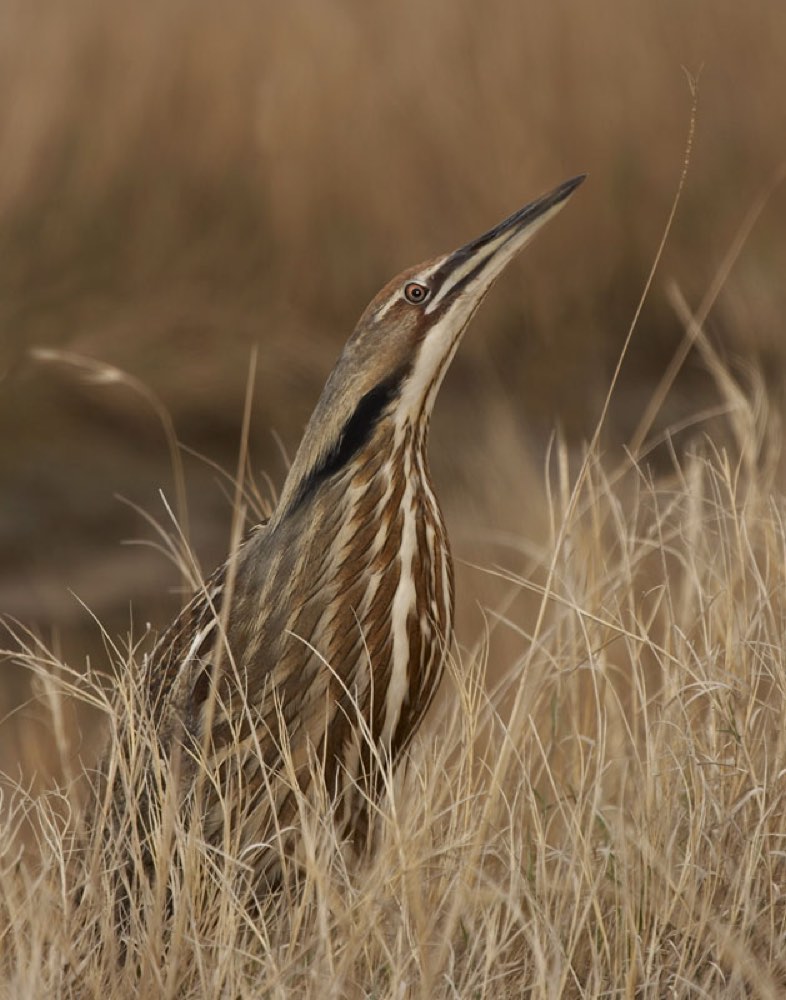
Warm brown above, boldly streaked brown and white below, with a black stripe down each side of the neck. Sexes look alike.
Female
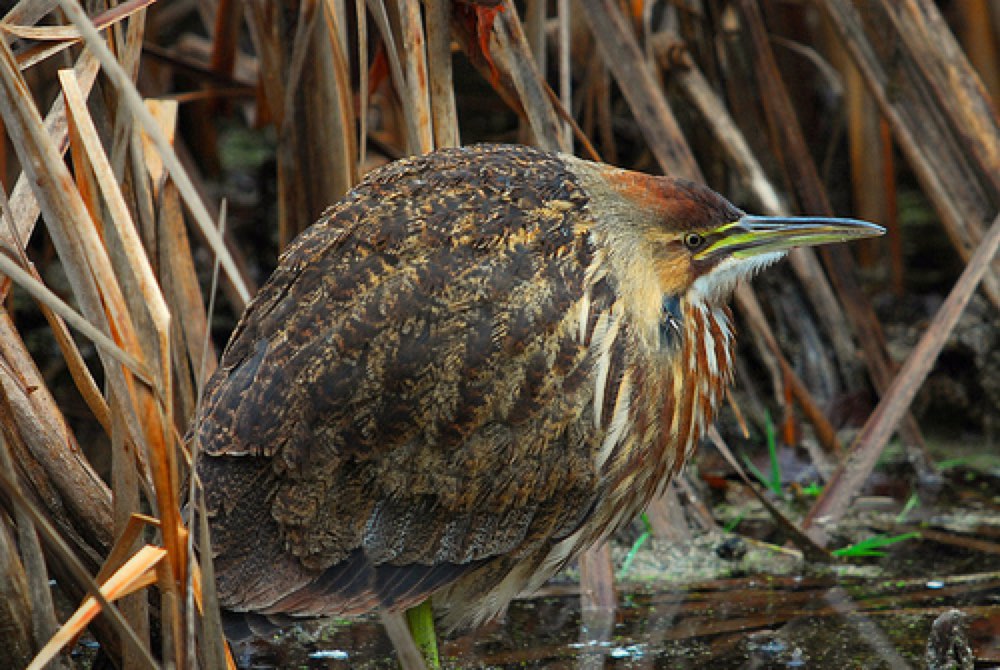
Identical to the male but smaller.
Male photo: Jerry Segraves (en:User:Jsegraves99) / Wikimedia, Public domain · Second photo: U.S. Fish & Wildlife Service - Pacific Region's / Wikimedia, CC BY 2.0
Field marks
- Vertical brown-and-white streaking that matches standing reeds
- Black streak running down the side of the neck
- Points the bill skyward when alarmed
- Blackish outer wing contrasting in flight
Similar species
What it sounds like
A deep, resonant, pumping "oonk-a-lunk" that carries far across a marsh, like a stuck water pump.
Behaviour that gives it away
When alarmed it stretches upright with its bill straight up and sways gently in time with the reeds around it.
Habitat & range
Dense freshwater marshes with tall cattails and reeds.
When you'll see it
Depending on where in North America you are, it is a summer visitor that arrives to breed and a passage migrant, seen mainly in spring and autumn.
What it eats
Fish, frogs, insects, crayfish and small mammals taken with a sudden strike.
Did you know?
Its booming call is produced by gulping air into its oesophagus, and can carry over half a mile across a marsh.
Spot one yourself?
Point your camera at any bird and Aviarist identifies it in seconds — then logs it to your life list.
Get Aviarist on Google Play
More backyard birds


Other apps we make