How to Identify aCommon Gallinule
Gallinula galeata · 12.6–13.8 in (32–35 cm)
Male vs. female
Male
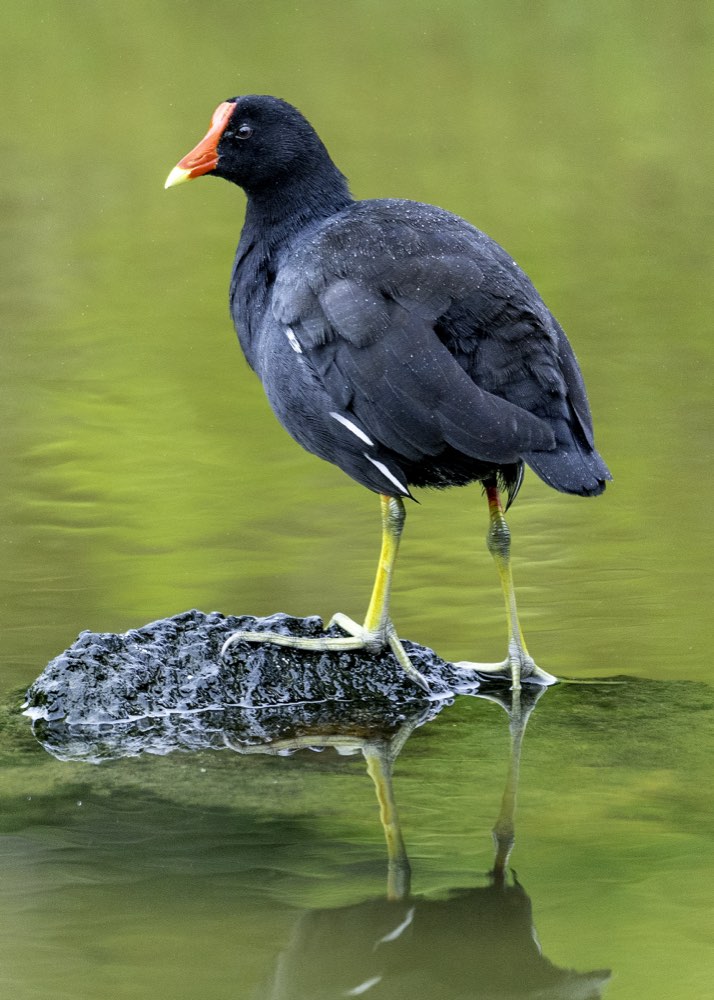
Slate-gray body with a browner back, a scarlet frontal shield and bill tipped yellow, and a bold white line along the flanks. Sexes look alike.
Female
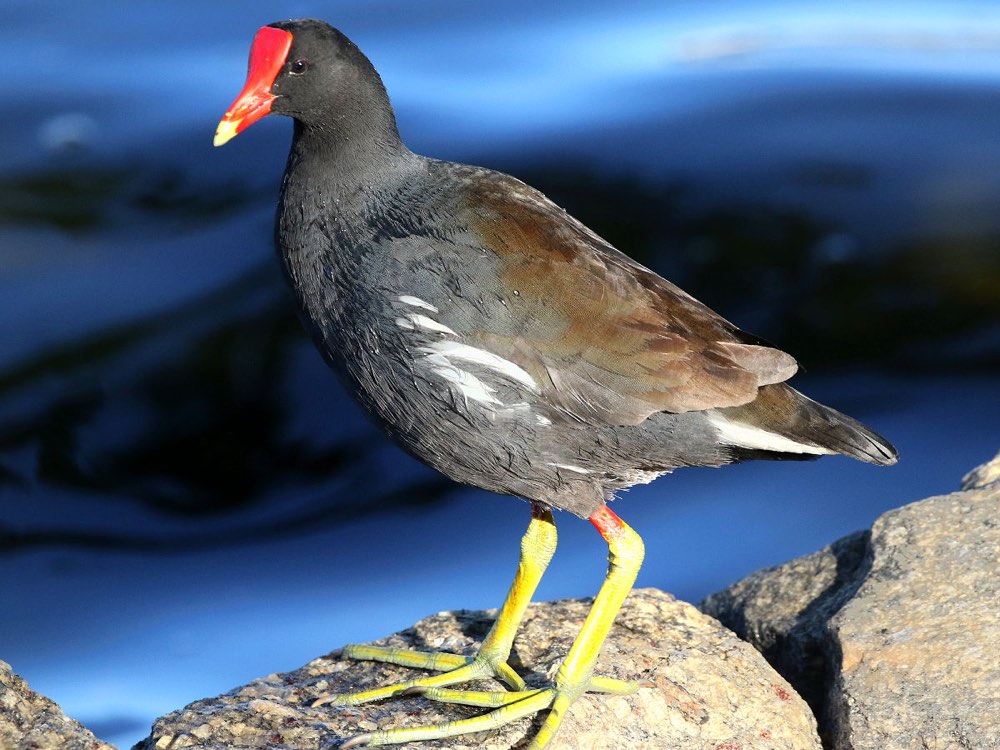
Identical to the male in the field.
Male photo: Casey Klebba / Wikimedia, CC BY-SA 4.0 · Second photo: Peterwchen / Wikimedia, CC BY-SA 4.0
Field marks
- Red bill and forehead shield with a yellow tip
- White horizontal stripe along the side
- White undertail split by a black centre
- Long yellow-green legs with very long toes
Similar species
What it sounds like
A loud, laughing, clucking series of squawks and whinnies from dense cover.
Behaviour that gives it away
Walks across floating vegetation on very long toes and clambers through reeds as readily as it swims.
Habitat & range
Freshwater marshes, ponds and canals with dense emergent plants.
When you'll see it
Depending on where in North America you are, it is present all year and a summer visitor that arrives to breed.
What it eats
Aquatic plants, seeds, snails and insects.
Did you know?
It was called the Common Moorhen until 2011, when the American and Eurasian birds were split into separate species.
Spot one yourself?
Point your camera at any bird and Aviarist identifies it in seconds — then logs it to your life list.
Get Aviarist on Google Play
More backyard birds


Other apps we make