How to Identify aVirginia Rail
Rallus limicola · 7.9–10.6 in (20–27 cm)
Male vs. female
Male
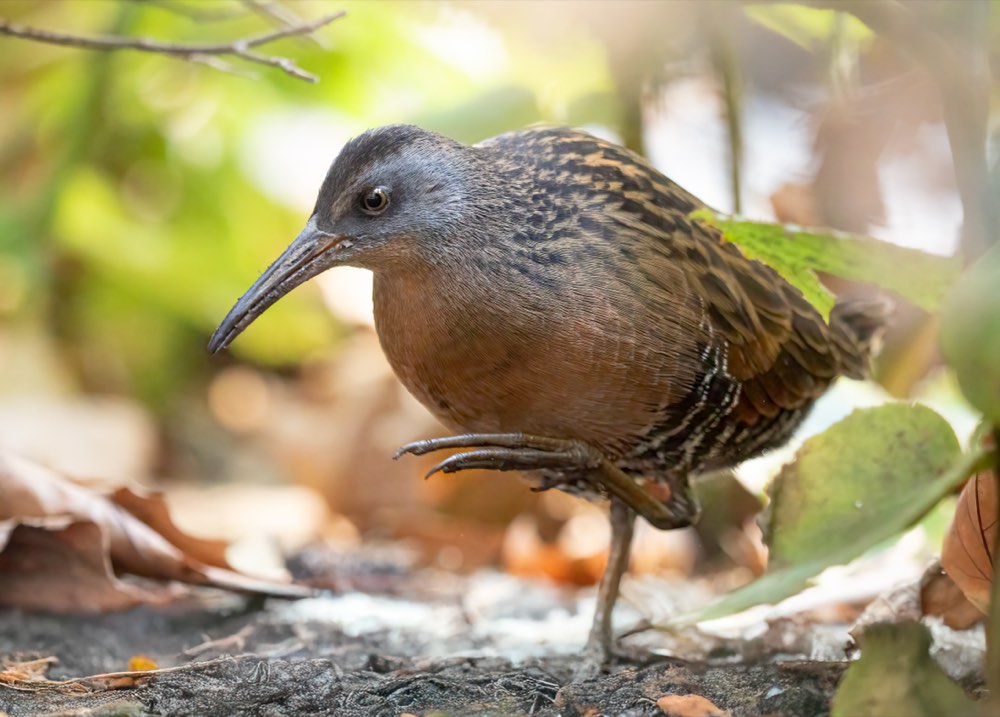
Rusty-orange chest, gray face, brown streaked back, black-and-white barred flanks and a long reddish bill. Sexes look alike.
Female
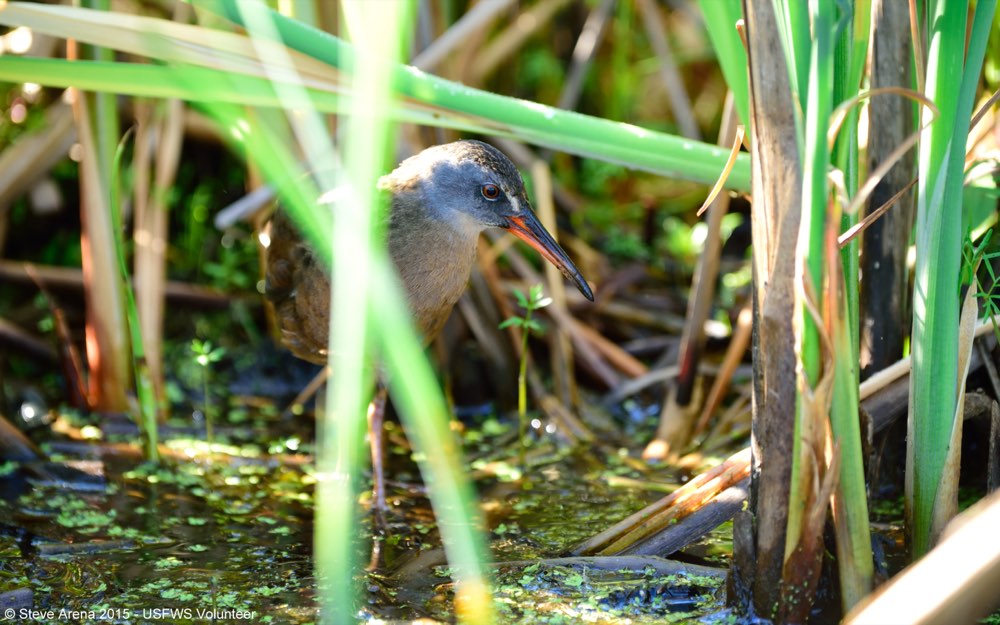
Identical to the male but slightly smaller and duller.
Male photo: Rhododendrites / Wikimedia, CC BY-SA 4.0 · Second photo: U. S. Fish and Wildlife Service - Northeast Region / Wikimedia, Public domain
Field marks
- Long, slim, slightly downcurved orange-red bill
- Gray cheek patch against a rusty chest
- Boldly barred black-and-white flanks
- Body flattened side to side for slipping through reeds
Similar species
What it sounds like
A metallic "kid-ick kid-ick" and a descending series of grunting notes.
Behaviour that gives it away
Its body is compressed laterally and its forehead feathers are reinforced against wear, both adaptations for pushing through dense reeds.
Habitat & range
Freshwater and brackish marshes with dense cattails and sedges.
When you'll see it
Depending on where in central, eastern and western North America you are, it is present all year and a summer visitor that arrives to breed.
What it eats
Insects, snails, small fish and seeds probed from marsh mud.
Did you know?
Its forehead feathers are specially toughened to resist wear from constantly pushing through dense stems.
Spot one yourself?
Point your camera at any bird and Aviarist identifies it in seconds — then logs it to your life list.
Get Aviarist on Google Play
More backyard birds
.jpg)
_(18201180658).jpg)
Other apps we make