How to Identify aCommon Tern
Sterna hirundo · 12.2–14.2 in (31–36 cm)
Male vs. female
Male
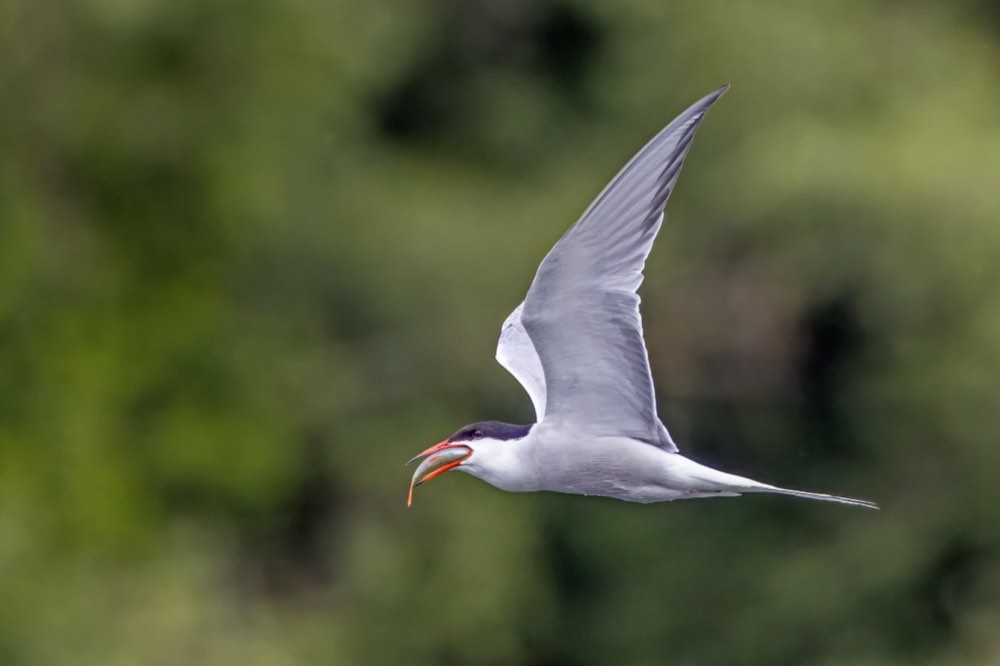
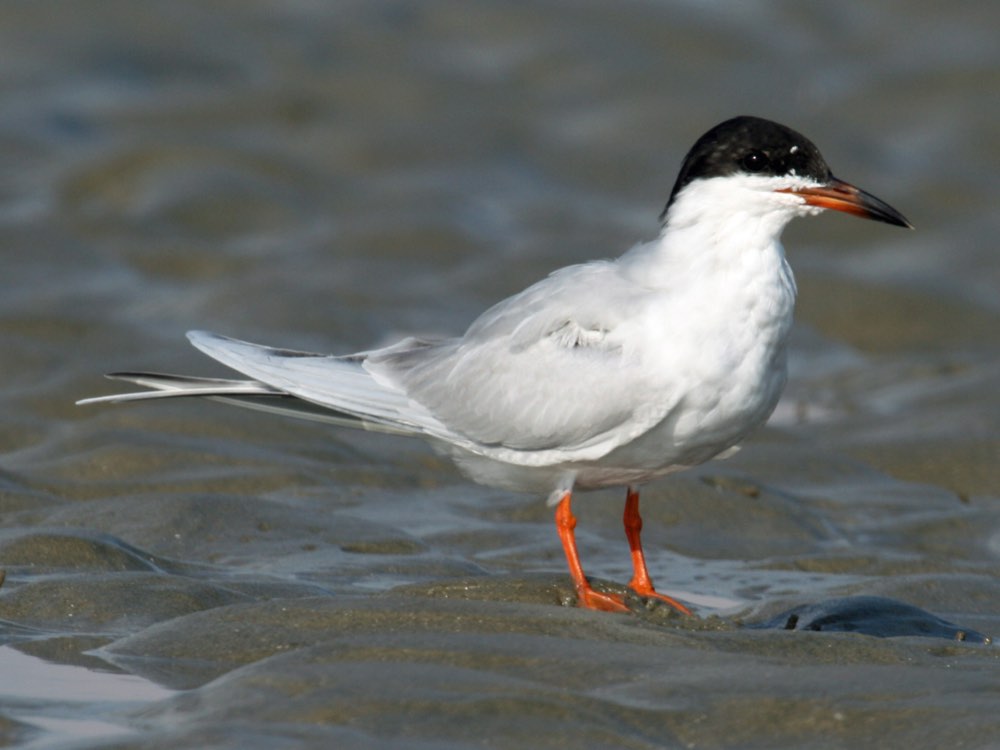
Pale gray above, white below, with a full black cap, orange-red bill with a black tip, and a long forked tail. Sexes look alike.
Female
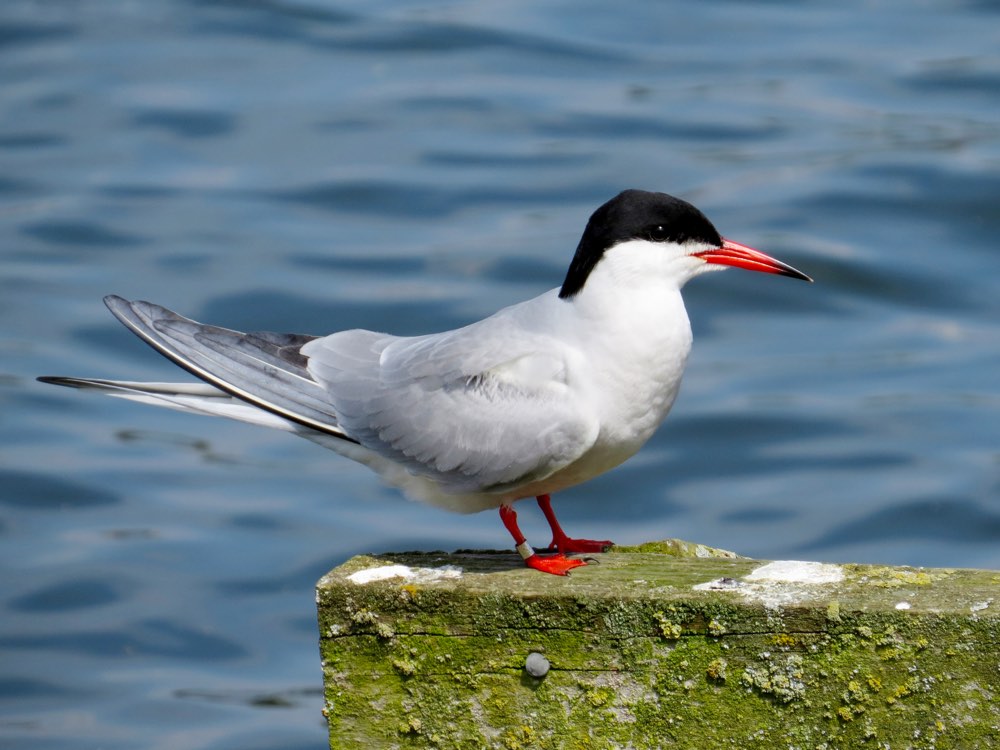
Identical to the male in the field.
Male photo: Charles J. Sharp / Wikimedia, CC BY-SA 4.0 · Second photo: MPF / Wikimedia, CC BY-SA 4.0
Field marks
- Orange-red bill with a distinct black tip
- Dark wedge on the outer upperwing in late summer
- Deeply forked white tail, shorter than the wingtips at rest
- Full black cap in breeding plumage
Similar species
What it sounds like
A harsh, drawn-out, grating "kee-arrr" with a downward slur.
Behaviour that gives it away
Hovers over the water then plunges bill-first for small fish, often carrying the catch crosswise to a mate.
Habitat & range
Beaches, islands, lakes and coastal marshes.
When you'll see it
Depending on where in eastern, central and northern North America you are, it is a summer visitor that arrives to breed and a passage migrant, seen mainly in spring and autumn.
What it eats
Small fish caught by plunge-diving, plus invertebrates.
Did you know?
Colonies mob intruders relentlessly, and a person walking into one will be struck repeatedly on the head.
Spot one yourself?
Point your camera at any bird and Aviarist identifies it in seconds — then logs it to your life list.
Get Aviarist on Google Play
More backyard birds
_with_common_roach_(Rutilus_rutilus)_Haff_Reimech.jpg)

Other apps we make