How to Identify aLeast Tern
Sternula antillarum · 8.3–9.1 in (21–23 cm)
Male vs. female
Male
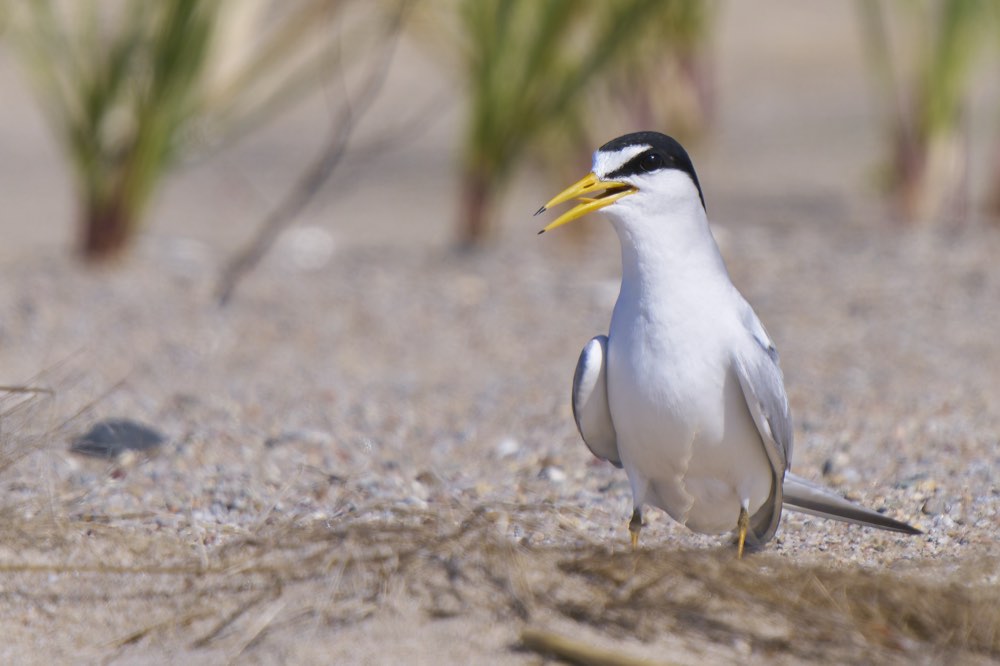
Pale gray above and white below with a black cap broken by a white forehead wedge, and a yellow black-tipped bill. Sexes look alike.
Female
Identical to the male in the field.
Male photo: Paul Danese / Wikimedia, CC BY-SA 4.0
Field marks
- Very small — barely bigger than a robin
- White triangular patch on the forehead cutting into the black cap
- Yellow bill
- Rapid shallow wingbeats, hovering frequently
Similar species
What it sounds like
A sharp, high, repeated "kip kip" and a scolding "zreep".
Behaviour that gives it away
Nests in a bare scrape on open sand and gravel, which puts colonies directly in the path of beachgoers and vehicles.
Habitat & range
Sandy beaches, river sandbars, salt flats and gravel rooftops.
When you'll see it
A summer visitor that arrives to breed in North America.
What it eats
Small fish and invertebrates caught by plunge-diving.
Did you know?
It increasingly nests on flat gravel rooftops, which mimic the open sandbars that development has taken away.
Spot one yourself?
Point your camera at any bird and Aviarist identifies it in seconds — then logs it to your life list.
Get Aviarist on Google Play
More backyard birds


Other apps we make