How to Identify aForster's Tern
Sterna forsteri · 13–14.2 in (33–36 cm)
Male vs. female
Male
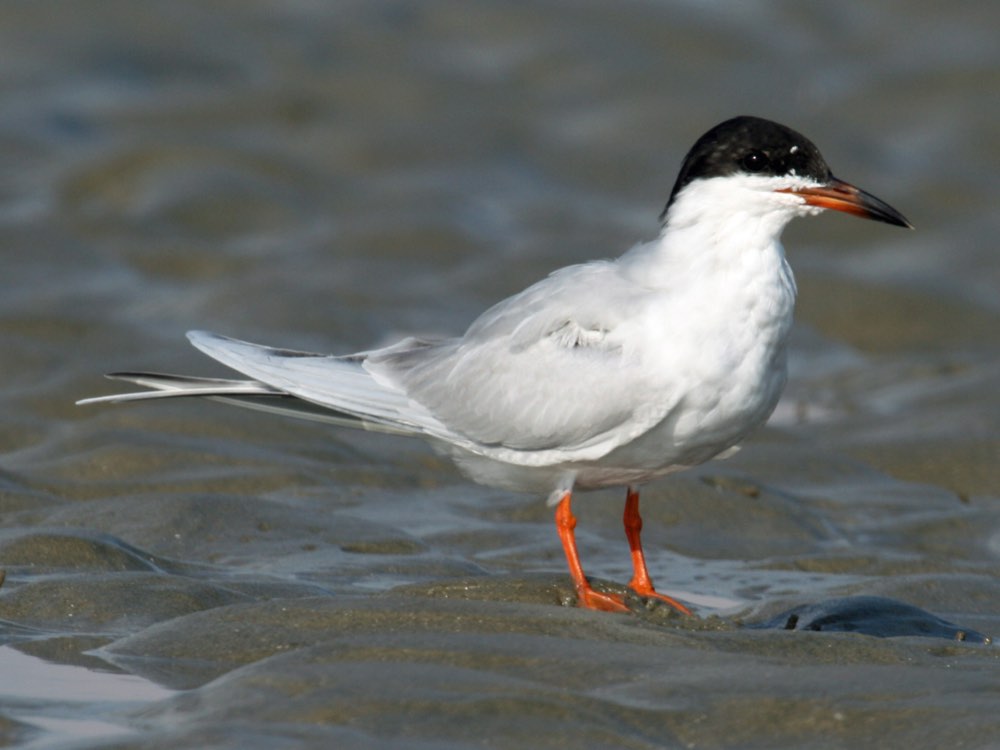
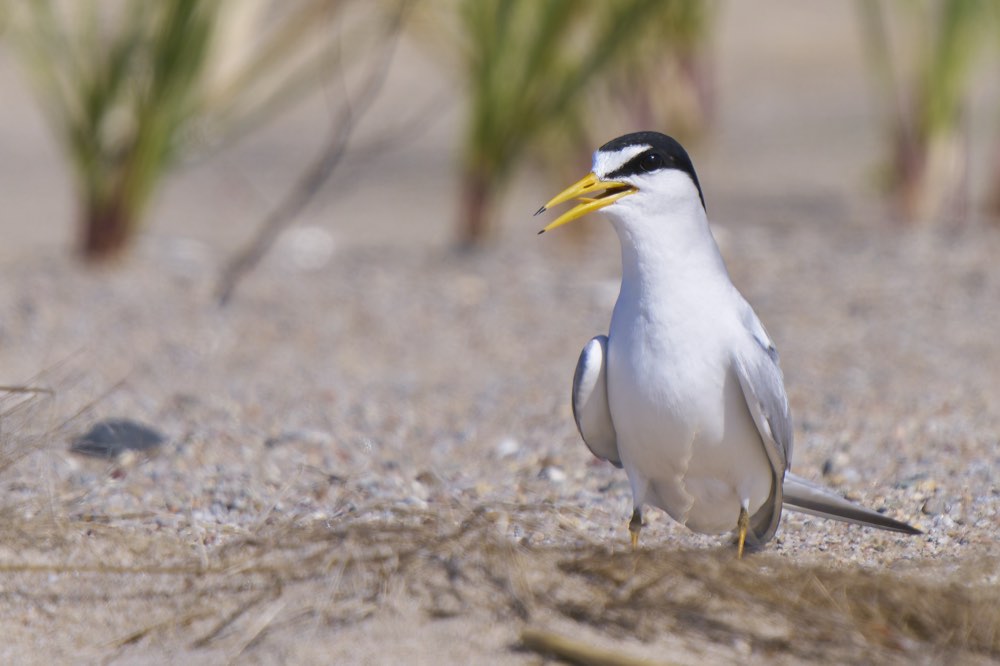
Very pale gray above and white below, black cap in summer, orange bill with a black tip, and long tail streamers. Sexes look alike.
Female
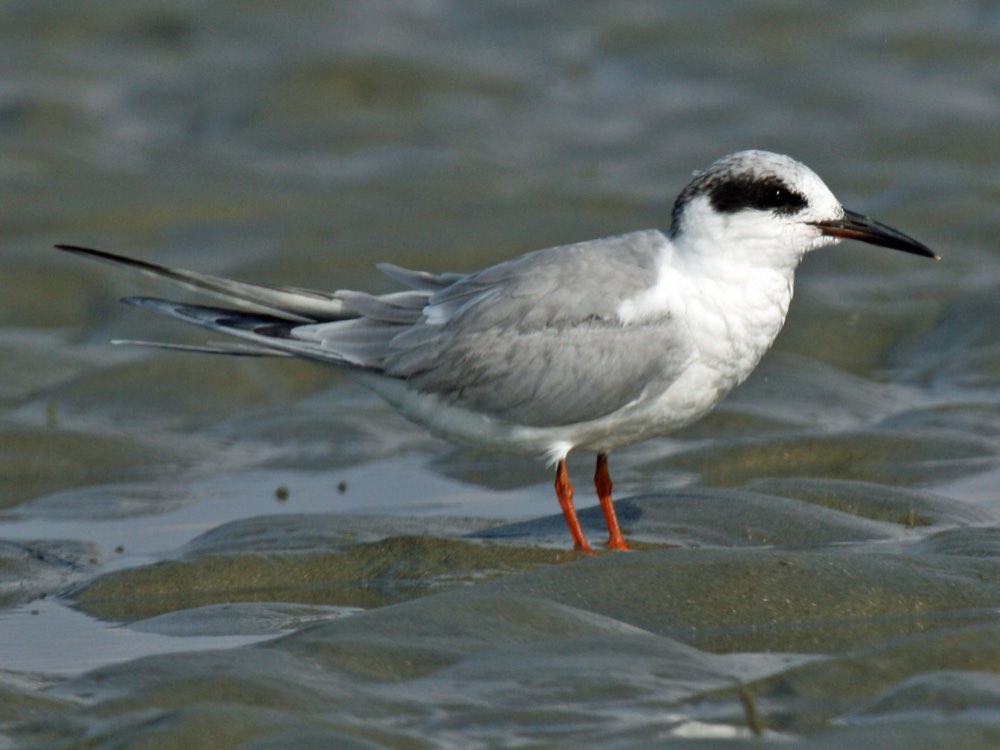
Identical to the male in the field.
Male photo: Dick Daniels (https://theworldbirds.org/) / Wikimedia, CC BY-SA 3.0 · Second photo: Dick Daniels (http://theworldbirds.org/) / Wikimedia, CC BY-SA 3.0
Field marks
- Silvery-white primaries that catch the light, with no dark wedge
- Isolated black eye patch on a white head in winter
- Tail streamers extending past the wingtips at rest
- Overall frostier and paler than a Common Tern
Similar species
What it sounds like
A low, harsh, nasal "kyarr", shorter and lower than a Common Tern’s.
Behaviour that gives it away
Nests on floating mats of marsh vegetation rather than sand, so it is far more a marsh bird than a beach one.
Habitat & range
Freshwater and salt marshes, lakes and coastal bays.
When you'll see it
Depending on where in North America you are, it is a summer visitor that arrives to breed and a winter visitor.
What it eats
Small fish and aquatic insects taken by plunging or hawking over the water.
Did you know?
It is the only tern almost entirely restricted to the Americas, and the only one that regularly nests on floating marsh vegetation.
Spot one yourself?
Point your camera at any bird and Aviarist identifies it in seconds — then logs it to your life list.
Get Aviarist on Google Play
More backyard birds
_RWD1.jpg)
_RWD2.jpg)
Other apps we make