How to Identify aDunlin
Calidris alpina · 6.3–8.7 in (16–22 cm)
Male vs. female
Male
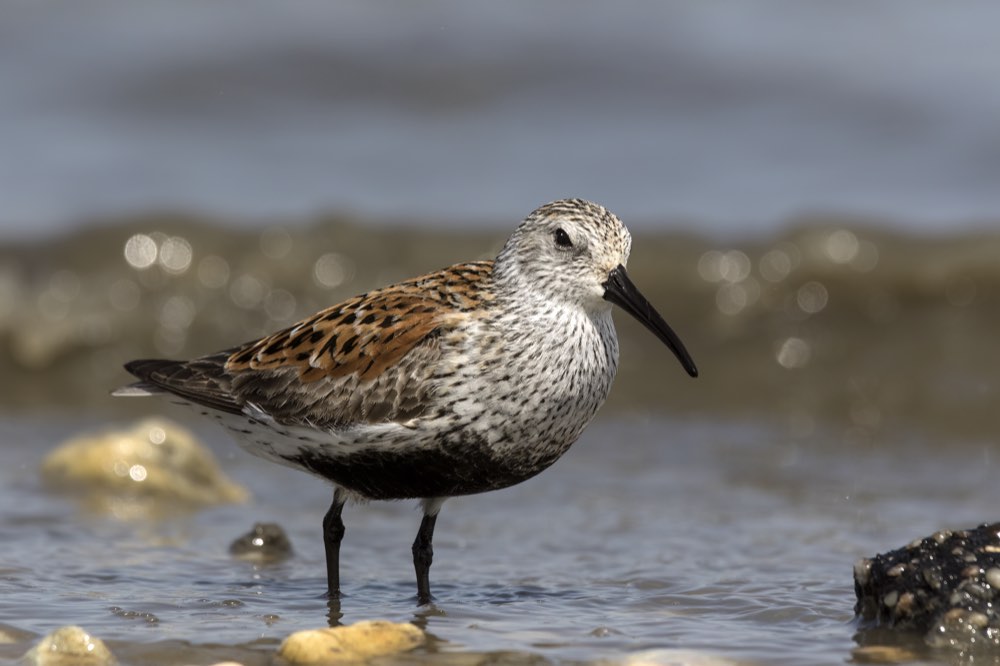
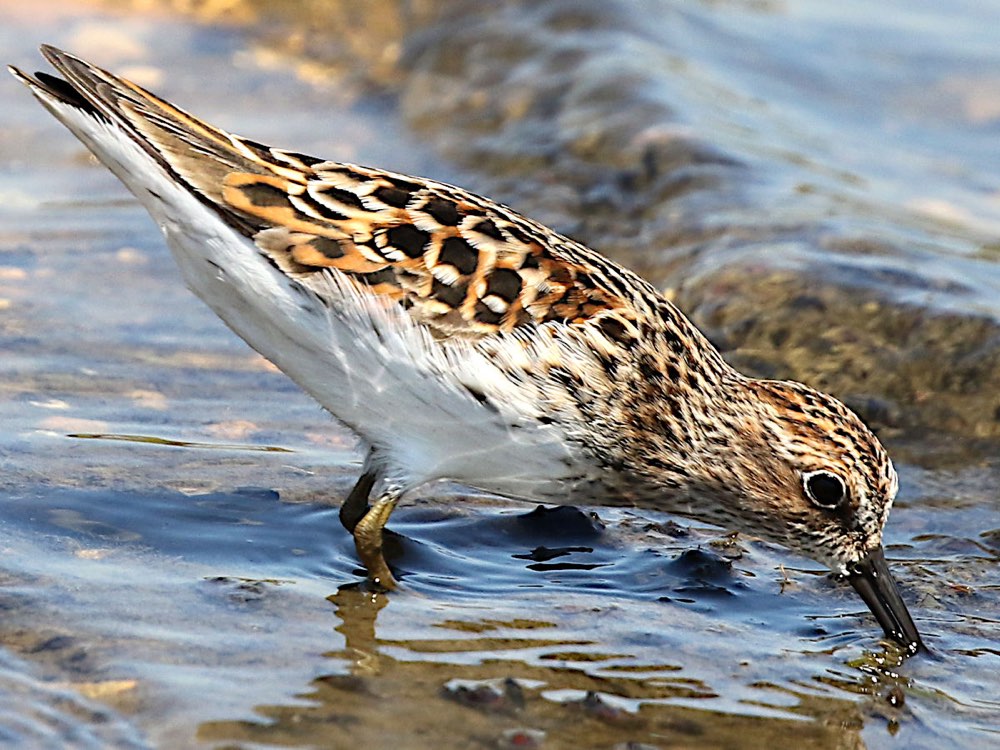
Rusty back and crown with a bold black patch across the belly in breeding plumage; plain gray-brown in winter. Sexes look alike.
Female
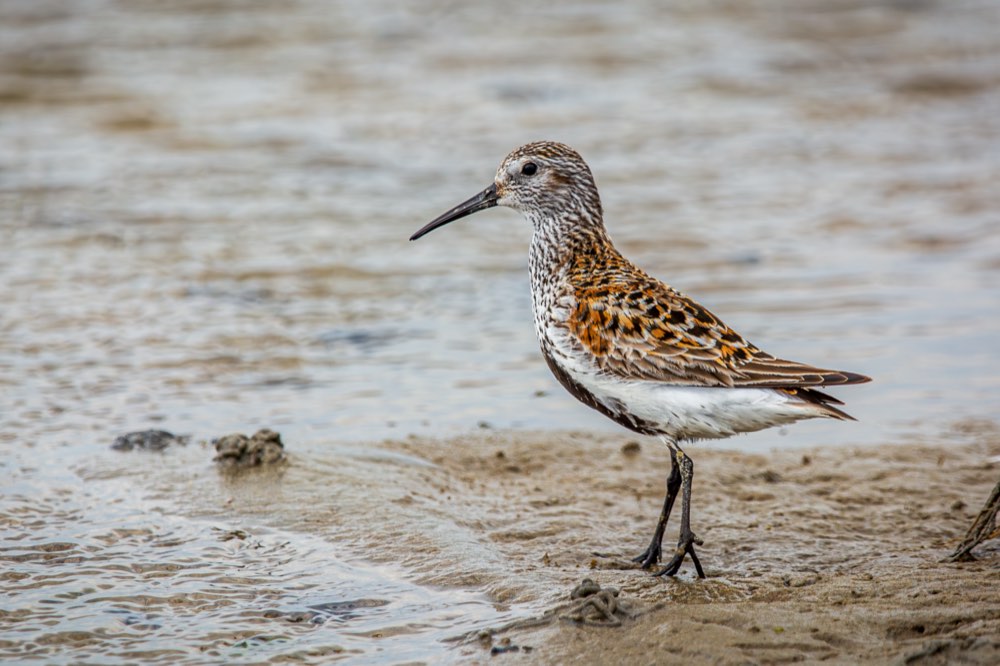
Like the male but averaging slightly longer-billed.
Male photo: Charles Homler d/b/a FocusOnWildlife / Wikimedia, CC BY-SA 4.0 · Second photo: Stephan Sprinz / Wikimedia, CC BY-SA 4.0
Field marks
- Bill long and clearly drooping at the tip
- Black belly patch in breeding plumage
- Hunched, round-shouldered posture
- Plain gray with a dusky chest in winter
Similar species
What it sounds like
A harsh, grating, rasping "kreep" given in flight.
Behaviour that gives it away
Winters in dense flocks that wheel in tight synchrony, flashing dark and light as the whole group turns.
Habitat & range
Mudflats, beaches and estuaries in winter; Arctic tundra in summer.
When you'll see it
Depending on where in North America you are, it is a winter visitor and a passage migrant, seen mainly in spring and autumn.
What it eats
Marine worms, small molluscs, crustaceans and insect larvae.
Did you know?
It was once called the Red-backed Sandpiper, and its old name Dunlin simply means "little dun-coloured bird".
Spot one yourself?
Point your camera at any bird and Aviarist identifies it in seconds — then logs it to your life list.
Get Aviarist on Google Play
More backyard birds
_in_the_Delaware_Bay_at_Heislerville_Wildlife_Management_Area,_New_Jersey,_USA.png)
_-_Spiekeroog,_Nationalpark_nieders%C3%A4chsisches_Wattenmeer.jpg)
Other apps we make