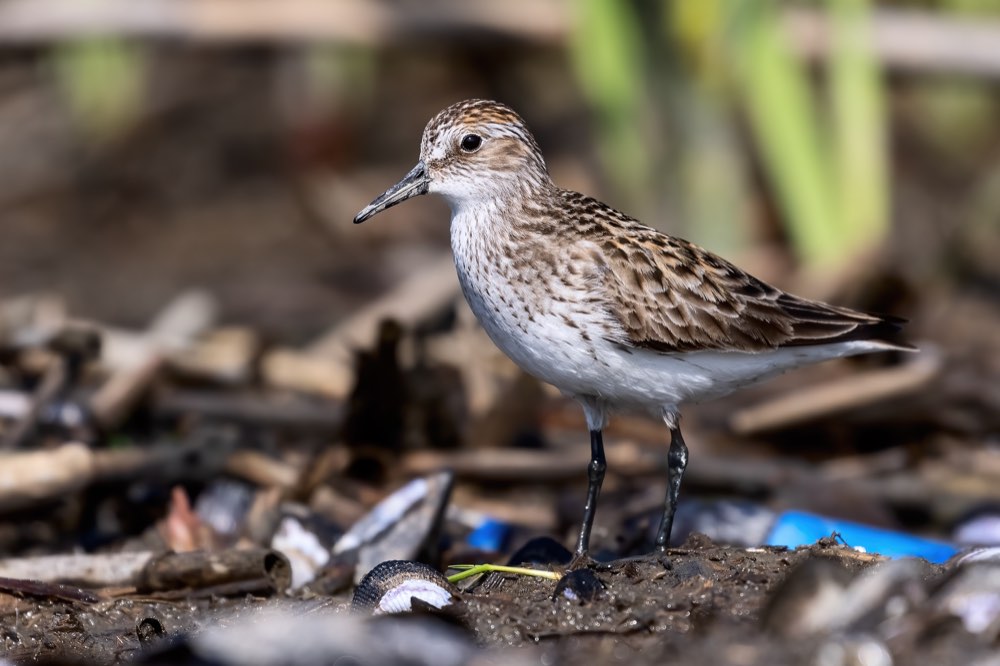
How to Identify aLeast Sandpiper
Calidris minutilla · 5.1–5.9 in (13–15 cm)
Male vs. female
Male
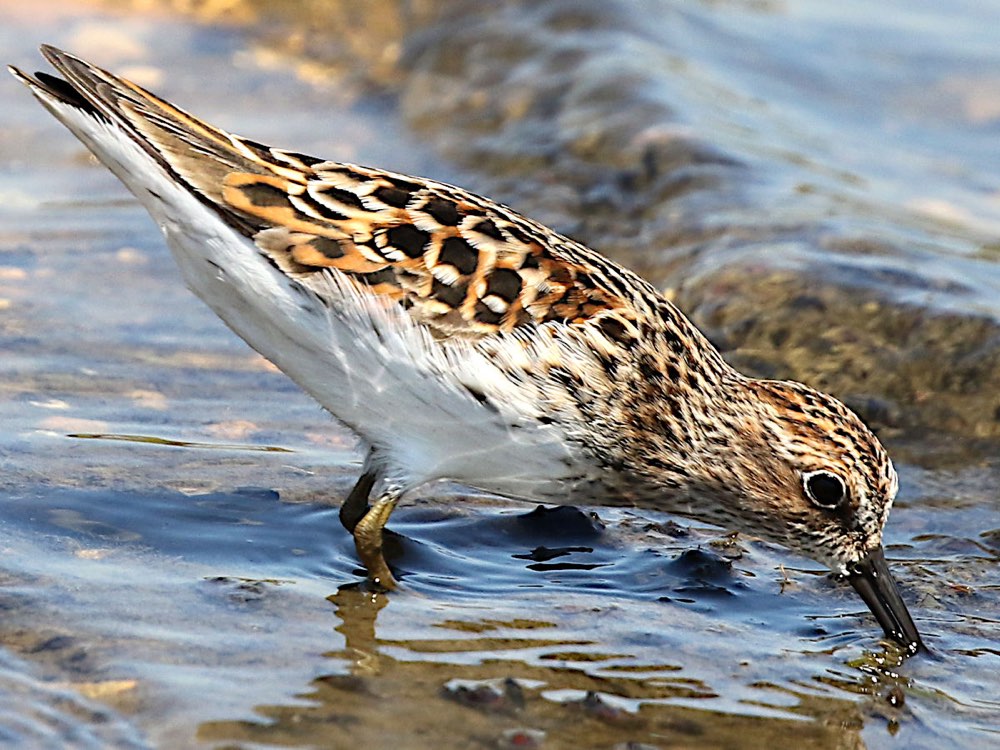
Warm brown and heavily patterned above, with a streaked chest band, a fine drooping bill and yellowish legs. Sexes look alike.
Female
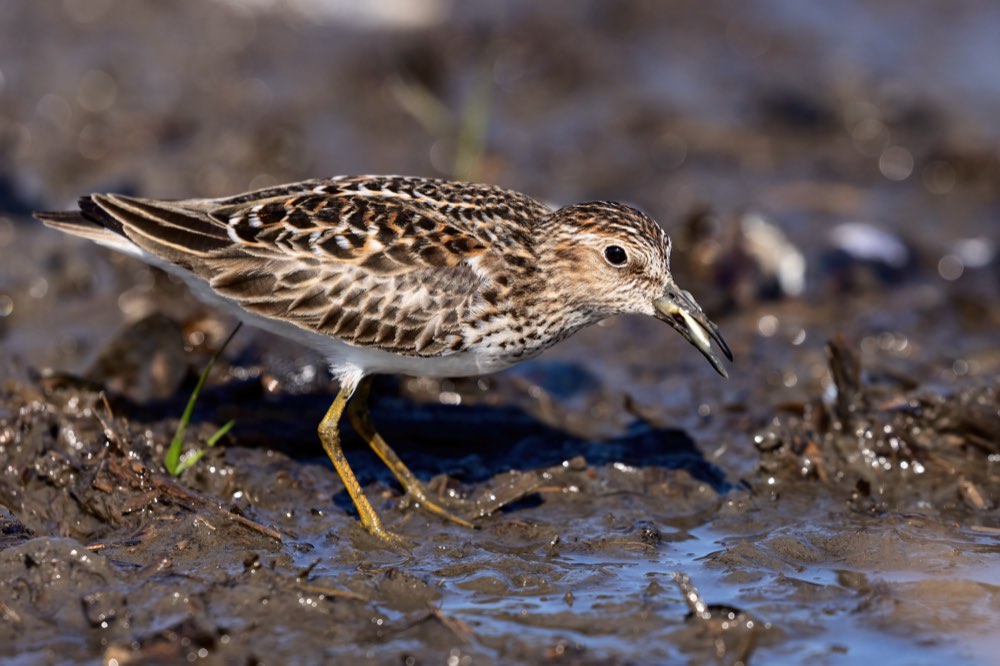
Identical to the male in the field.
Male photo: Peterwchen / Wikimedia, CC BY-SA 4.0 · Second photo: Charles Homler d/b/a FocusOnWildlife / Wikimedia, CC BY-SA 4.0
Field marks
- Yellow-green legs, not black
- Very small — noticeably tinier than other peeps
- Browner and more contrasty than similar sandpipers
- Hunched posture with a slightly drooping fine bill
Similar species
What it sounds like
A high, rising, reedy "kreee" given as it flushes.
Behaviour that gives it away
Feeds higher up the mudflat than other small sandpipers, often at the grassy margin rather than the waterline.
Habitat & range
Mudflats, pond edges, flooded fields and marsh margins on migration.
When you'll see it
Depending on where in North America you are, it is a winter visitor and a passage migrant, seen mainly in spring and autumn.
What it eats
Tiny crustaceans, insects and worms picked from mud.
Did you know?
At around 20 grams it is the smallest shorebird in the world, weighing about the same as four US quarters.
Spot one yourself?
Point your camera at any bird and Aviarist identifies it in seconds — then logs it to your life list.
Get Aviarist on Google Play
More backyard birds


Other apps we make