How to Identify aSemipalmated Sandpiper
Calidris pusilla · 5.1–5.9 in (13–15 cm)
Male vs. female
Male
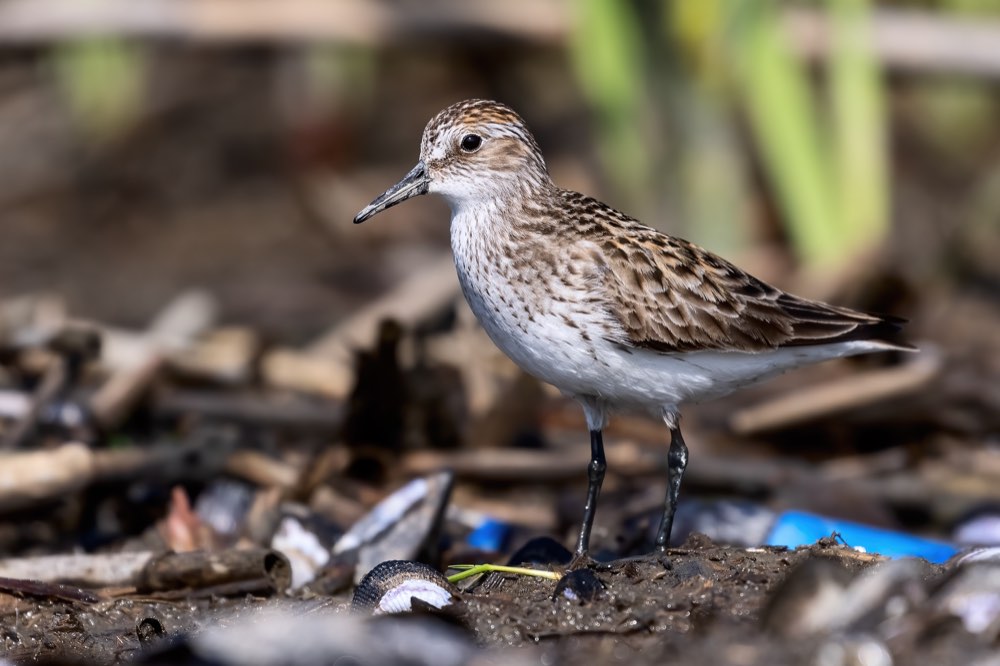
Gray-brown above, white below with a lightly streaked chest, black legs and a stubby straight bill. Sexes look alike.
Female
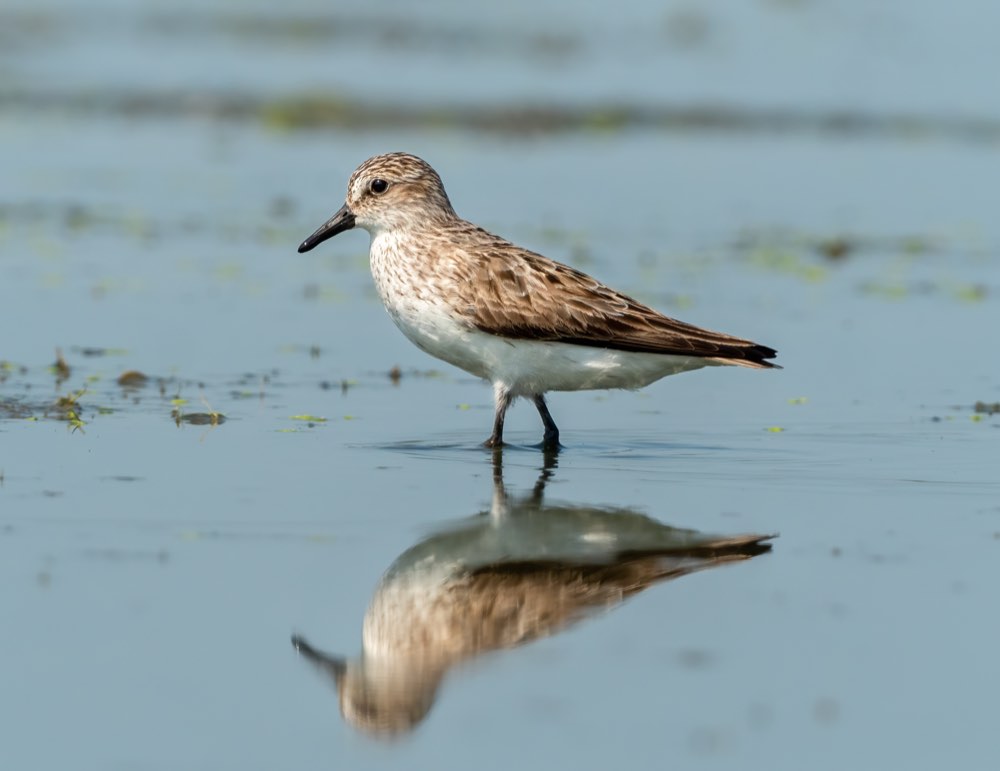
Like the male but averaging slightly longer-billed.
Male photo: Chuck Homler (FocusOnWildlife.Me) / Wikimedia, CC BY-SA 4.0 · Second photo: Rhododendrites / Wikimedia, CC BY-SA 4.0
Field marks
- Black legs
- Short straight bill with a blunt, slightly swollen tip
- Grayer and plainer than a Least Sandpiper
- Feeds in tightly packed flocks at the waterline
Similar species
What it sounds like
A short, low, husky "cherk", less shrill than other small sandpipers.
Behaviour that gives it away
Stages in enormous flocks in the Bay of Fundy, doubling its weight on mud shrimp before flying non-stop to South America.
Habitat & range
Mudflats, beaches and shallow wetlands on migration; Arctic tundra in summer.
When you'll see it
A passage migrant, seen mainly in spring and autumn in eastern, central and northern North America.
What it eats
Mud shrimp, small crustaceans, worms and insects.
Did you know?
Before its southward flight it nearly doubles its body weight on Bay of Fundy mud shrimp, then flies non-stop over the Atlantic.
Spot one yourself?
Point your camera at any bird and Aviarist identifies it in seconds — then logs it to your life list.
Get Aviarist on Google Play
More backyard birds
_-_Heislerville_Wildlife_Management_Area,_New_Jersey,_USA.png)
.jpg)
Other apps we make