How to Identify aGlossy Ibis
Plegadis falcinellus · 18.9–26 in (48–66 cm)
Male vs. female
Male
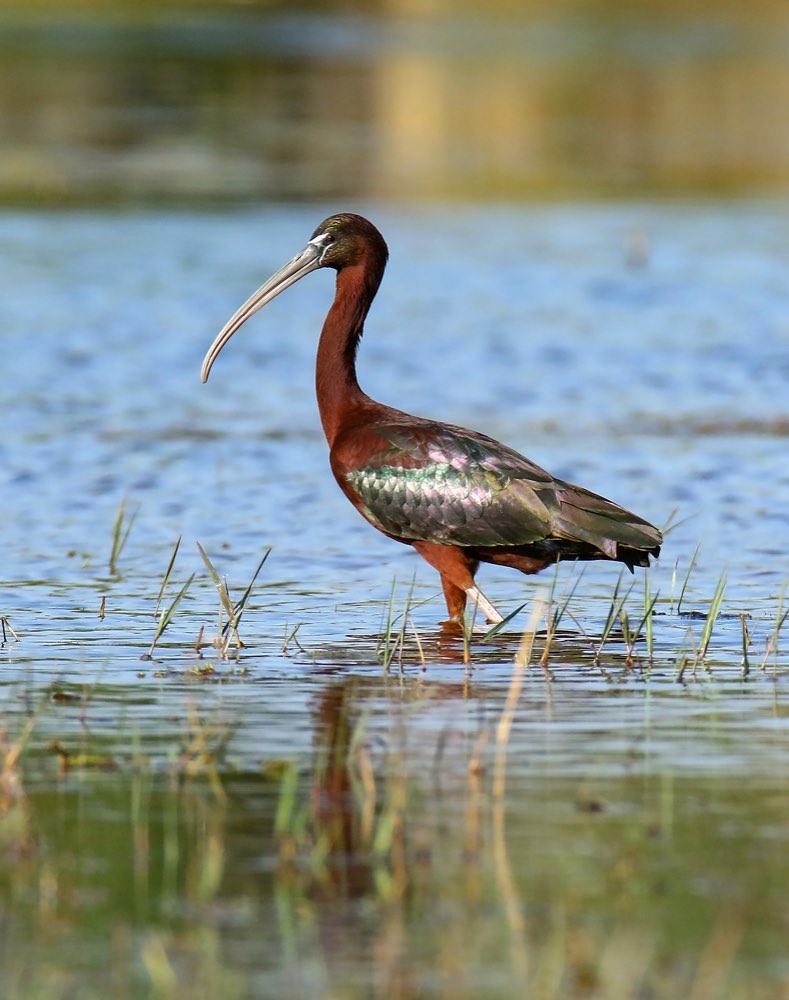
Deep chestnut body with a metallic green and purple sheen on the wings and back, and a long grayish downcurved bill. Sexes look alike.
Female
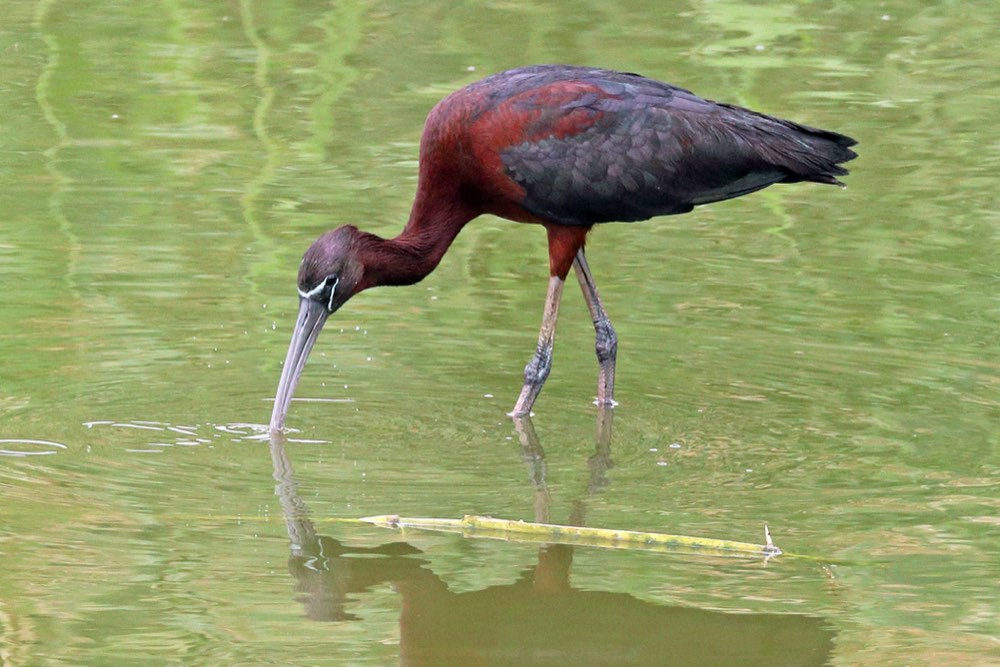
Identical to the male but slightly smaller.
Male photo: Imran Shah from Islamabad, Pakistan / Wikimedia, CC BY-SA 2.0 · Second photo: Charles J. Sharp / Wikimedia, CC BY-SA 4.0
Field marks
- Long smoothly downcurved bill
- Looks uniformly black at a distance, bronze-green in sunlight
- Thin pale line around the bare facial skin
- Flies with the neck outstretched and legs trailing
Similar species
What it sounds like
A low grunting and a nasal bleating around colonies; usually silent otherwise.
Behaviour that gives it away
Probes deep in soft mud by feel, sweeping the bill from side to side until it touches prey.
Habitat & range
Coastal marshes, flooded fields, ponds and mudflats along the Atlantic and Gulf coasts.
When you'll see it
Depending on where in eastern and southeastern North America you are, it is present all year and a summer visitor that arrives to breed.
What it eats
Crayfish, insects, worms and small aquatic animals located by touch.
Did you know?
It is one of very few wading birds found on every continent except Antarctica, and reached the Americas from Africa on its own.
Spot one yourself?
Point your camera at any bird and Aviarist identifies it in seconds — then logs it to your life list.
Get Aviarist on Google Play
More backyard birds
_(49073334802).jpg)
.jpg)
Other apps we make