How to Identify aGreat Black-backed Gull
Larus marinus · 28–31 in (71–79 cm)
Male vs. female
Male
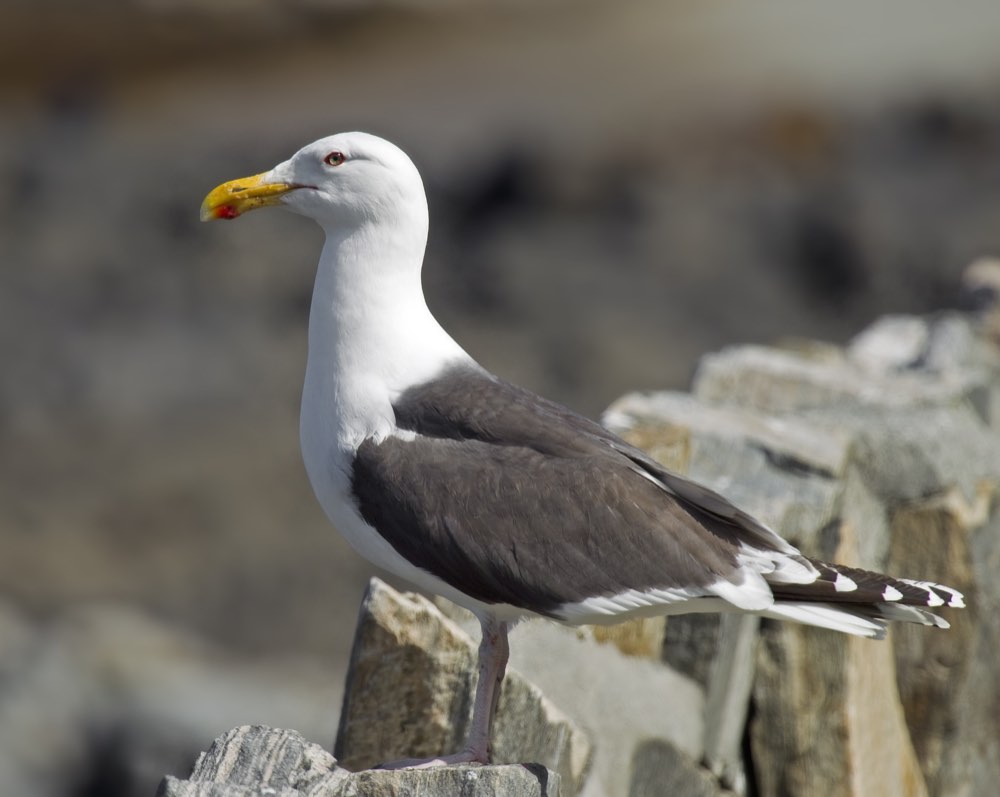
White head and body with a black back and wings, pale pink legs and a very heavy yellow bill with a red spot. Sexes look alike.
Female
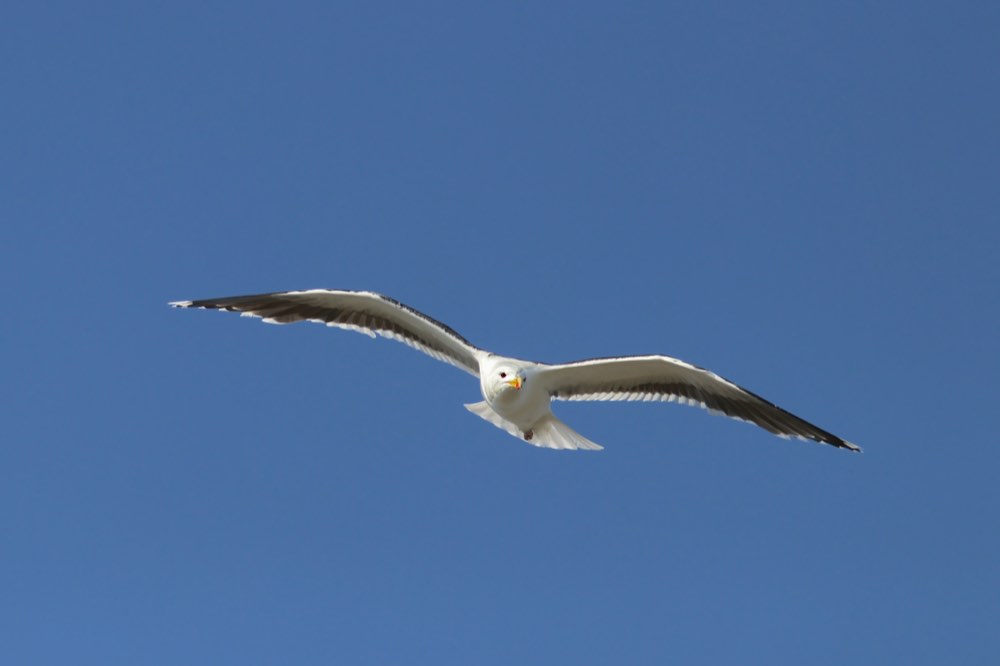
Identical to the male but smaller.
Male photo: Andreas Trepte / Wikimedia, CC BY-SA 2.5 · Second photo: Charles J. Sharp / Wikimedia, CC BY-SA 4.0
Field marks
- Very large, noticeably bigger than any other gull present
- Slaty-black back and wings
- Massive bill with a pronounced hooked tip
- Pink legs
Similar species
What it sounds like
A deep, hoarse, gruff "owk", much lower than other gulls.
Behaviour that gives it away
A dominant predator on the coast, taking ducks, puffins and the chicks of other seabirds whole.
Habitat & range
Coasts, harbours, landfills and large lakes in the Northeast.
When you'll see it
Depending on where in eastern and northern North America you are, it is present all year and a winter visitor.
What it eats
Fish, birds, eggs, carrion and refuse.
Did you know?
It is the world’s largest gull, and routinely swallows smaller seabirds whole.
Spot one yourself?
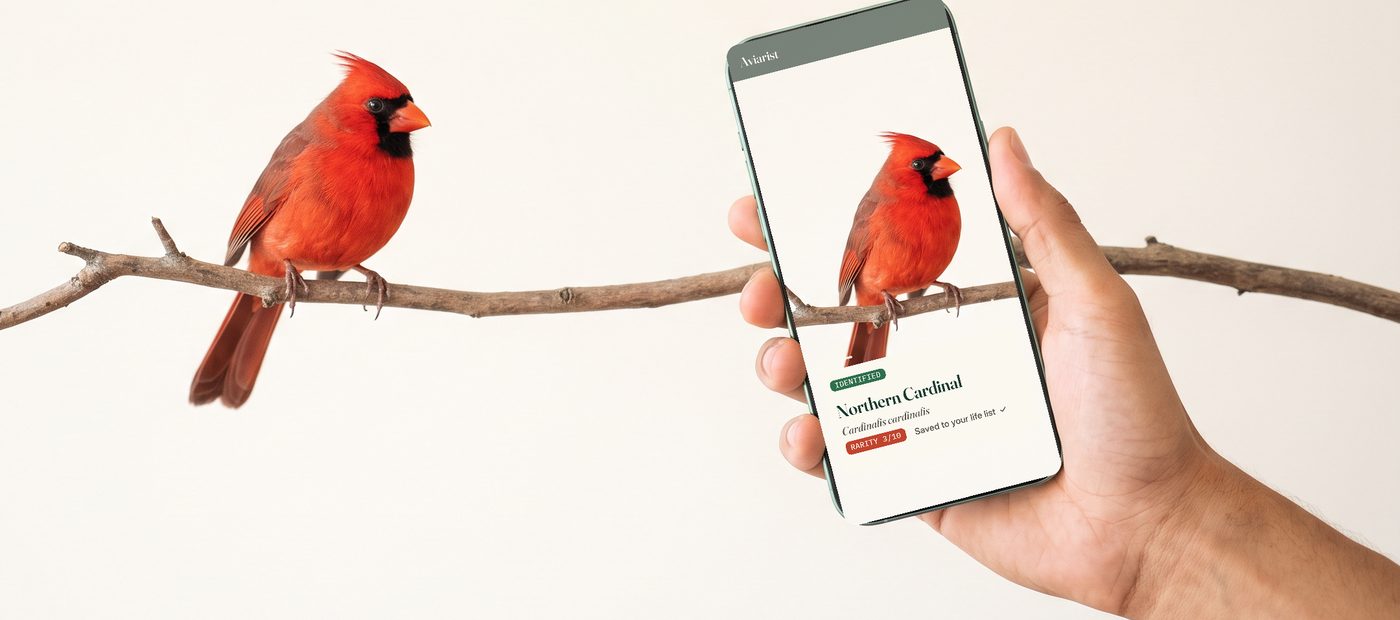
Point your camera at any bird and Aviarist identifies it in seconds — then logs it to your life list.
Get Aviarist on Google Play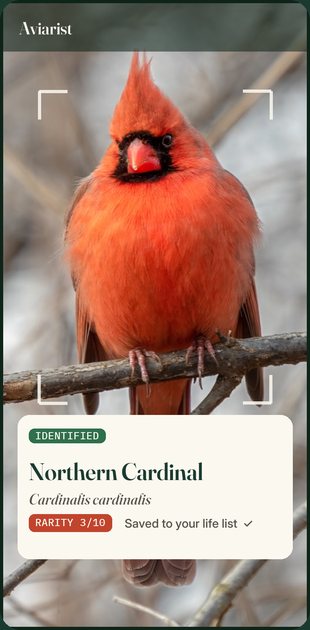
More backyard birds

_in_flight.jpg)
Other apps we make