How to Identify aLittle Blue Heron
Egretta caerulea · 22.1–29.1 in (56–74 cm)
Male vs. female
Male
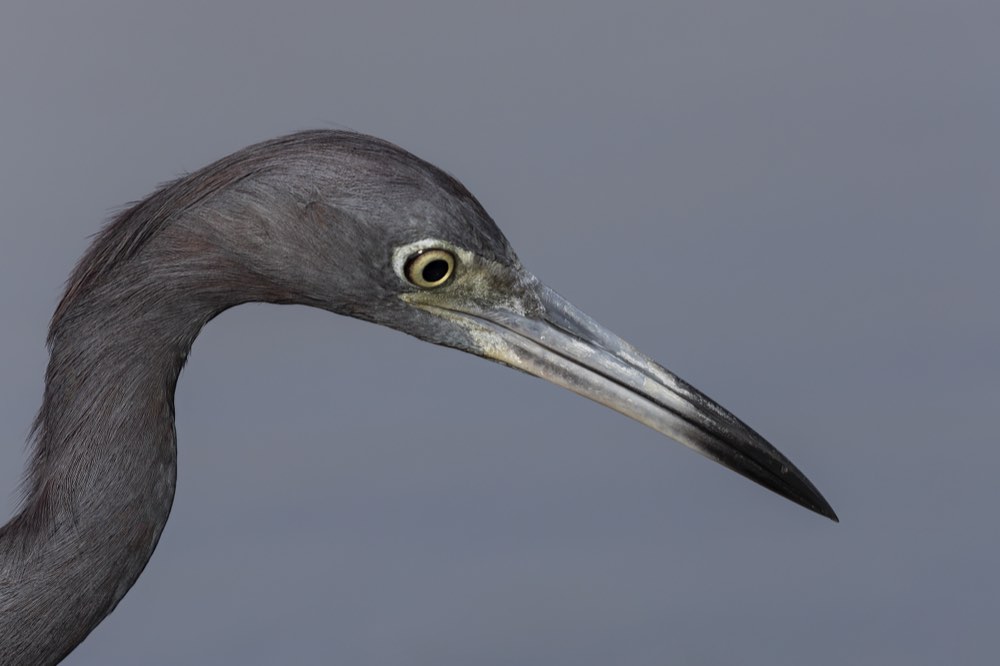
Deep slate-blue body with a rich purple-maroon head and neck, and a gray bill with a black tip. Sexes look alike.
Female
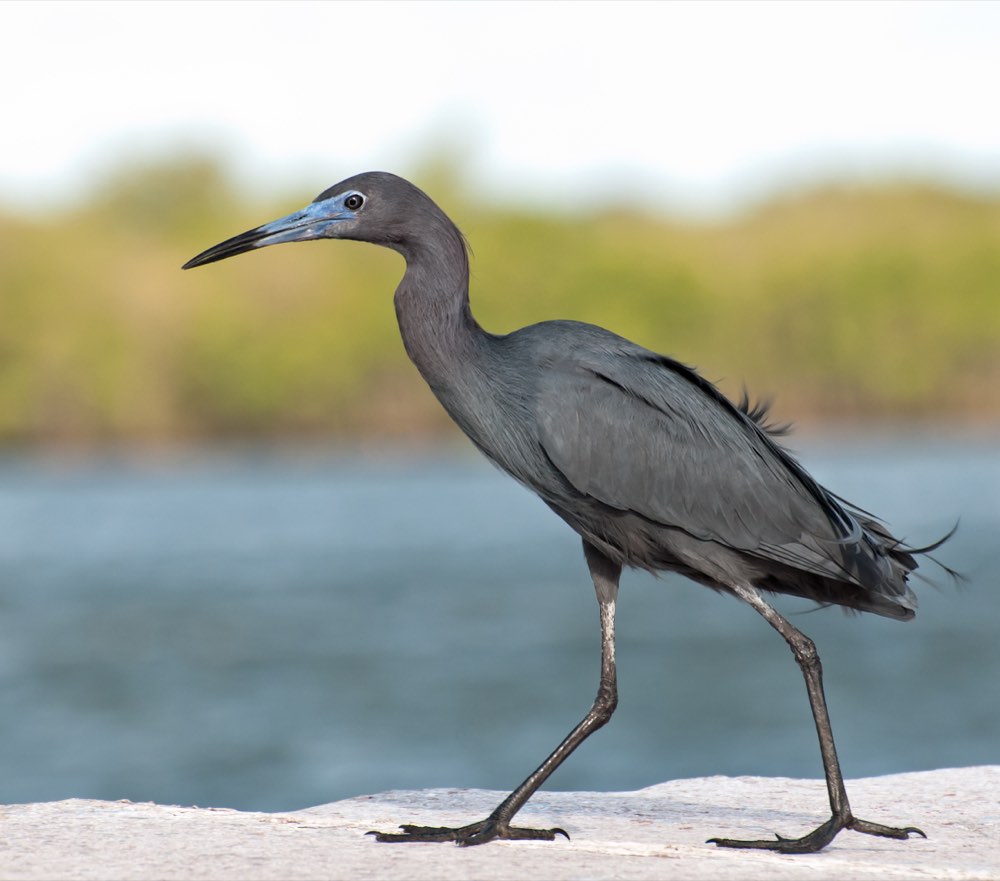
Identical to the male in the field.
Male photo: Chuck Homler (FocusOnWildlife.Me) / Wikimedia, CC BY-SA 4.0 · Second photo: Dario Sanches from São Paulo, Brazil / Wikimedia, CC BY-SA 2.0
Field marks
- Uniform dark slate-blue with a maroon-tinged head
- Bill pale gray at the base, sharply black at the tip
- Greenish legs
- First-year birds entirely white with the same two-toned bill
Similar species
What it sounds like
A low croaking squawk, mostly at the colony.
Behaviour that gives it away
Spends its first year in white plumage, which lets it feed alongside Snowy Egrets and apparently be tolerated by them.
Habitat & range
Marshes, swamps, ponds and coastal shallows across the Southeast.
When you'll see it
Depending on where in southeastern, eastern and central North America you are, it is present all year and a summer visitor that arrives to breed.
What it eats
Fish, crayfish, frogs and insects stalked slowly in shallow water.
Did you know?
Young birds are white for their whole first year, and mixed-age flocks look like two different species standing together.

Spot one yourself?
Point your camera at any bird and Aviarist identifies it in seconds — then logs it to your life list.
Get Aviarist on Google Play
More backyard birds






Other apps we make