How to Identify aTricolored Heron
Egretta tricolor · 24–26 in (61–66 cm)
Male vs. female
Male
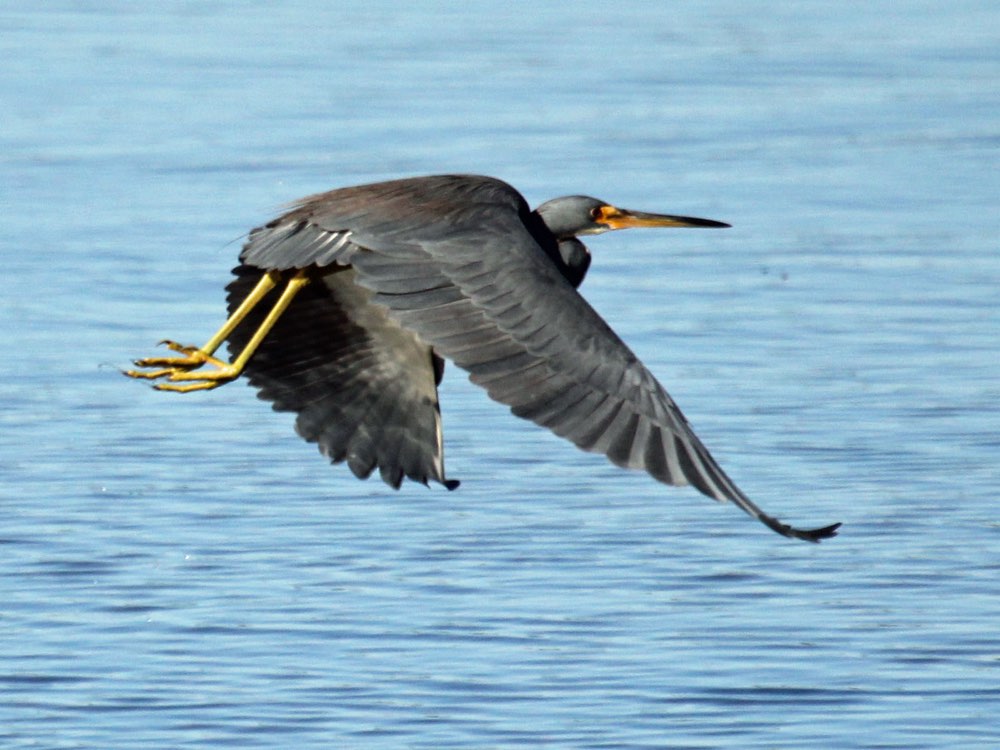
Blue-gray head, neck and back with a rusty stripe down the foreneck and a clean white belly and underwing. Sexes look alike.
Female
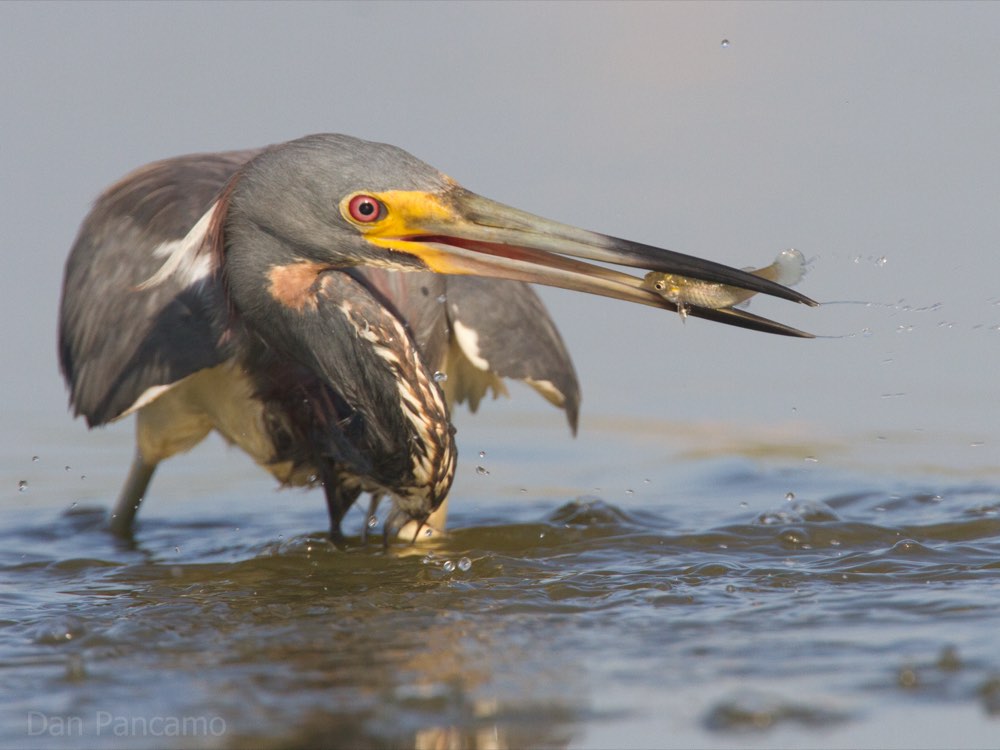
Identical to the male in the field.
Male photo: DickDaniels (http://theworldbirds.org/) / Wikimedia, CC BY-SA 3.0 · Second photo: Dan Pancamo / Wikimedia, CC BY-SA 2.0
Field marks
- White belly contrasting sharply with a dark blue-gray chest
- Very long thin neck and long bill
- White stripe running down the front of the neck
- White underwings flashing in flight
Similar species
What it sounds like
A harsh nasal squawk, usually when flushed.
Behaviour that gives it away
Hunts far more actively than most herons, running, lurching and dashing through shallows rather than standing still.
Habitat & range
Coastal marshes, mangroves, estuaries and ponds along the Southeast and Gulf.
When you'll see it
Present all year in southeastern and eastern North America.
What it eats
Small fish, crustaceans and amphibians.
Did you know?
It was long called the Louisiana Heron, and is the most active hunter among North American herons, often sprinting after fish.
Spot one yourself?
Point your camera at any bird and Aviarist identifies it in seconds — then logs it to your life list.
Get Aviarist on Google Play
More backyard birds
_RWD5.jpg)

Other apps we make