How to Identify aLong-eared Owl
Asio otus · 13.8–15.8 in (35–40 cm)
Male vs. female
Male
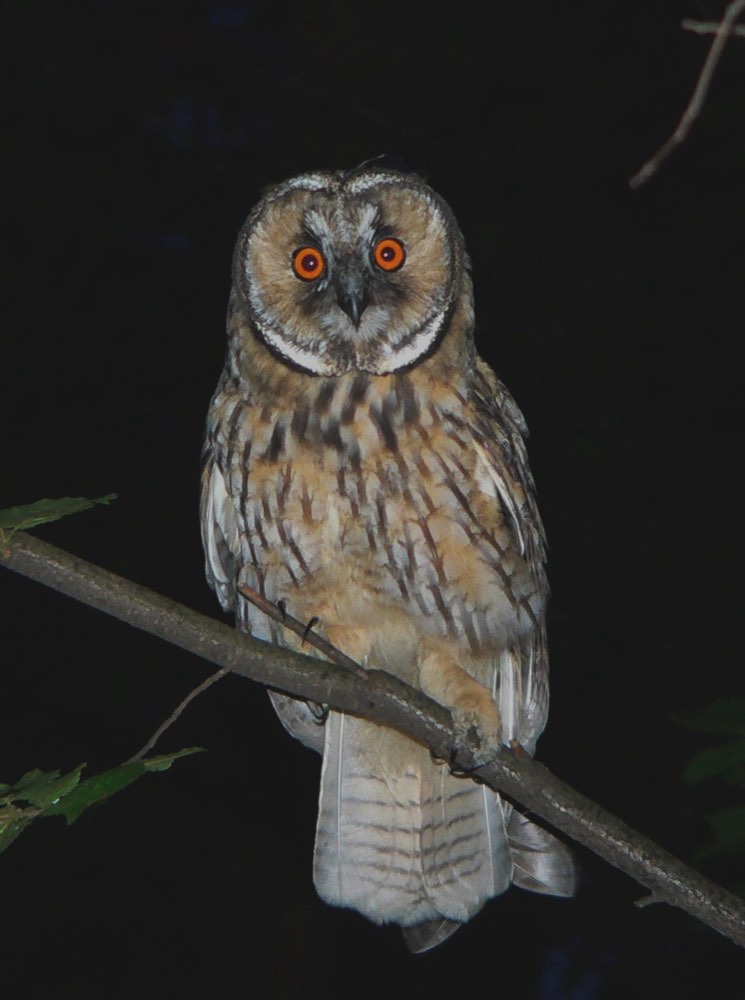
Mottled brown with a rich orange facial disc, vertical black streaks down the belly and long ear tufts set close together. Sexes look alike.
Female
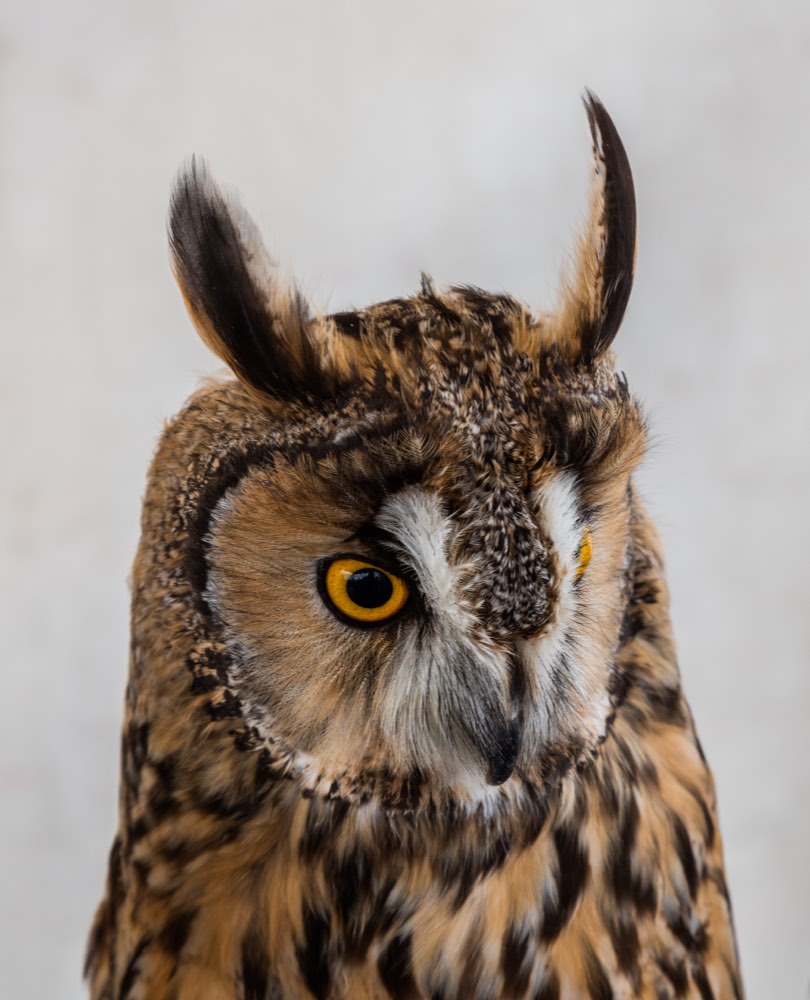
Like the male but usually darker and richer in colour.
Male photo: photo taken by Artur Mikołajewski / Wikimedia, CC BY-SA 3.0 · Second photo: Diego Delso / Wikimedia, CC BY-SA 4.0
Field marks
- Long ear tufts placed close together near the centre of the head
- Rusty-orange facial disc with black vertical marks around yellow eyes
- Slim, elongated shape when alarmed
- Vertical streaking on the belly
Similar species
What it sounds like
A low, evenly spaced, hooting "hoo… hoo… hoo", plus catlike shrieks near the nest.
Behaviour that gives it away
Roosts communally in dense conifers in winter, sometimes a dozen birds in one small stand, and stretches thin as a branch when disturbed.
Habitat & range
Dense conifer stands next to open country for hunting.
When you'll see it
Depending on where in North America you are, it is present all year and a winter visitor.
What it eats
Voles and other small rodents, hunted at night over open ground.
Did you know?
When alarmed it compresses its body and raises its ear tufts, becoming so thin and bark-like that it is easily mistaken for a broken branch.
Spot one yourself?
Point your camera at any bird and Aviarist identifies it in seconds — then logs it to your life list.
Get Aviarist on Google Play
More backyard birds

,_Arcos_de_la_Frontera,_C%C3%A1diz,_Espa%C3%B1a,_2015-12-08,_DD_04.jpg)
Other apps we make