How to Identify aProthonotary Warbler
Protonotaria citrea · 5.1 in (13 cm)
Male vs. female
Male
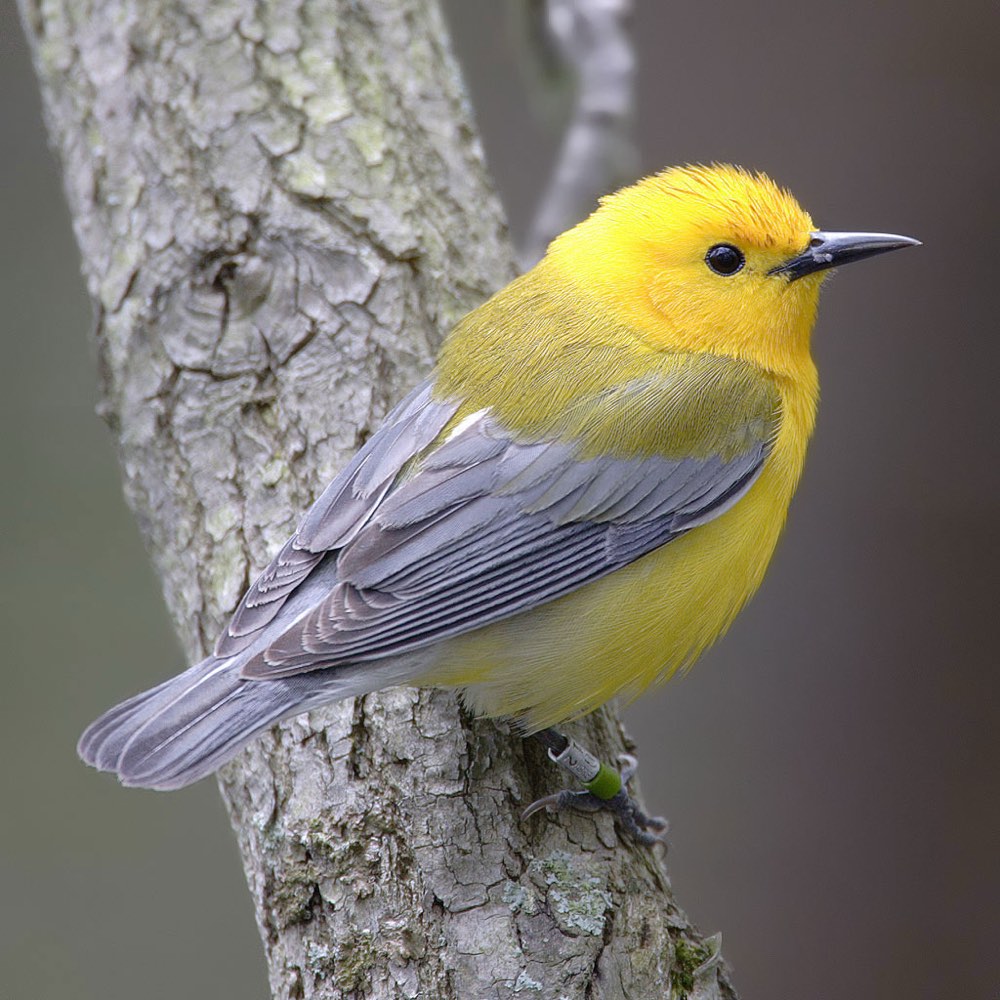
Brilliant golden-yellow head and underparts, unmarked blue-gray wings and tail, and a large black bill; dark eye on a plain face.
Female
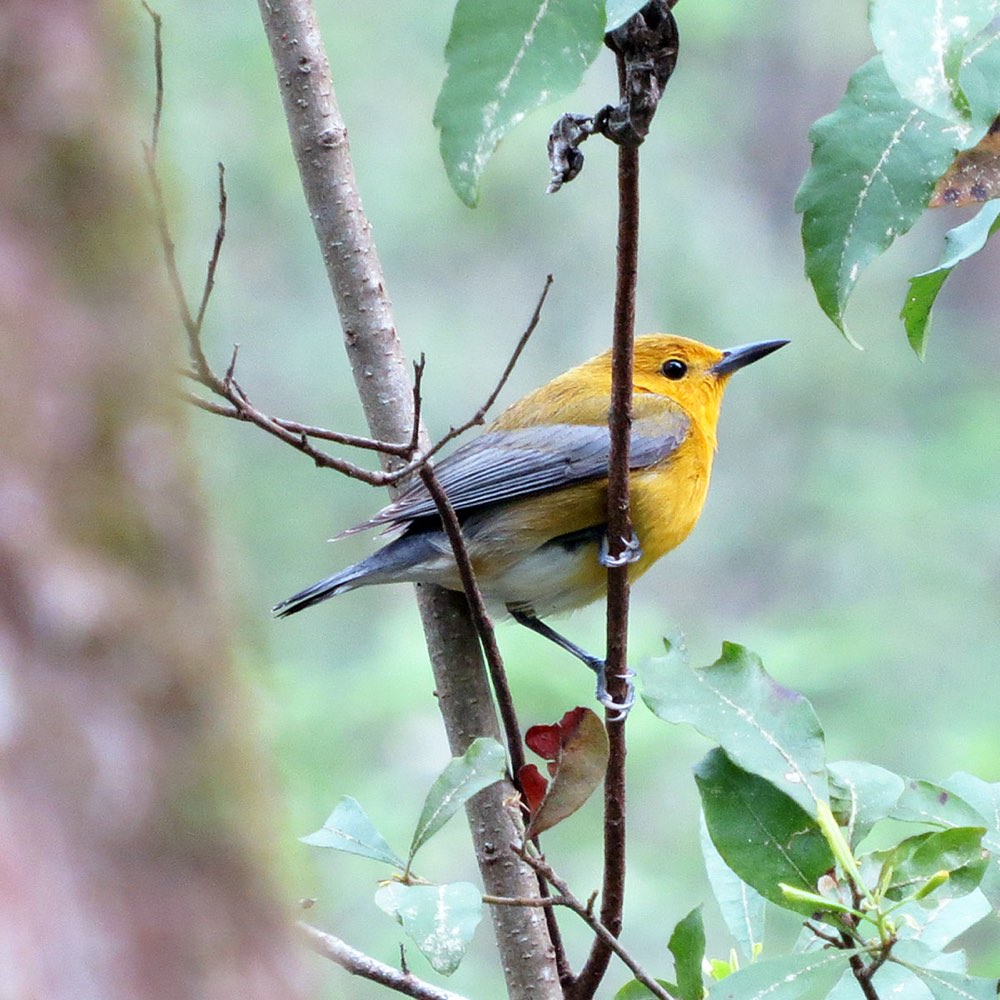
Slightly duller yellow but otherwise the same.
Male photo: Mdf, edited by Fir0002 / Wikimedia, CC BY-SA 3.0 · Female photo: Don Faulkner / Wikimedia, CC BY-SA 2.0
Field marks
- Solid golden-yellow head with no face markings at all
- Plain blue-gray wings with no wingbars
- Large black bill
- White undertail coverts
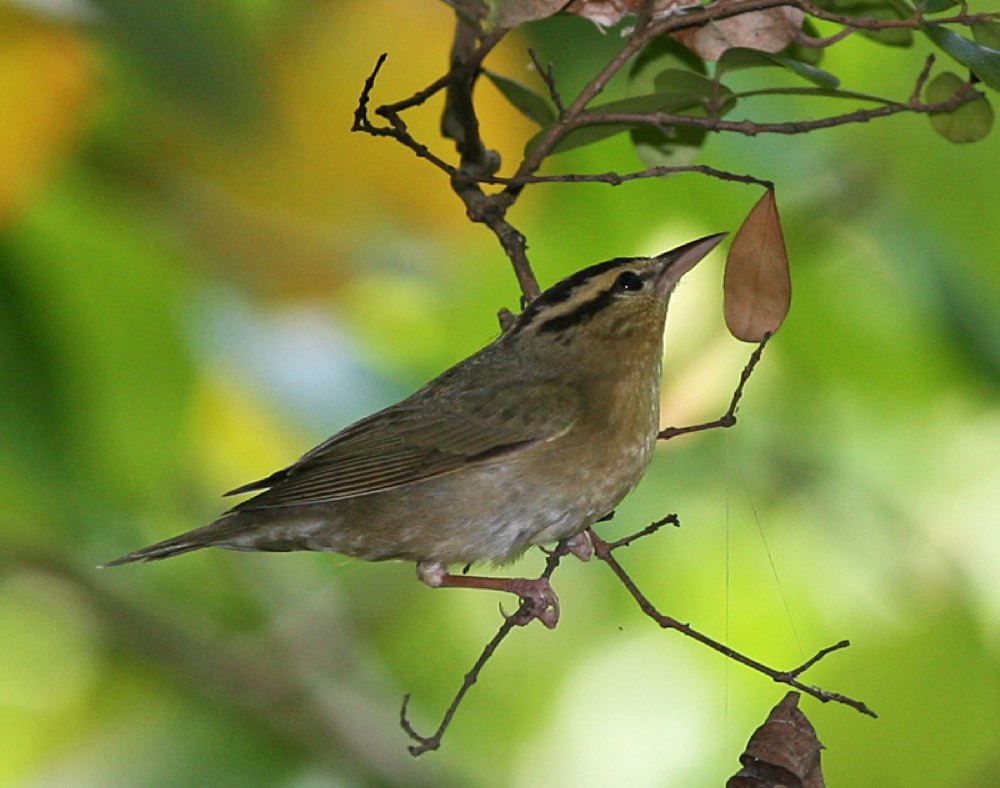
Similar species
What it sounds like
A loud, ringing, evenly pitched "sweet-sweet-sweet-sweet" that carries across a swamp.
Behaviour that gives it away
The only eastern warbler that nests in tree cavities, and it readily takes to nest boxes placed over water.
Habitat & range
Flooded bottomland forest, cypress swamps and wooded riverbanks.
When you'll see it
A summer visitor that arrives to breed in southeastern, eastern and central North America.
What it eats
Insects and snails gleaned near the water surface.
Did you know?
It is named for the golden robes of papal clerks called prothonotaries, and is the only eastern warbler to nest in holes.
Spot one yourself?
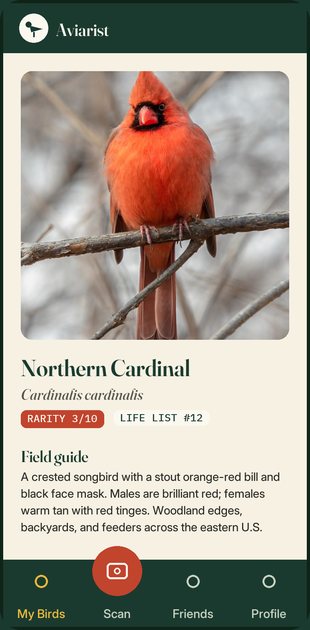
Point your camera at any bird and Aviarist identifies it in seconds — then logs it to your life list.
Get Aviarist on Google Play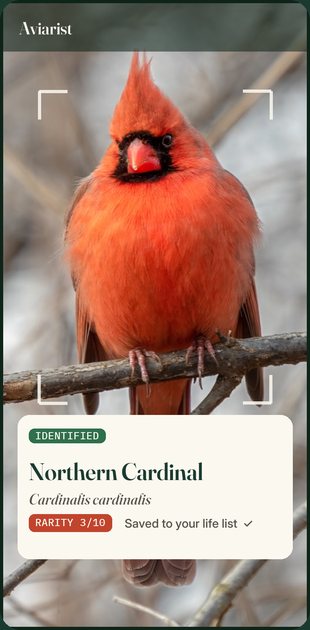
More backyard birds

_(16971116308).jpg)
Other apps we make