How to Identify aNashville Warbler
Leiothlypis ruficapilla · 4.3–5.1 in (11–13 cm)
Male vs. female
Male
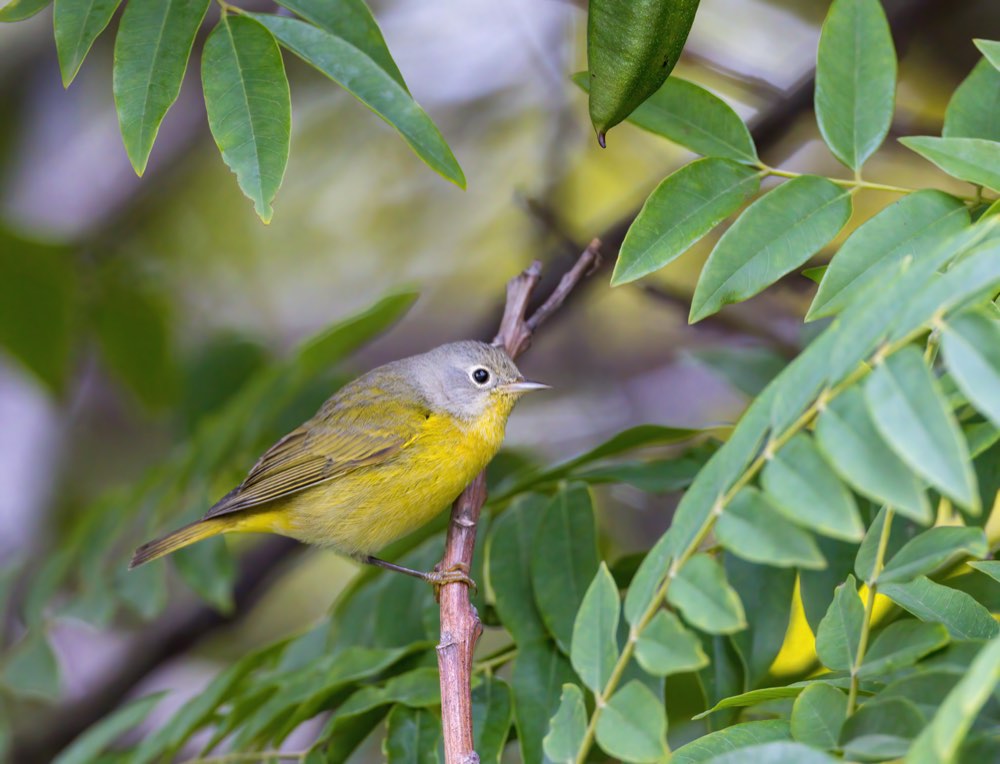
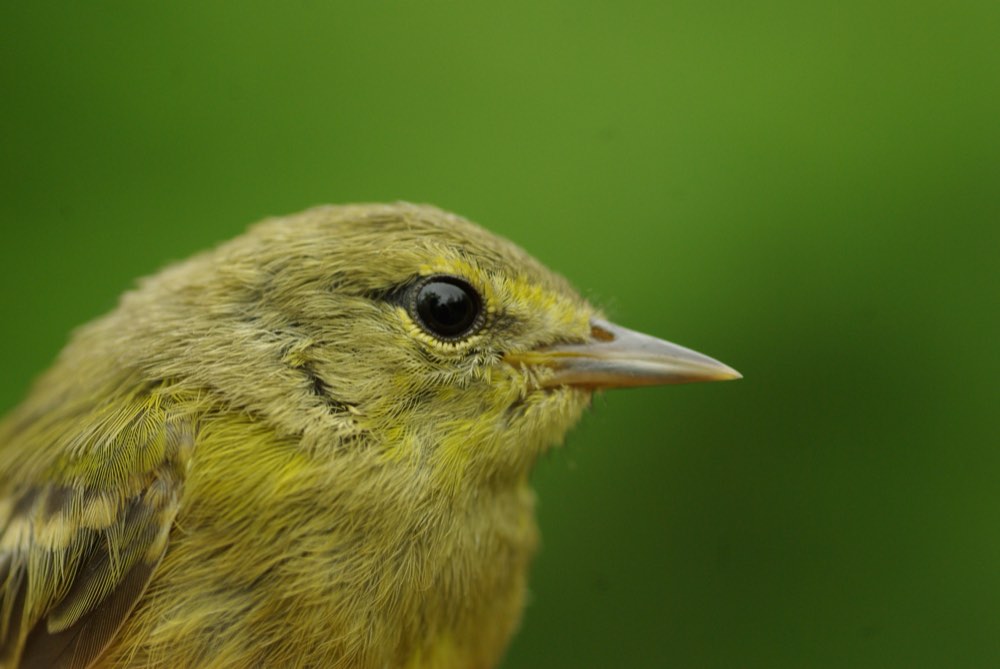
Gray head with a complete white eye-ring, olive-green back and bright yellow throat and underparts; a rusty crown patch is usually hidden.
Female
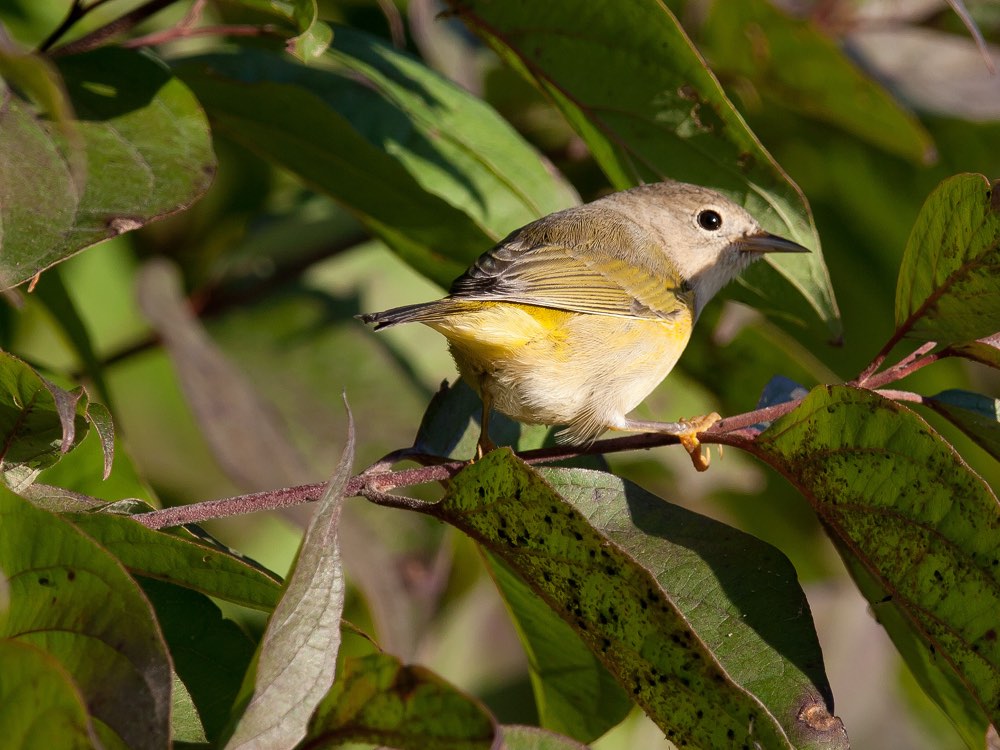
Like the male but duller, with a grayer head and no visible rusty crown.
Male photo: Channel City Camera Club from Santa Barbara, US / Wikimedia, CC BY 2.0 · Female photo: John Benson from Madison WI / Wikimedia, CC BY 2.0
Field marks
- Bold complete white eye-ring on a gray head
- Yellow throat running right up to the bill
- No wingbars
- White patch between the legs on the belly
Similar species
What it sounds like
A two-part song — a sharp "see-bit see-bit see-bit" followed by a lower rapid trill.
Behaviour that gives it away
Named from a single migrating bird collected near Nashville, a city it only passes through twice a year.
Habitat & range
Second-growth woodland, bogs and brushy forest edges.
When you'll see it
Depending on where in North America you are, it is a summer visitor that arrives to breed and a passage migrant, seen mainly in spring and autumn.
What it eats
Insects and spiders gleaned from foliage.
Did you know?
Alexander Wilson named it after Nashville, where he happened to shoot the first one — the bird neither breeds nor winters anywhere near there.
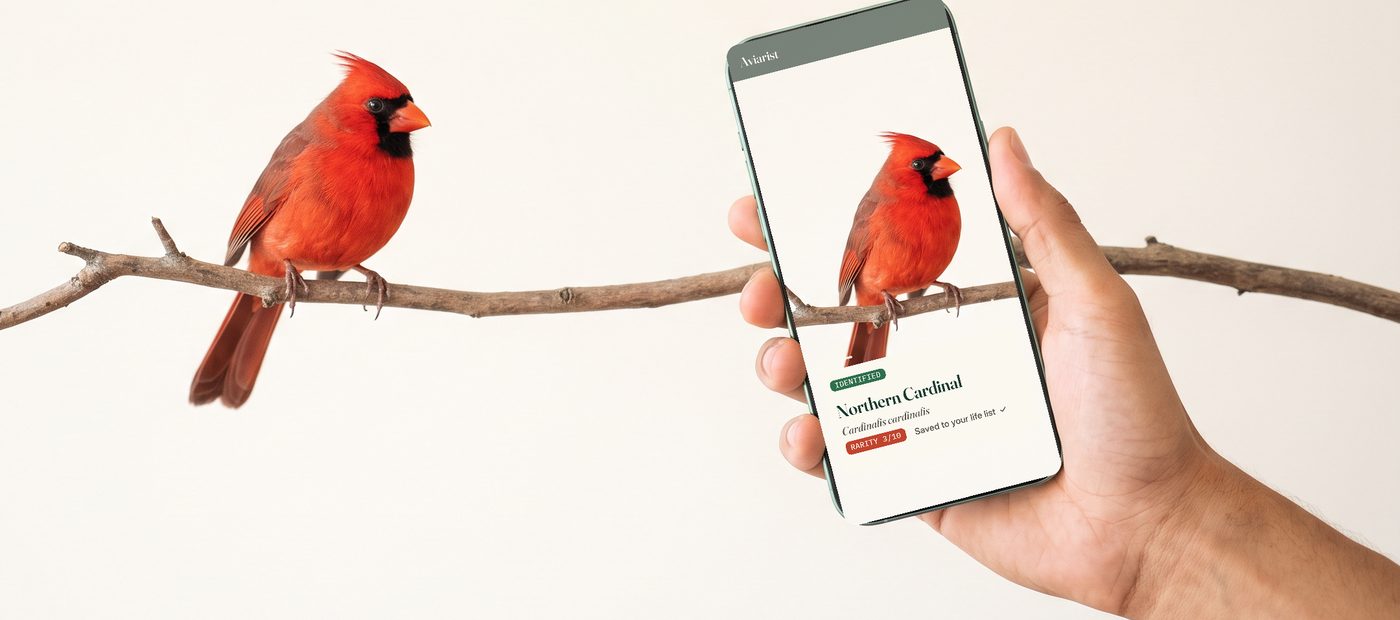
Spot one yourself?
Point your camera at any bird and Aviarist identifies it in seconds — then logs it to your life list.
Get Aviarist on Google Play
More backyard birds
.jpg)
.jpg)
Other apps we make