How to Identify aOrange-crowned Warbler
Leiothlypis celata · 4.3–5.5 in (11–14 cm)
Male vs. female
Male
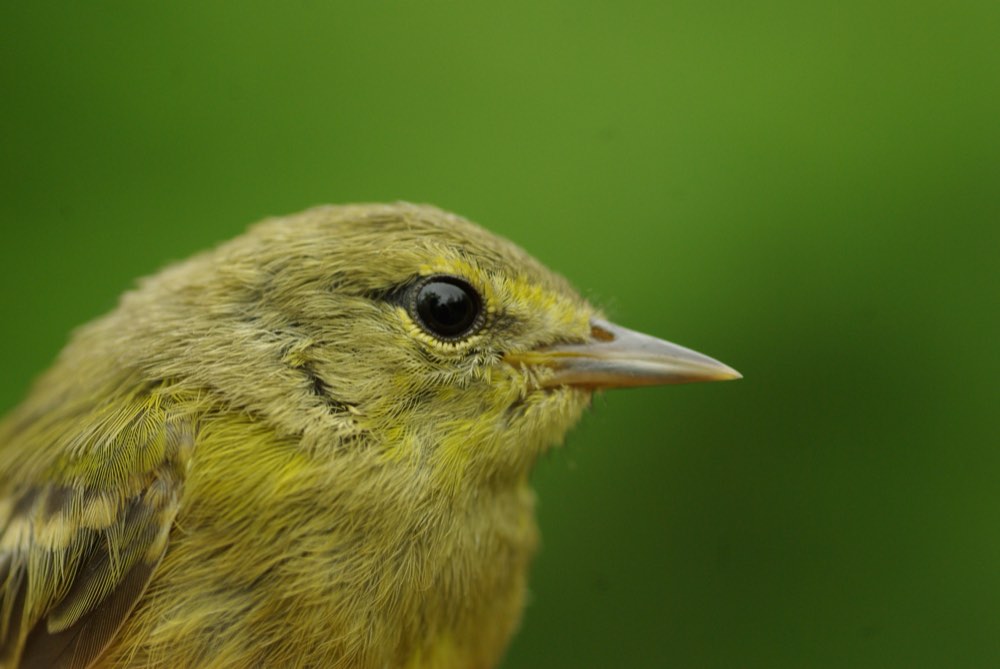
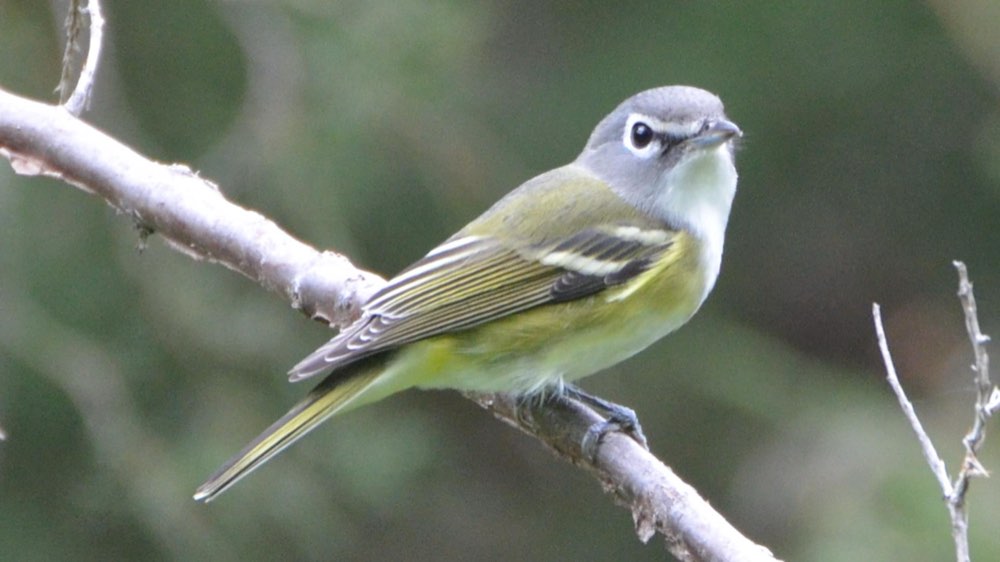
Uniform olive to grayish-olive with faint blurry breast streaking, a thin broken eye-ring and a faint dark eye-line; the orange crown is essentially never visible. Sexes look alike.
Female
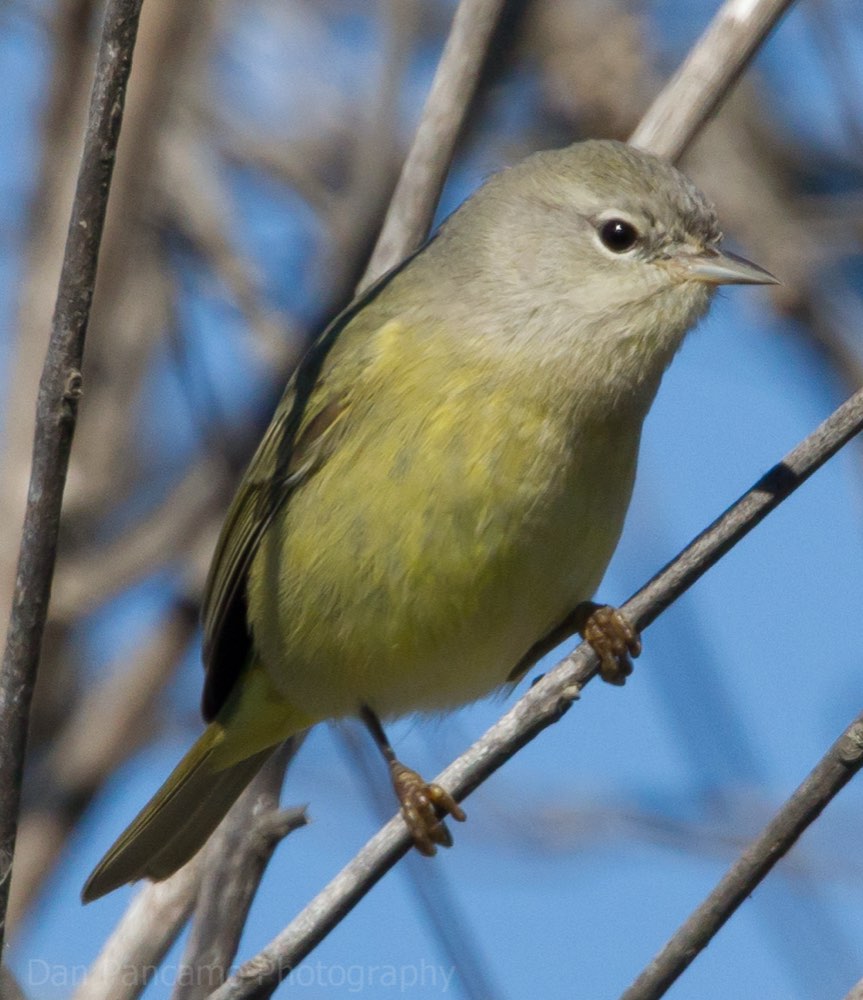
Identical to the male in the field.
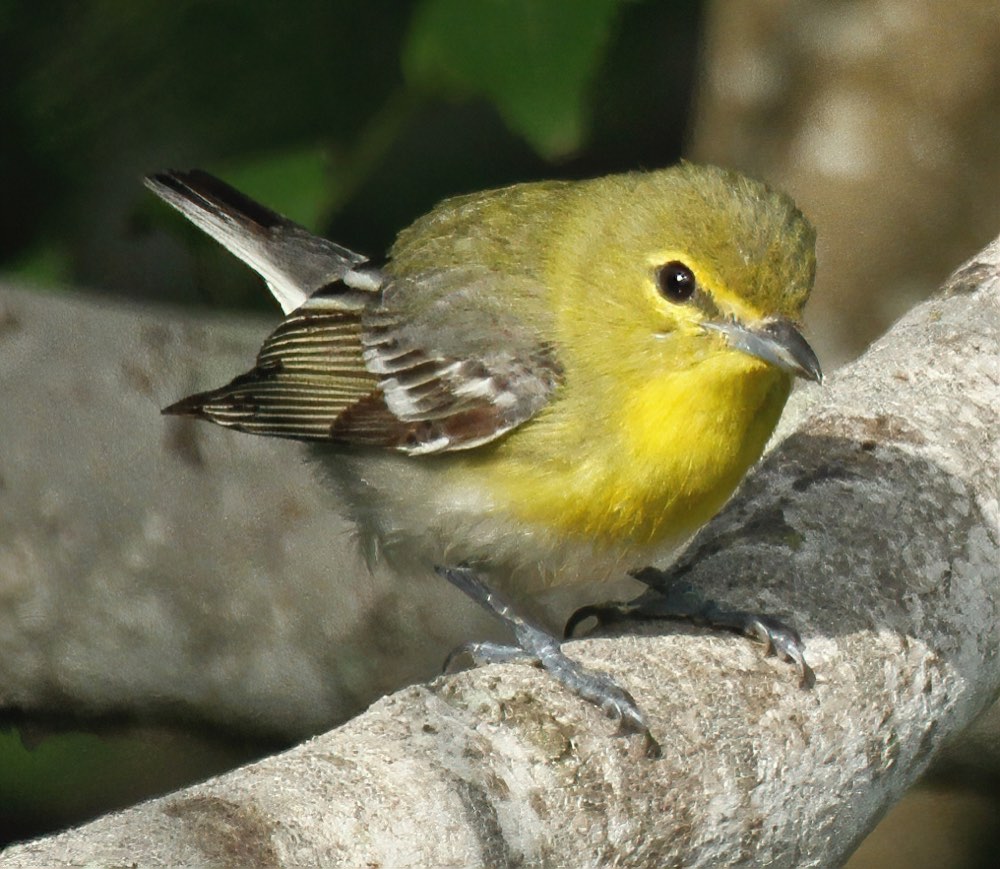
Male photo: Oregon State University / Wikimedia, CC BY-SA 2.0 · Second photo: Dan Pancamo / Wikimedia, CC BY-SA 2.0
Field marks
- No wingbars, no tail spots, no bold face pattern
- Faint blurry streaks down a dingy yellow chest
- Bright yellow undertail coverts
- Thin sharply pointed bill
Similar species
What it sounds like
A loose, dry trill that changes pitch partway through and trails off.
Behaviour that gives it away
Identified largely by what it lacks — the absence of every usual warbler mark is itself the clue.
Habitat & range
Brushy woodland, chaparral, thickets and gardens; winters commonly in the South and West.
When you'll see it
Depending on where in western, northern and southeastern North America you are, it is a winter visitor and a passage migrant, seen mainly in spring and autumn.
What it eats
Insects, spiders, berries and sap; sometimes visits feeders for suet.
Did you know?
Its orange crown is so rarely visible that most birders never see it, making the bird’s name almost useless in the field.
Spot one yourself?
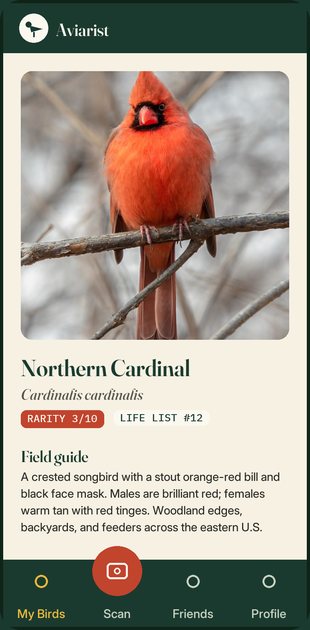
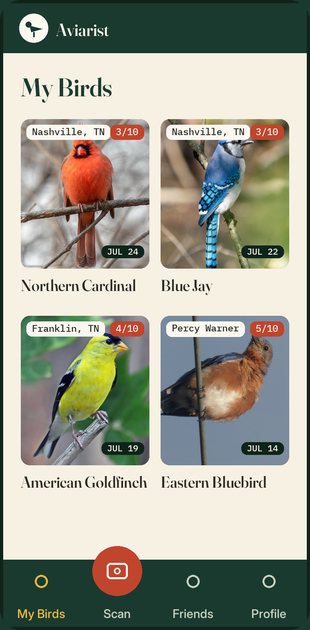
Point your camera at any bird and Aviarist identifies it in seconds — then logs it to your life list.
Get Aviarist on Google Play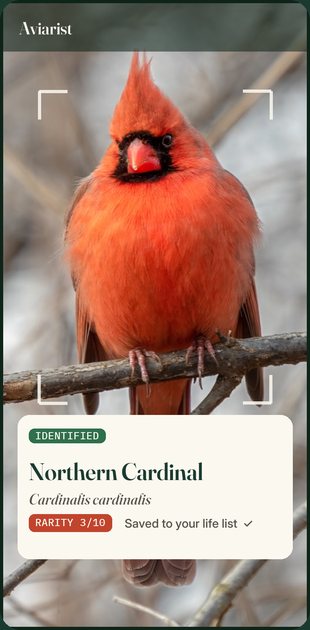
More backyard birds


Other apps we make