How to Identify aOlive-sided Flycatcher
Contopus cooperi · 7.1–7.9 in (18–20 cm)
Male vs. female
Male
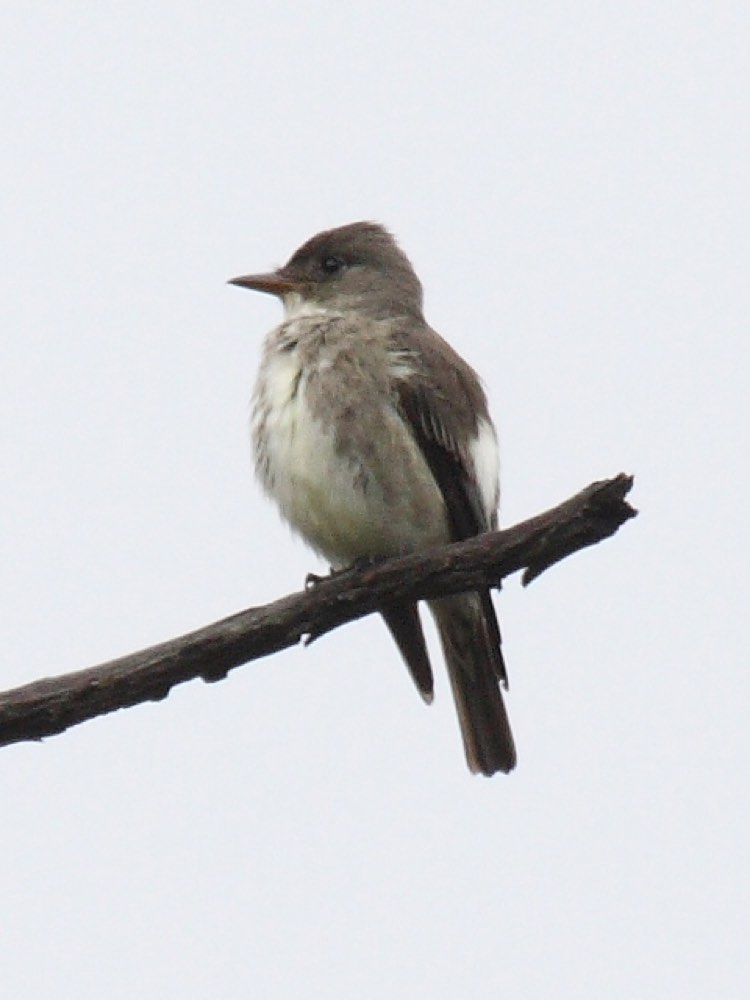
Dark olive-gray sides forming a vest around a white central stripe down the chest and belly. Sexes look alike.
Female
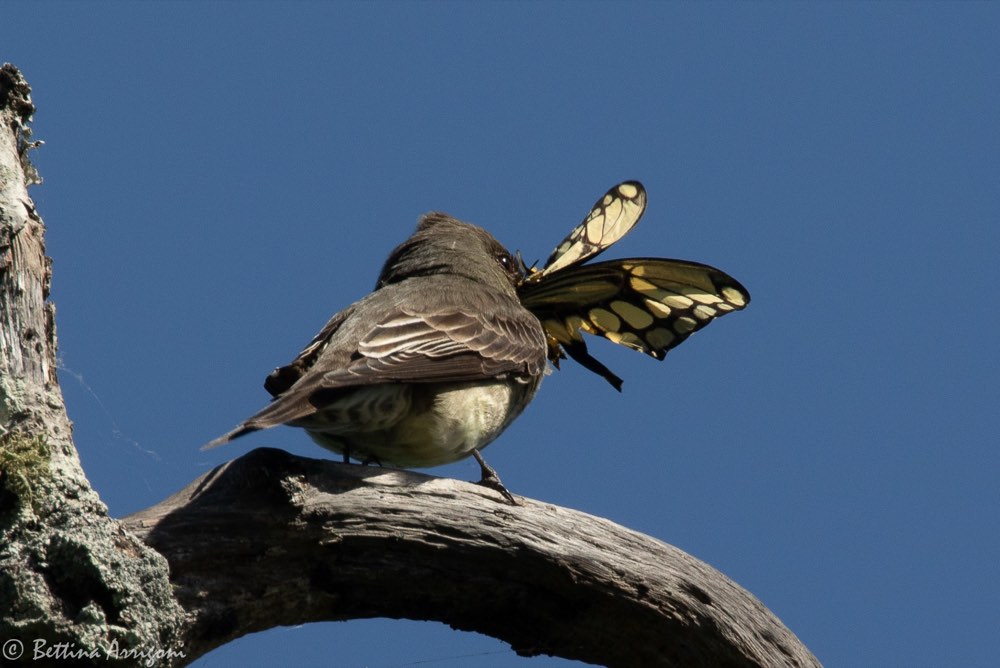
Identical to the male in the field.
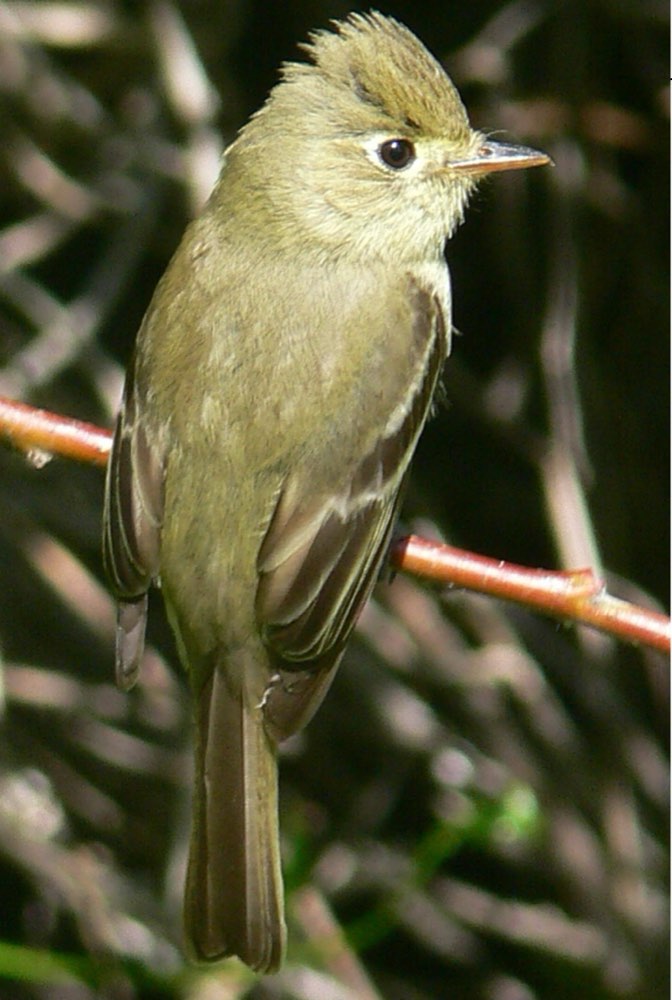
Male photo: Dominic Sherony / Wikimedia, CC BY-SA 2.0 · Second photo: Bettina Arrigoni / Wikimedia, CC BY 2.0
Field marks
- Dark sides and a white central stripe, like an unbuttoned waistcoat
- Large head and short tail giving a bull-necked look
- Perches at the very tip of dead branches
- White tufts sometimes showing at the sides of the rump
Similar species
What it sounds like
An emphatic whistled three-note "quick — THREE BEERS", the middle note highest.
Behaviour that gives it away
Almost always chooses the highest dead snag available and returns to the same perch after every sally.
Habitat & range
Boreal and mountain conifer forest, burns and bogs with standing dead trees.
When you'll see it
Depending on where in northern, western and eastern North America you are, it is a summer visitor that arrives to breed and a passage migrant, seen mainly in spring and autumn.
What it eats
Flying insects, especially bees and wasps, caught on long sallies.
Did you know?
Its whistled "quick, three beers" is one of the most quoted bird songs in North America, and carries far across burned forest.
Spot one yourself?
Point your camera at any bird and Aviarist identifies it in seconds — then logs it to your life list.
Get Aviarist on Google Play
More backyard birds

.jpg)
Other apps we make