How to Identify aPacific-slope Flycatcher
Empidonax difficilis · 5.1–5.7 in (13–14.5 cm)
Male vs. female
Male
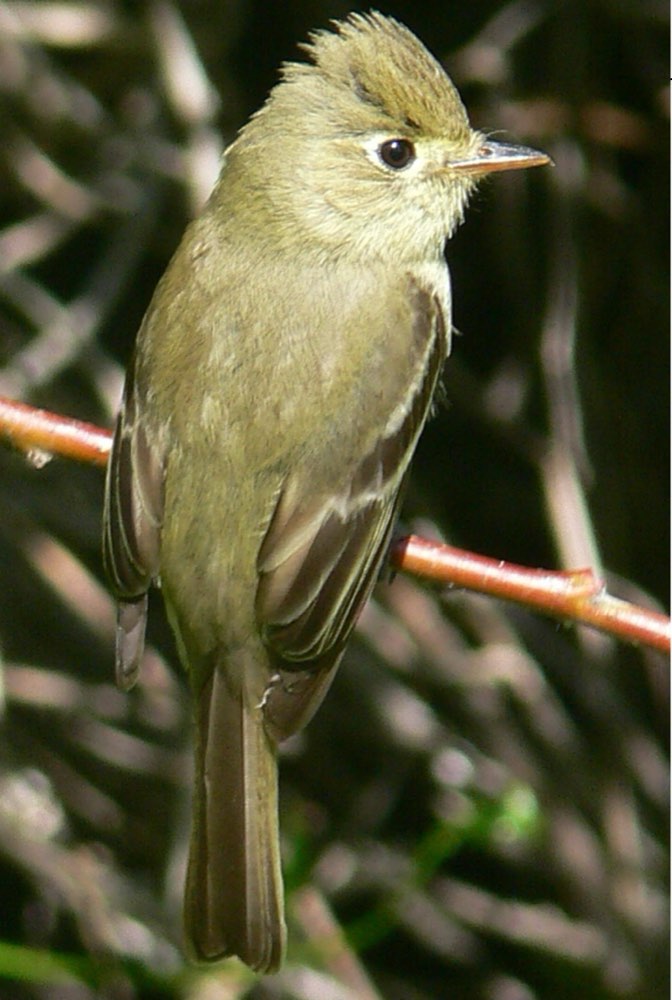
Olive-green above with a yellow throat and belly, two buffy wingbars, and a white eye-ring drawn out into a point behind the eye. Sexes look alike.
Female
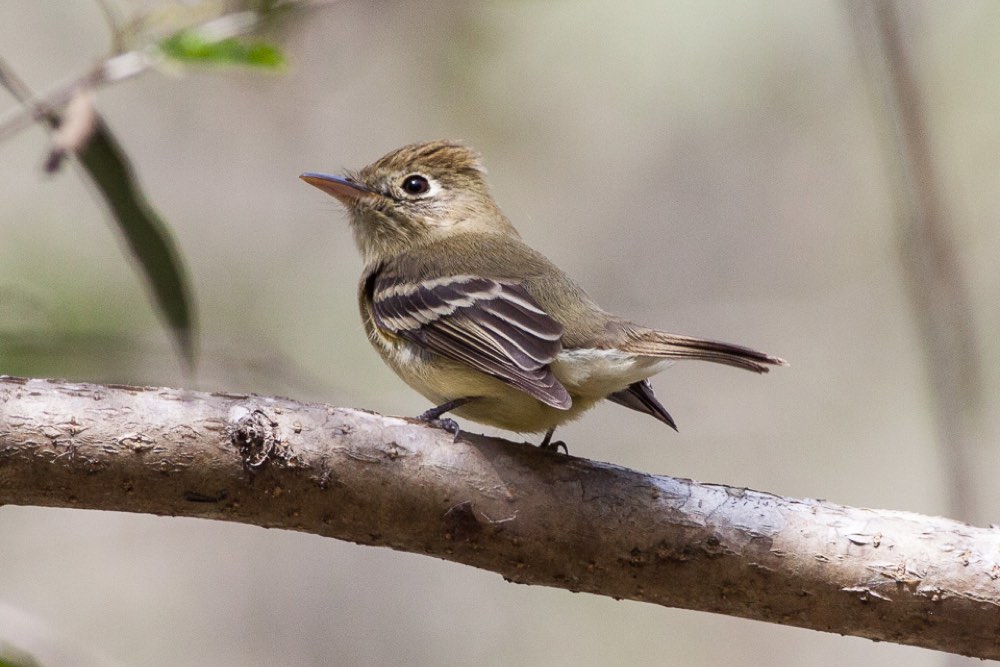
Identical to the male in the field.
Male photo: Empidonax_difficilis1.jpg: goingslo on Flickr derivative work: Berichard (talk) / Wikimedia, CC BY 2.0 · Second photo: Ron Knight from Seaford, East Sussex, United Kingdom / Wikimedia, CC BY 2.0
Field marks
- Eye-ring shaped like a teardrop, pointed at the rear
- Yellow wash extending onto the throat
- Buffy rather than white wingbars
- Peaked crown giving a slightly crested look
Similar species
What it sounds like
A thin, high, rising "pseet" from the male, and a two-part "tsee-seet" position note.
Behaviour that gives it away
Its species name difficilis reflects how hard it is to separate from its relatives, and it is usually identified by voice.
Habitat & range
Shady coniferous and mixed forest, canyons and wooded ravines near the Pacific.
When you'll see it
A summer visitor that arrives to breed in western North America.
What it eats
Small flying insects and spiders.
Did you know?
It and the Cordilleran Flycatcher were split, then re-lumped in 2023 as the Western Flycatcher, a decision still debated.
Spot one yourself?
Point your camera at any bird and Aviarist identifies it in seconds — then logs it to your life list.
Get Aviarist on Google Play
More backyard birds

_(8079388455).jpg)
Other apps we make