How to Identify aRock Wren
Salpinctes obsoletus · 4.9–5.9 in (12.5–15 cm)
Male vs. female
Male
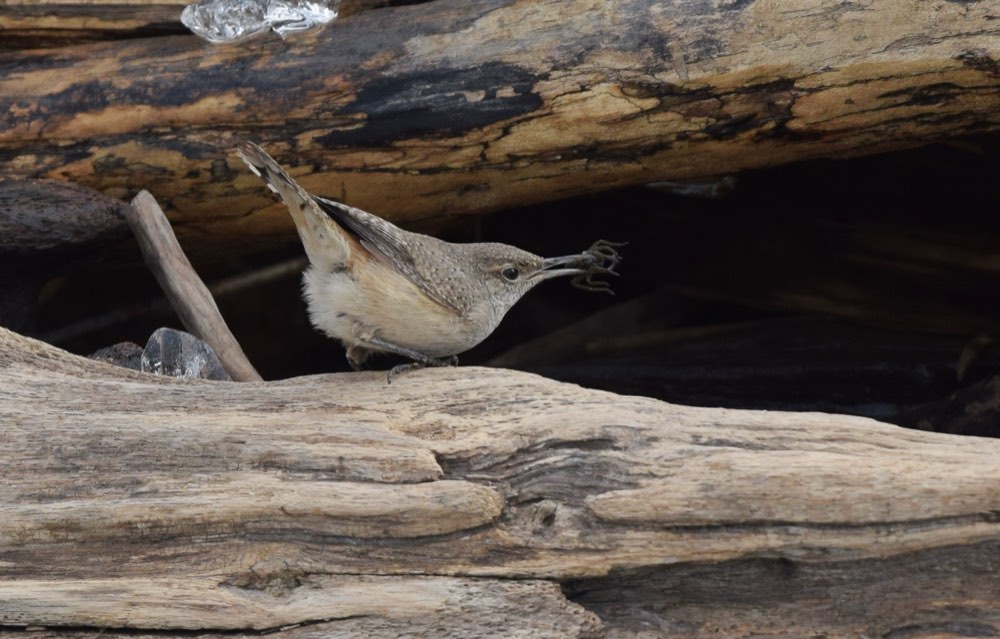
Dusty gray-brown finely speckled black and white above, pale below with faint streaking, and a cinnamon rump with a buff-tipped tail. Sexes look alike.
Female
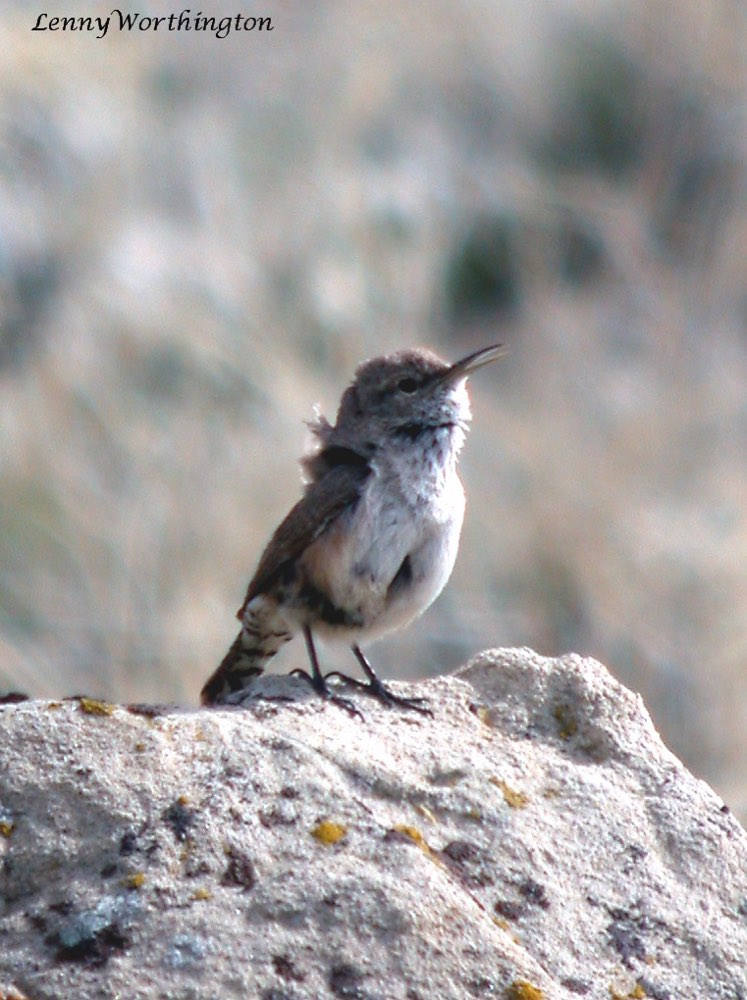
Identical to the male in the field.
Male photo: Andy Reago & Chrissy McClarren / Wikimedia, CC BY 2.0 · Second photo: Len Worthington / Wikimedia, CC BY-SA 2.0
Field marks
- Fine white speckling across gray upperparts
- Buff corners at the tip of the tail
- Long slightly downcurved bill
- Constantly bobs up and down on rocks
Similar species
What it sounds like
A dry, ringing, mechanical series of repeated phrases, each one different, echoing off rock.
Behaviour that gives it away
Paves the entrance to its nest crevice with a walkway of small flat stones, sometimes hundreds of them.
Habitat & range
Rocky slopes, talus, canyons, badlands and boulder fields across the West.
When you'll see it
Depending on where in western, southwestern and central North America you are, it is present all year and a summer visitor that arrives to breed.
What it eats
Insects and spiders probed from rock crevices.
Did you know?
It builds a deliberate pavement of small stones leading to its nest crevice, and nobody is certain why.


Spot one yourself?
Point your camera at any bird and Aviarist identifies it in seconds — then logs it to your life list.
Get Aviarist on Google Play


More backyard birds

.jpg)
.jpg)
Other apps we make