How to Identify aMexican Jay
Aphelocoma wollweberi · 11.4–13 in (29–33 cm)
Male vs. female
Male
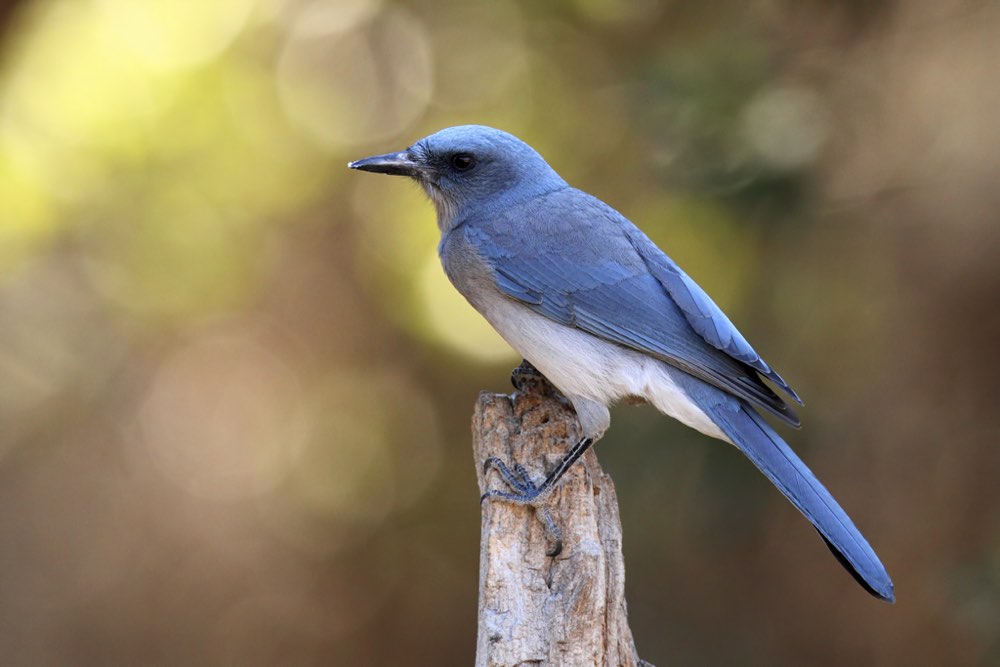
Soft blue head, wings and tail with a gray back and plain pale gray underparts, and no necklace or white throat markings. Sexes look alike.
Female
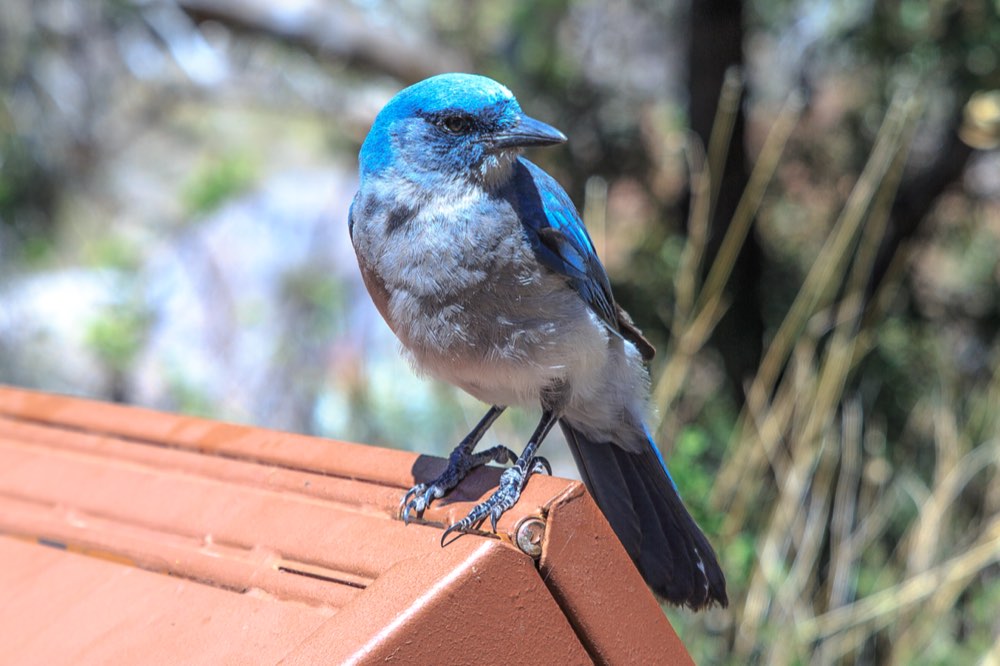
Identical to the male in the field.
Male photo: Alan Vernon / Wikimedia, CC BY 2.0 · Second photo: Murray Foubister / Wikimedia, CC BY-SA 2.0
Field marks
- Completely plain — no crest, necklace or face pattern
- Dull blue above with a gray-brown back
- Plain gray underparts
- Always in flocks of five to twenty
Similar species
What it sounds like
A ringing, rising "wink? wink?" repeated by the whole flock.
Behaviour that gives it away
Lives in permanent flocks in which several adults help feed the young at a single nest, a cooperative system rare among North American birds.
Habitat & range
Oak and pine-oak canyons of southeastern Arizona, New Mexico and west Texas.
When you'll see it
Present all year in southwestern North America.
What it eats
Acorns, pine seeds, insects and small vertebrates.
Did you know?
Flocks are cooperative, with several adults feeding the chicks at one nest — one of the most studied social systems in birds.
Spot one yourself?
Point your camera at any bird and Aviarist identifies it in seconds — then logs it to your life list.
Get Aviarist on Google Play
More backyard birds

_(18101285765).jpg)
Other apps we make