How to Identify aTundra Swan
Cygnus columbianus · 47.2–57.9 in (120–147 cm)
Male vs. female
Male
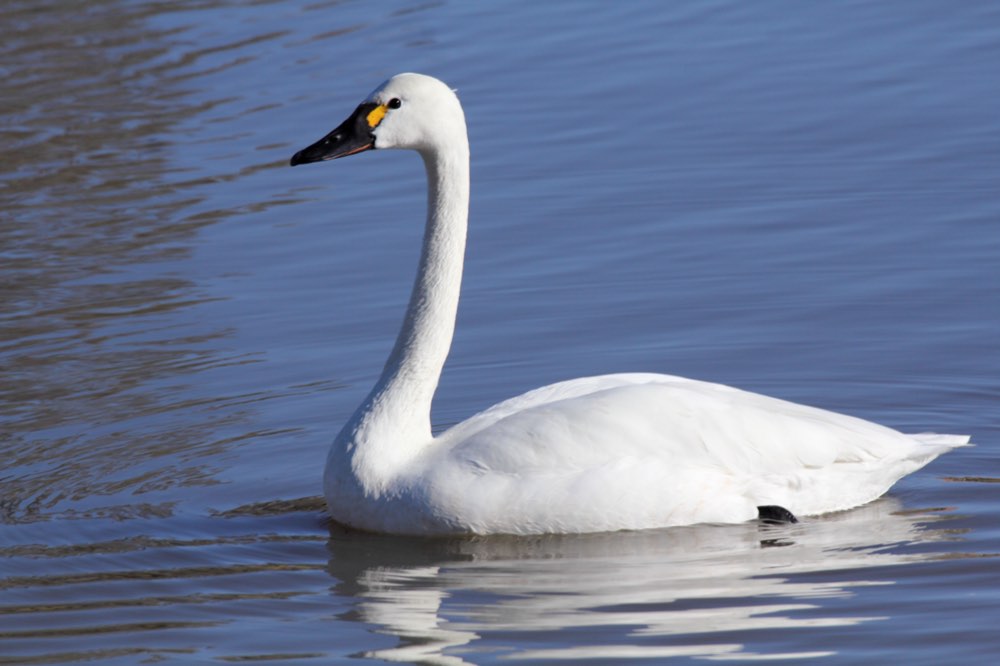
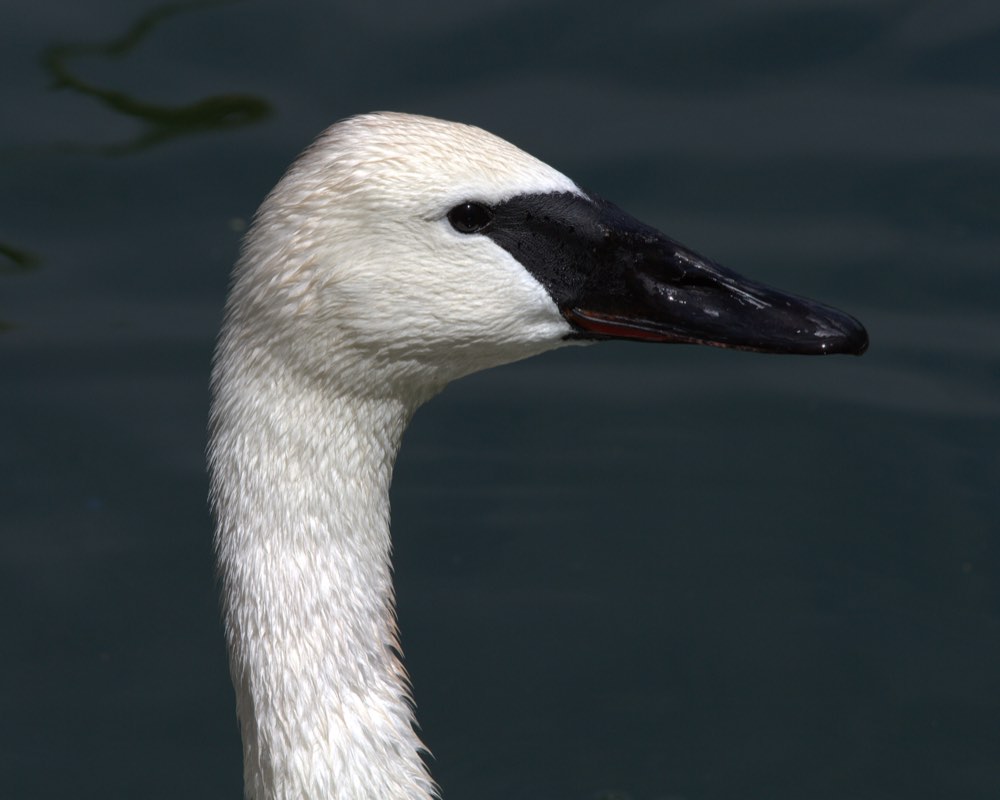
Entirely white with a black bill and facial skin, and typically a small yellow spot at the base of the bill. Sexes look alike.
Female
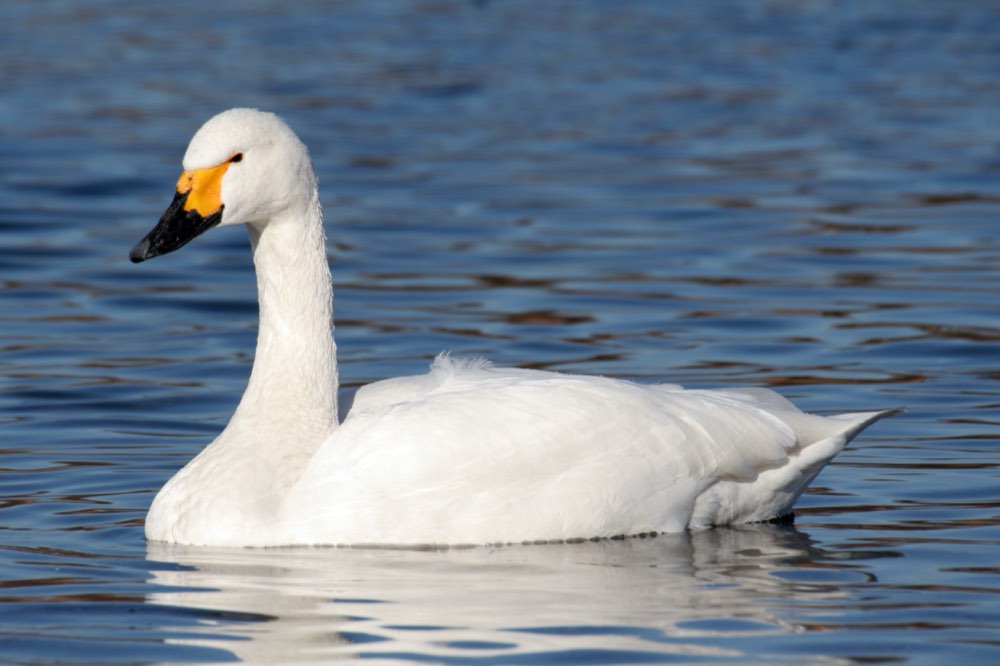
Identical to the male but slightly smaller.
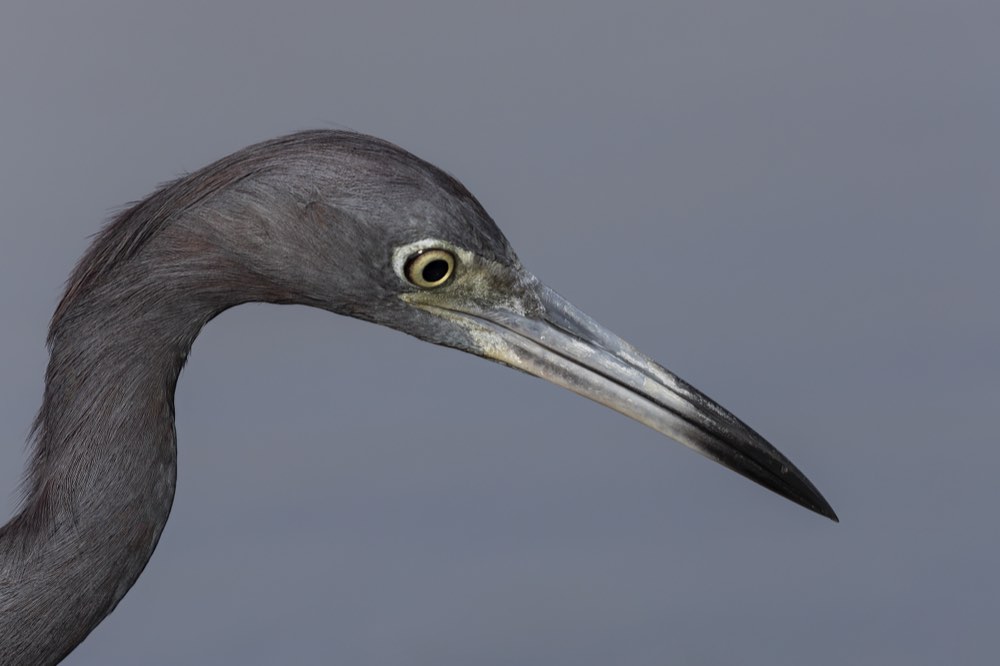
Male photo: Dominic Sherony / Wikimedia, CC BY-SA 2.0 · Second photo: Maga-chan / Wikimedia, CC BY-SA 2.5
Field marks
- Small yellow teardrop before the eye on most birds
- Rounded head with a concave bill profile
- Neck held straight up rather than curved
- Young birds dingy gray with a pink bill
Similar species
What it sounds like
A high, yelping, musical bugle, softer and higher than a Trumpeter Swan’s.
Behaviour that gives it away
Migrates in family groups that stay together all winter, with young birds learning the route from their parents.
Habitat & range
Arctic tundra in summer; shallow lakes, estuaries and flooded farm fields in winter.
When you'll see it
Depending on where in North America you are, it is a winter visitor and a passage migrant, seen mainly in spring and autumn.
What it eats
Aquatic plants and tubers, plus waste grain and shoots in winter fields.
Did you know?
It makes one of the longest migrations of any swan, from the high Arctic to the mid-Atlantic and California each year.

Spot one yourself?
Point your camera at any bird and Aviarist identifies it in seconds — then logs it to your life list.
Get Aviarist on Google Play
More backyard birds

_(8571142484).jpg)

Other apps we make