How to Identify aBrant
Branta bernicla · 22–26 in (56–66 cm)
Male vs. female
Male
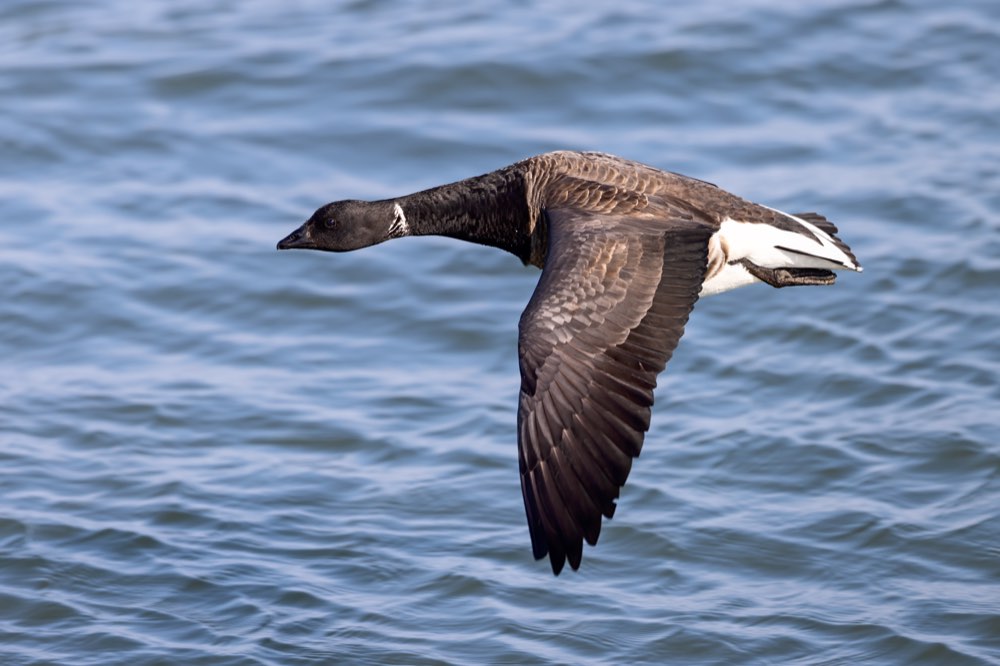
Black head, neck and chest with a small white slash on each side of the neck, dark body and a bright white rear. Sexes look alike.
Female
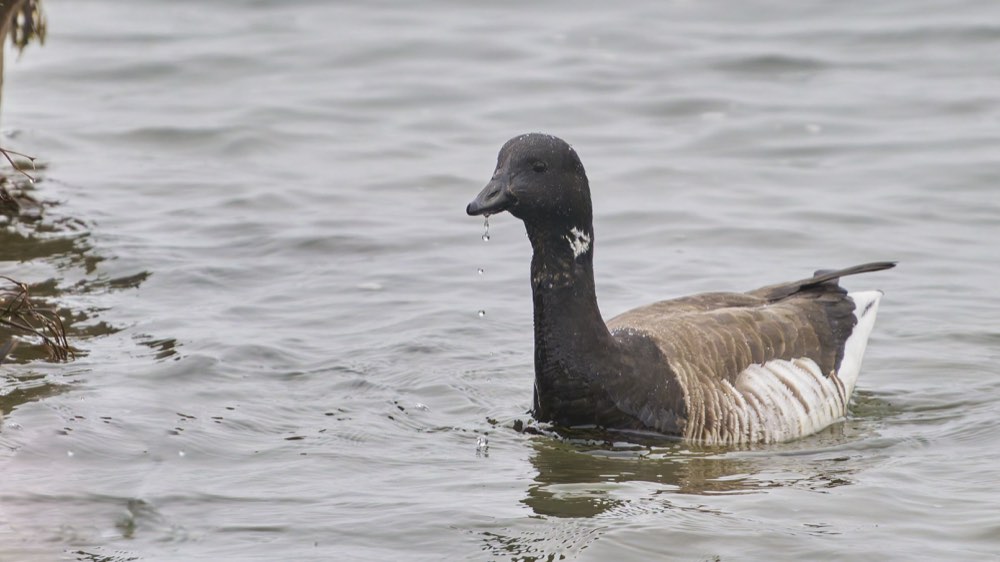
Identical to the male in the field.
Male photo: Needsmoreritalin / Wikimedia, CC BY-SA 4.0 · Second photo: Paul Danese / Wikimedia, CC BY-SA 4.0
Field marks
- Small white neck patch, not a full cheek strap
- Black head and chest running together with no white face
- Very white rear end and undertail
- Small — barely larger than a Mallard
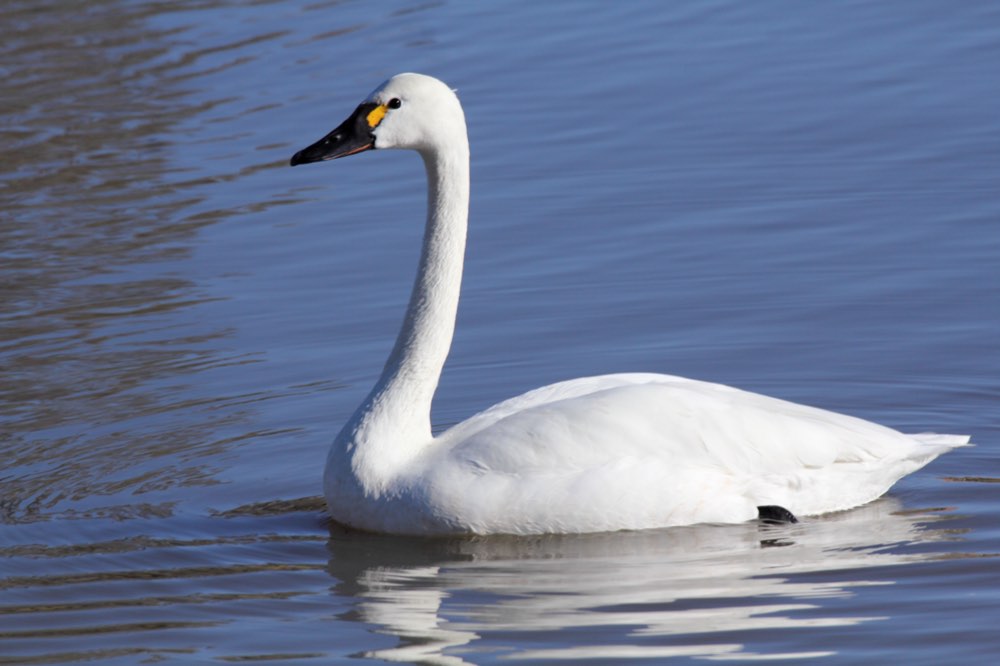
Similar species
What it sounds like
A soft rolling, guttural "cronk" given constantly by flocks.
Behaviour that gives it away
Feeds almost entirely on eelgrass in coastal shallows, and its numbers crashed when eelgrass beds died off in the 1930s.
Habitat & range
Arctic tundra in summer; shallow coastal bays and estuaries in winter.
When you'll see it
Depending on where in eastern, western and northern North America you are, it is a winter visitor and a passage migrant, seen mainly in spring and autumn.
What it eats
Eelgrass and sea lettuce, plus grasses on coastal fields.
Did you know?
Its population collapsed in the 1930s when an eelgrass blight wiped out its main winter food along the Atlantic coast.
Spot one yourself?
Point your camera at any bird and Aviarist identifies it in seconds — then logs it to your life list.
Get Aviarist on Google Play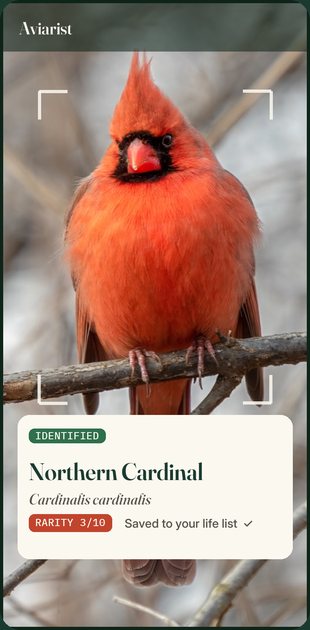
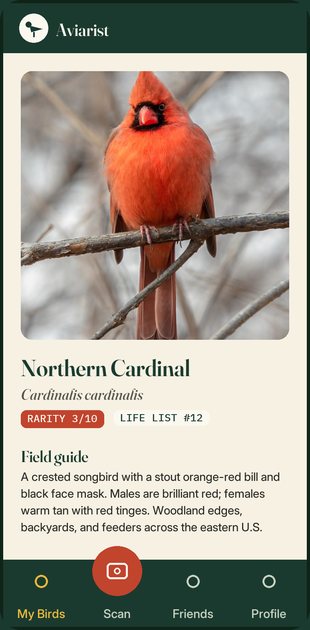
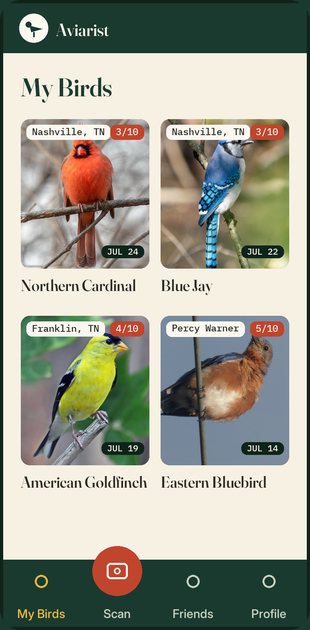
More backyard birds


Other apps we make