How to Identify aVaried Thrush
Ixoreus naevius · 7.5–10.2 in (19–26 cm)
Male vs. female
Male
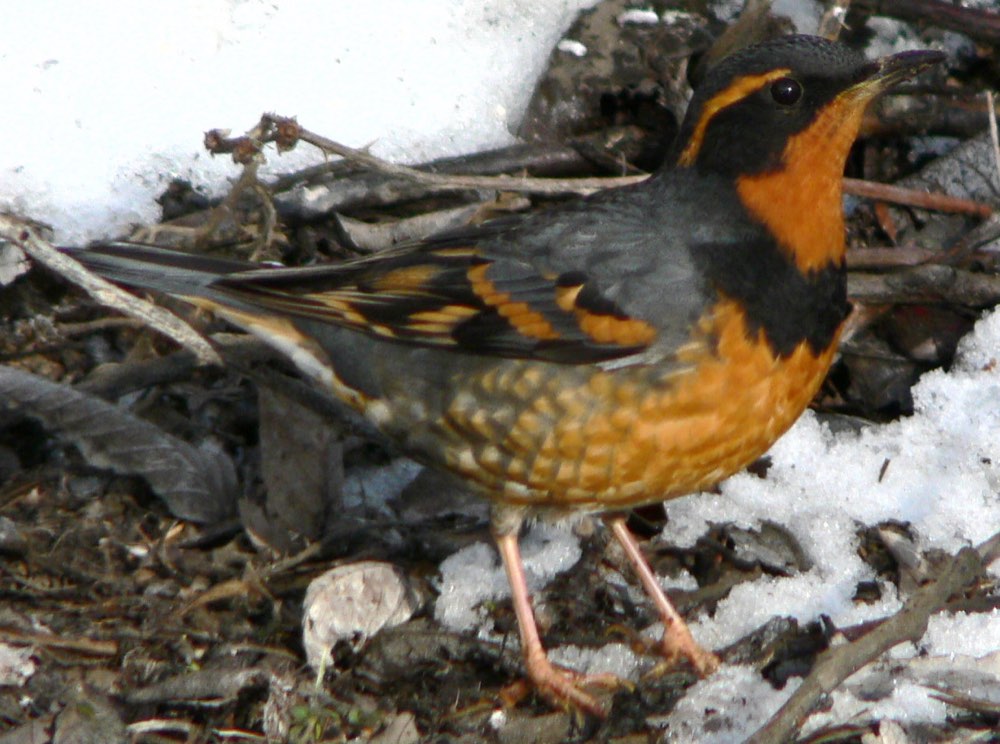
Slate-blue above, deep burnt-orange below with a black band across the chest, an orange eyebrow and orange wing bars.
Female
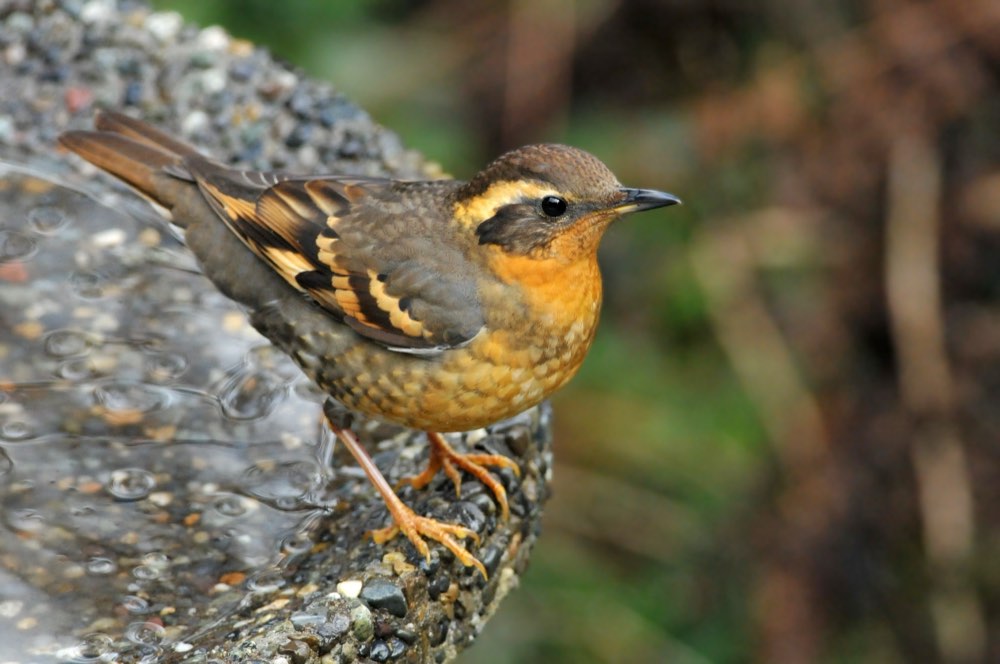
Similar but browner above with a faint gray chest band.
Male photo: Walter Siegmund / Wikimedia, CC BY 2.5 · Female photo: Minette Layne from Seattle, Washington / Wikimedia, CC BY-SA 2.0
Field marks
- Black band across an orange chest
- Orange stripe above and behind the eye
- Two orange bars across dark wings
- Robin-like shape but shorter-tailed
Similar species
What it sounds like
A single long, eerie, quavering whistle on one pitch, followed after a pause by another at a different pitch.
Behaviour that gives it away
Its haunting single-note whistle, spaced by long silences, is one of the defining sounds of wet Pacific old-growth forest.
Habitat & range
Dense, damp conifer forest along the Pacific coast and northern mountains.
When you'll see it
Depending on where in western and northern North America you are, it is present all year and a winter visitor.
What it eats
Insects and earthworms in summer; berries and acorns in winter.
Did you know?
Its long ringing single note sounds so unlike a bird that many people mistake it for machinery humming in the distance.
Spot one yourself?
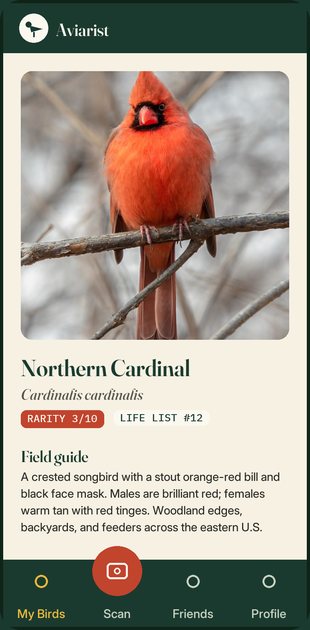
Point your camera at any bird and Aviarist identifies it in seconds — then logs it to your life list.
Get Aviarist on Google Play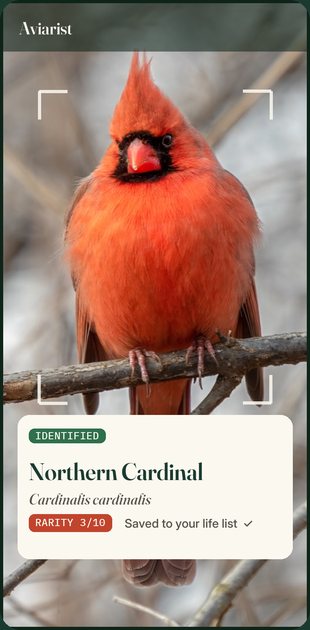
More backyard birds


Other apps we make