How to Identify aBonaparte's Gull
Chroicocephalus philadelphia · 11–15 in (28–38 cm)
Male vs. female
Male
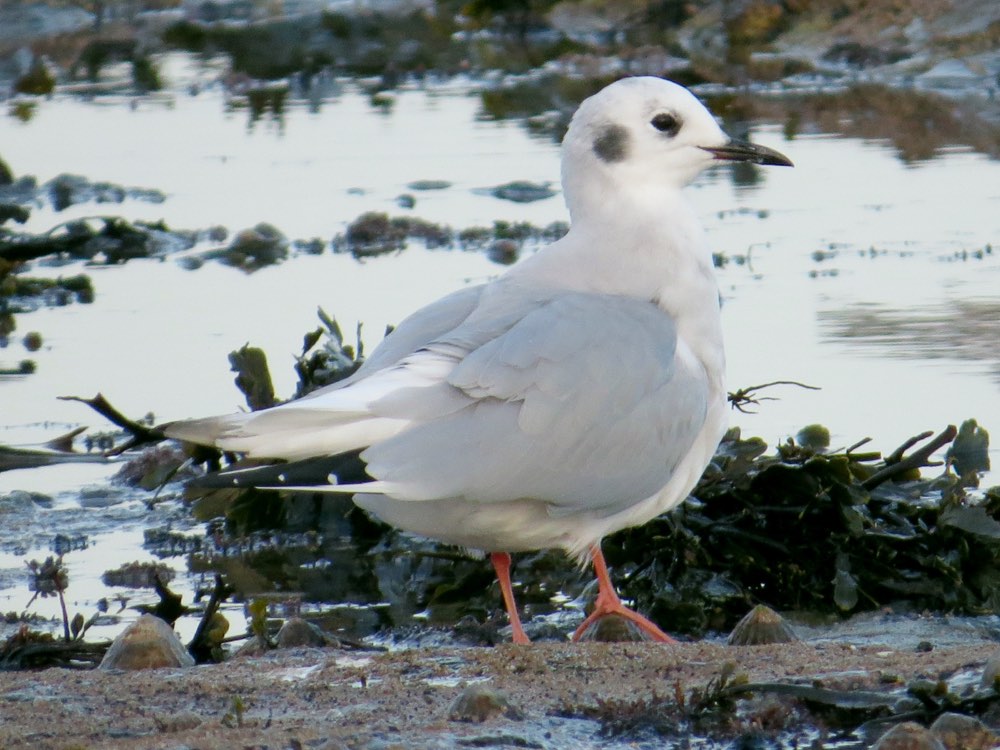
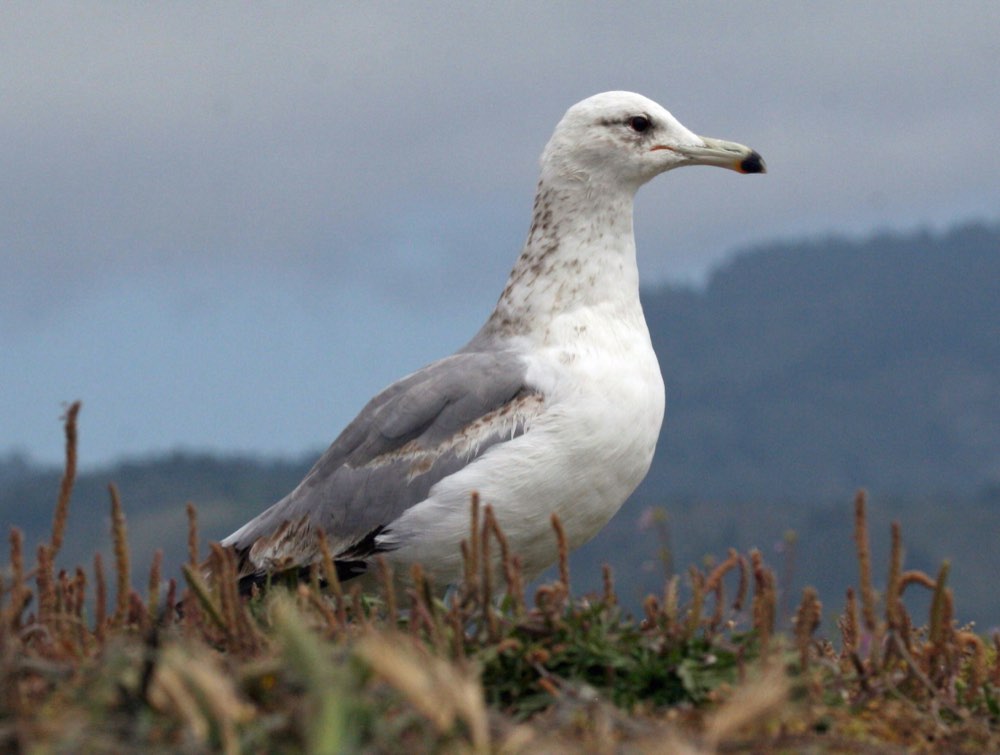
Pale gray back, white underparts, a slate-black hood in breeding plumage, thin black bill and orange-red legs. Sexes look alike.
Female
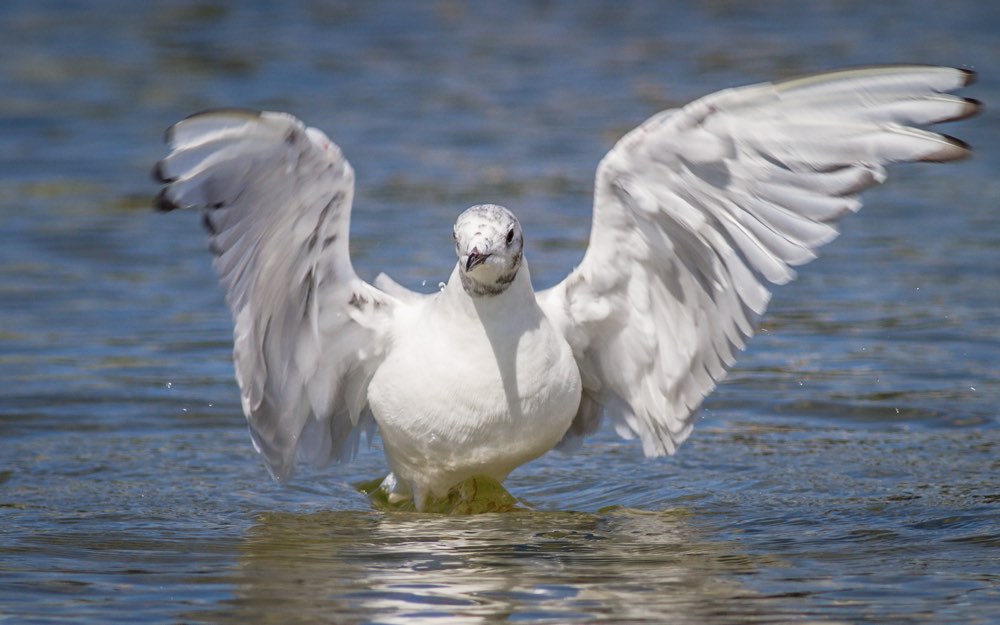
Identical to the male in the field.
Male photo: MPF / Wikimedia, CC BY-SA 4.0 · Second photo: Fyn Kynd / Wikimedia, CC BY 2.0
Field marks
- Small and delicate, flying with quick buoyant wingbeats
- White wedge along the leading edge of the outer wing
- Thin black bill
- Black ear spot on an otherwise white head in winter
Similar species
What it sounds like
A soft, nasal, buzzy "cheer", quite unlike a big gull’s laugh.
Behaviour that gives it away
The only gull that regularly nests in trees, building on conifer branches in the boreal forest.
Habitat & range
Boreal bogs and forest ponds in summer; coasts, lakes and rivers in migration and winter.
When you'll see it
Depending on where in North America you are, it is a winter visitor and a passage migrant, seen mainly in spring and autumn.
What it eats
Small fish, aquatic insects and crustaceans taken on the wing or from the surface.
Did you know?
Almost uniquely among gulls it nests in trees, laying its eggs on spruce branches in northern bogs.
Spot one yourself?
Point your camera at any bird and Aviarist identifies it in seconds — then logs it to your life list.
Get Aviarist on Google Play
More backyard birds

.jpg)
Other apps we make