How to Identify aWestern Gull
Larus occidentalis · 22–26 in (56–66 cm)
Male vs. female
Male
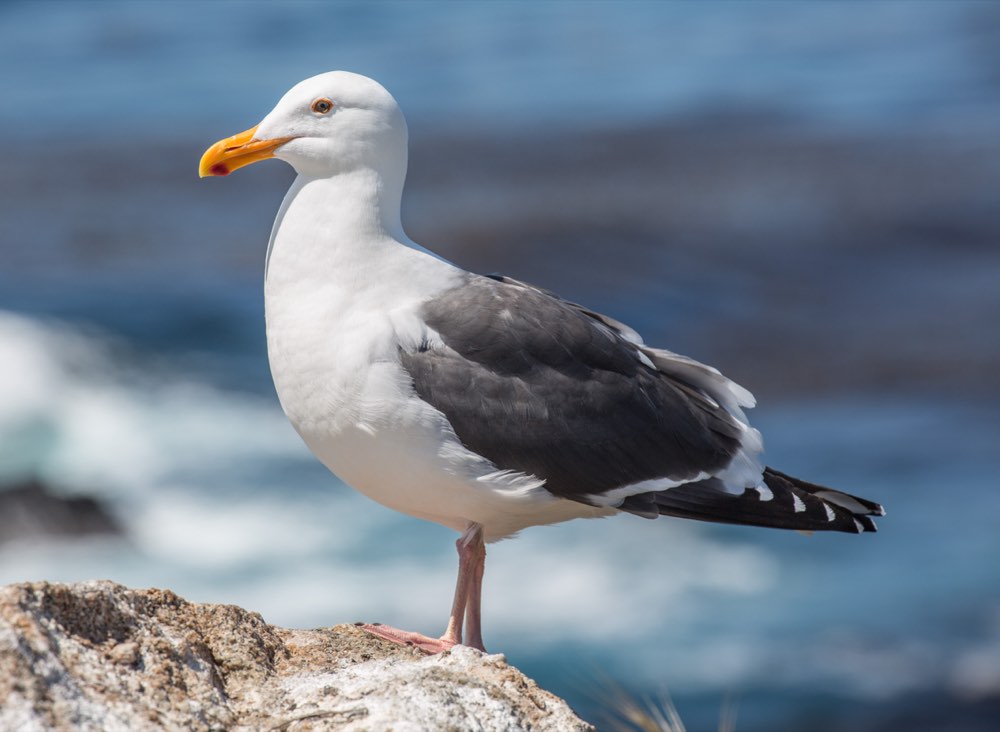
White head and body with a dark slate-gray back, a thick yellow bill with a large red spot, and pink legs. Sexes look alike.
Female
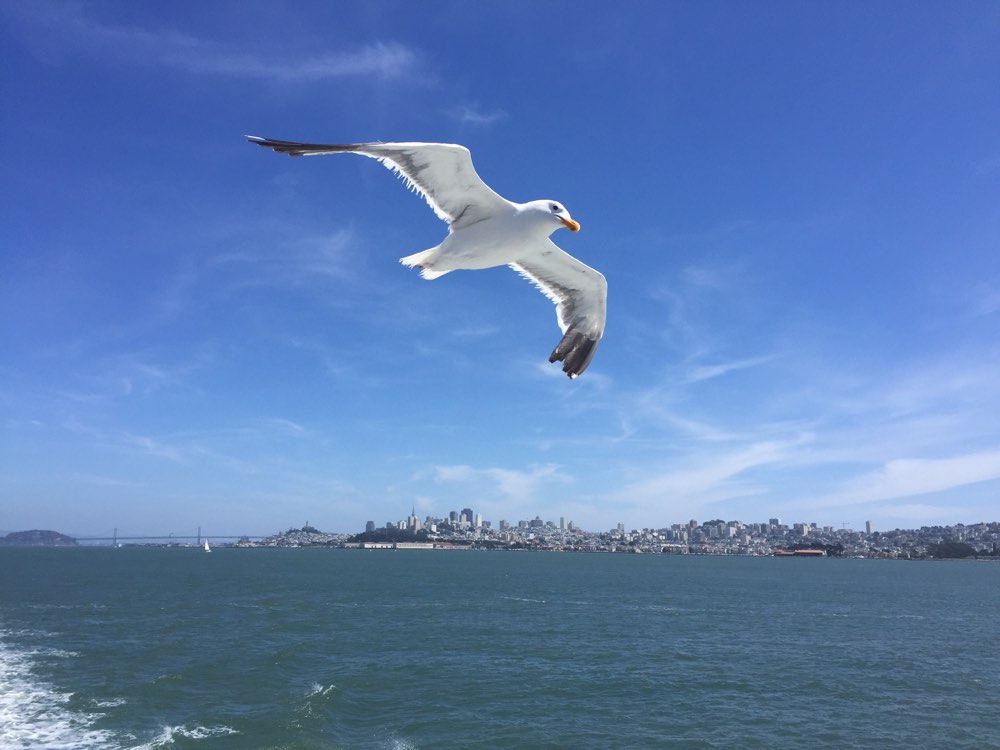
Identical to the male but smaller.
Male photo: Diliff / Wikimedia, CC BY-SA 3.0 · Second photo: Kegira / Wikimedia, CC BY-SA 3.0
Field marks
- Dark slate-gray back, darker than most gulls on the coast
- Very heavy bill with a bulbous tip
- Pink legs
- Head stays clean white all year
Similar species
What it sounds like
A loud, deep, repeated laughing call, typical of large gulls.
Behaviour that gives it away
Hybridises freely with the Glaucous-winged Gull where their ranges meet in the Pacific Northwest, producing endless intermediate birds.
Habitat & range
Pacific coastline, harbours, beaches, piers and coastal cities.
When you'll see it
Present all year in western North America.
What it eats
Fish, invertebrates, carrion, seabird eggs and refuse.
Did you know?
Where its range meets the Glaucous-winged Gull the two interbreed so freely that many birds cannot be assigned to either species.
Spot one yourself?
Point your camera at any bird and Aviarist identifies it in seconds — then logs it to your life list.
Get Aviarist on Google Play
More backyard birds
,_Point_Lobos,_CA,_US_-_May_2013.jpg)

Other apps we make