How to Identify aCanada Warbler
Cardellina canadensis · 4.7–5.9 in (12–15 cm)
Male vs. female
Male
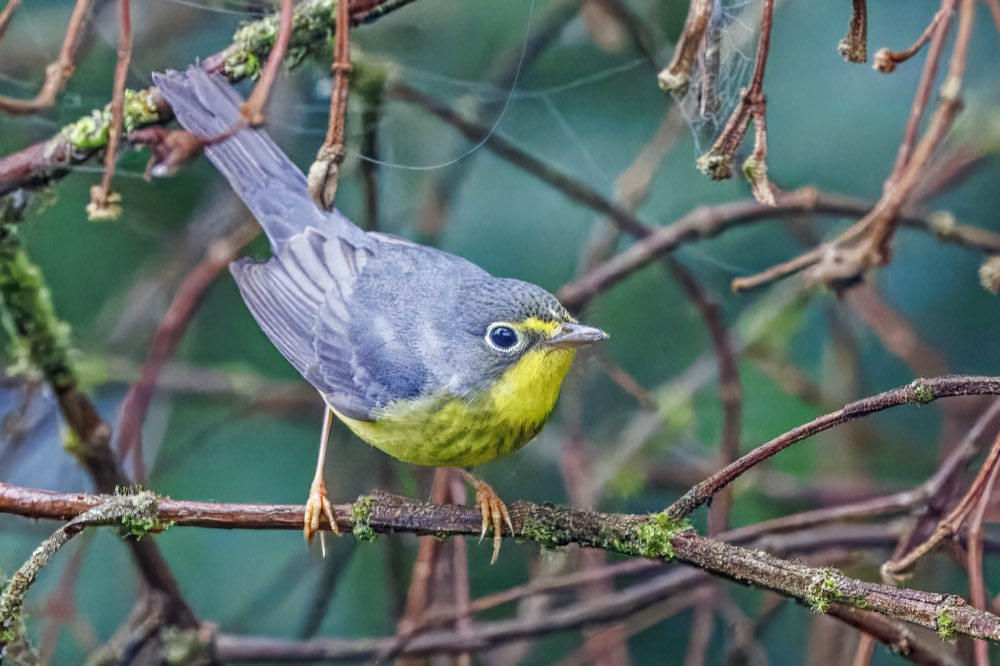
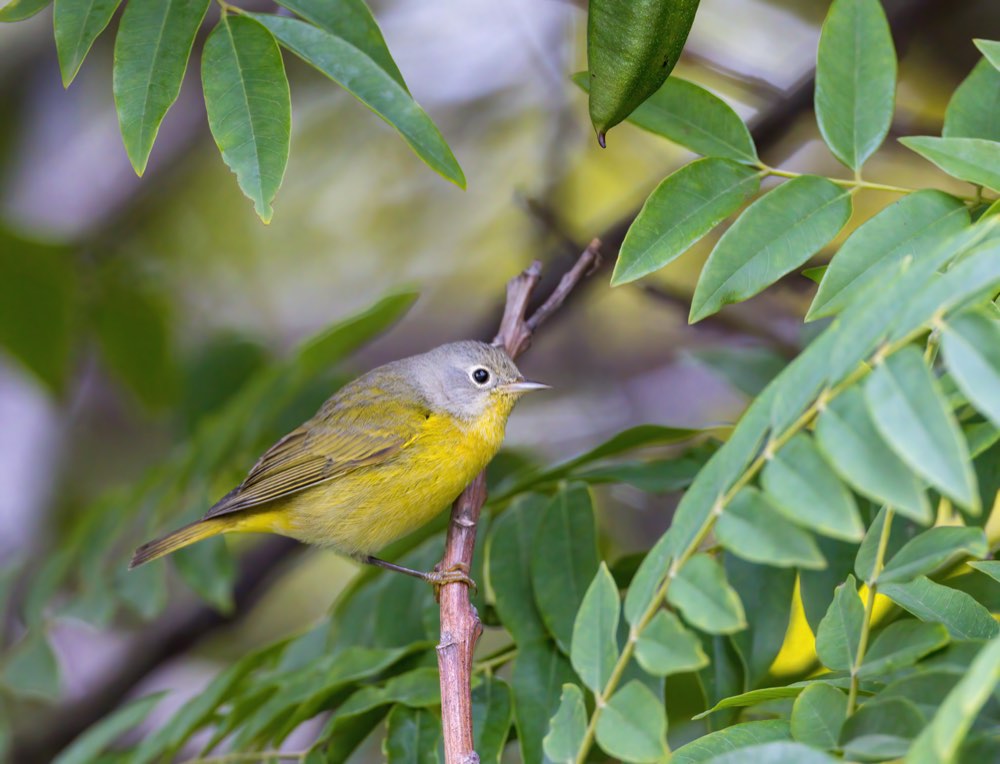
Plain blue-gray above, bright yellow below, with a distinct necklace of short black streaks and bold white eye-rings.
Female
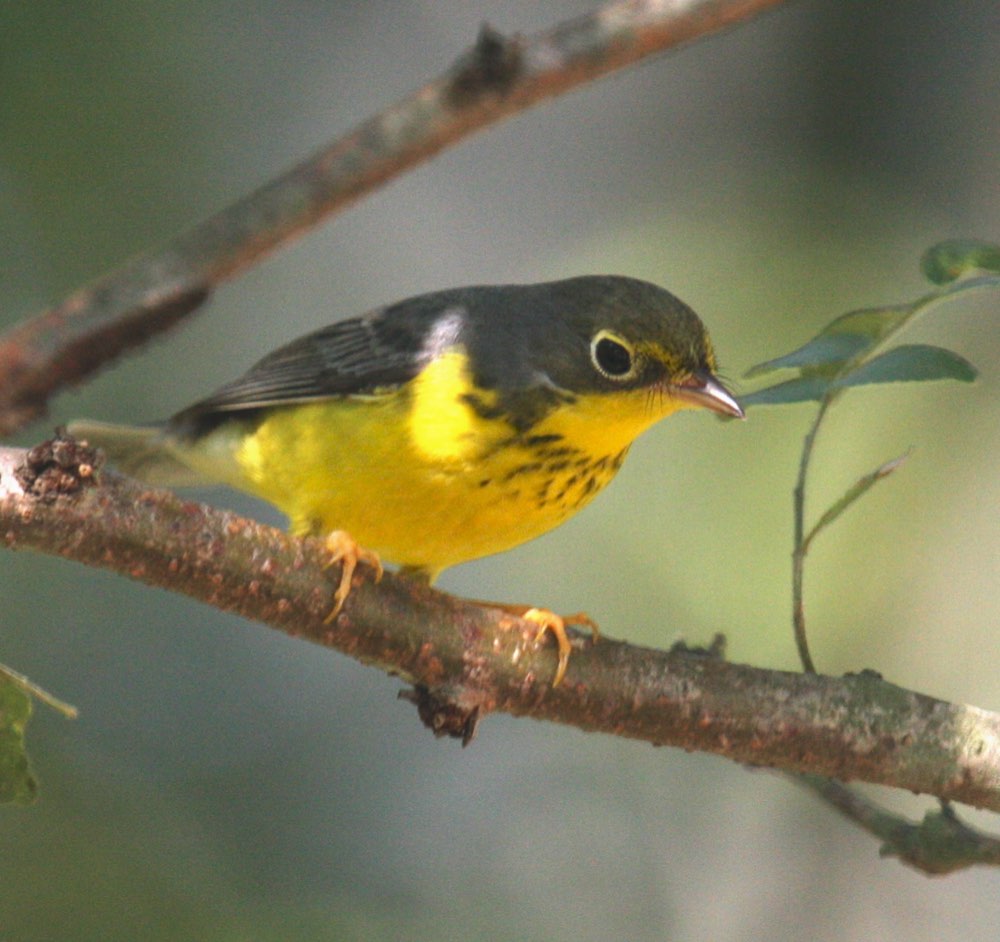
Similar but with a fainter, grayer necklace.
Male photo: Charles J. Sharp / Wikimedia, CC BY-SA 4.0 · Second photo: Emmett Hume / Wikimedia, CC BY 3.0
Field marks
- Necklace of black streaks across a yellow chest
- Bold complete white spectacles
- Plain blue-gray wings with no wingbars
- White undertail coverts
Similar species
What it sounds like
A quick, sputtering, irregular jumble of notes beginning with a sharp chip.
Behaviour that gives it away
One of the last warblers to arrive in spring and among the first to leave, spending barely two months on its breeding grounds.
Habitat & range
Damp northern forest with a dense shrubby understorey, often near water.
When you'll see it
Depending on where in northern and eastern North America you are, it is a summer visitor that arrives to breed and a passage migrant, seen mainly in spring and autumn.
What it eats
Insects and spiders, frequently caught in mid-air.
Did you know?
It spends only about two months on its breeding grounds, one of the shortest breeding seasons of any North American warbler.
Spot one yourself?
Point your camera at any bird and Aviarist identifies it in seconds — then logs it to your life list.
Get Aviarist on Google Play
More backyard birds
_male_San_Isidro.jpg)

Other apps we make