How to Identify aCassin's Kingbird
Tyrannus vociferans · 8.3–9.1 in (21–23 cm)
Male vs. female
Male
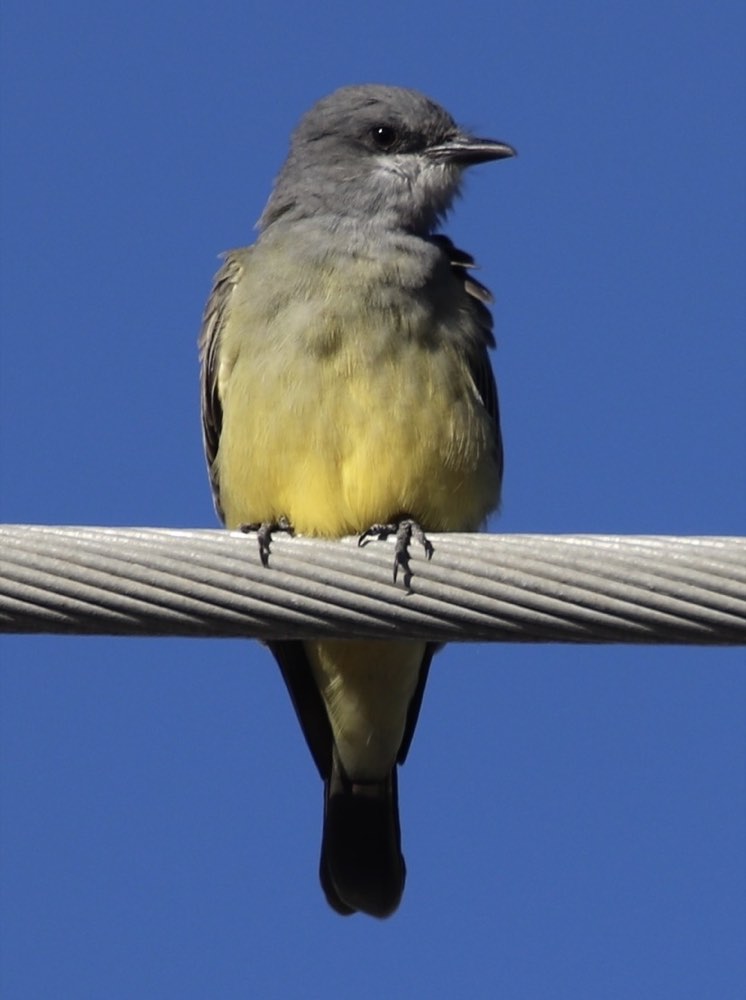
Dark gray head and chest with a conspicuous white chin, yellow belly, and a dark tail with a pale buff tip. Sexes look alike.
Female
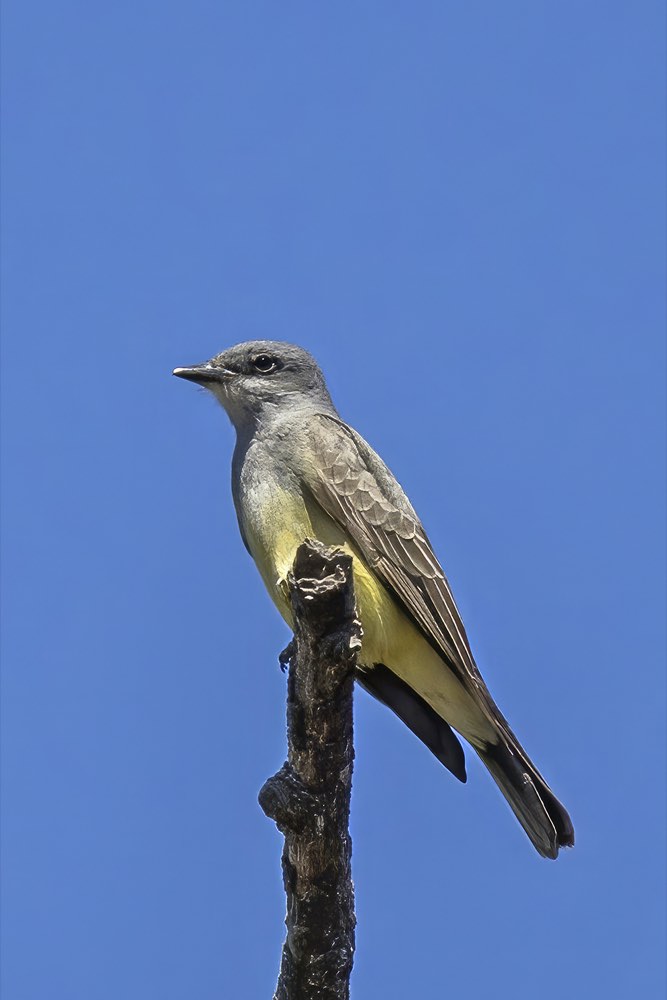
Identical to the male in the field.
Male photo: Steph Cárdenas / Wikimedia, CC BY 4.0 · Second photo: Charles J. Sharp / Wikimedia, CC BY-SA 4.0
Field marks
- White chin patch contrasting sharply with a dark gray head
- Tail dark with a pale buff tip and no white edges
- Darker and grayer than a Western Kingbird
- Yellow belly cut from a gray chest
Similar species
What it sounds like
A loud, low, burry "chi-BEER", repeated insistently — much harsher than a Western Kingbird.
Behaviour that gives it away
Overlaps with the Western Kingbird but keeps to higher, more wooded country, which reduces direct competition.
Habitat & range
Pine-oak woodland, canyons, ranchland and riparian groves in the Southwest.
When you'll see it
A summer visitor that arrives to breed in southwestern and western North America.
What it eats
Flying insects taken on sallies from an exposed perch, plus berries.
Did you know?
Its scientific name vociferans means "shouting", earned by its habit of calling loudly and repeatedly at dawn.
Spot one yourself?
Point your camera at any bird and Aviarist identifies it in seconds — then logs it to your life list.
Get Aviarist on Google Play
More backyard birds
.jpg)
_Almoloya.jpg)
Other apps we make