How to Identify aWillet
Tringa semipalmata · 13–16.1 in (33–41 cm)
Male vs. female
Male
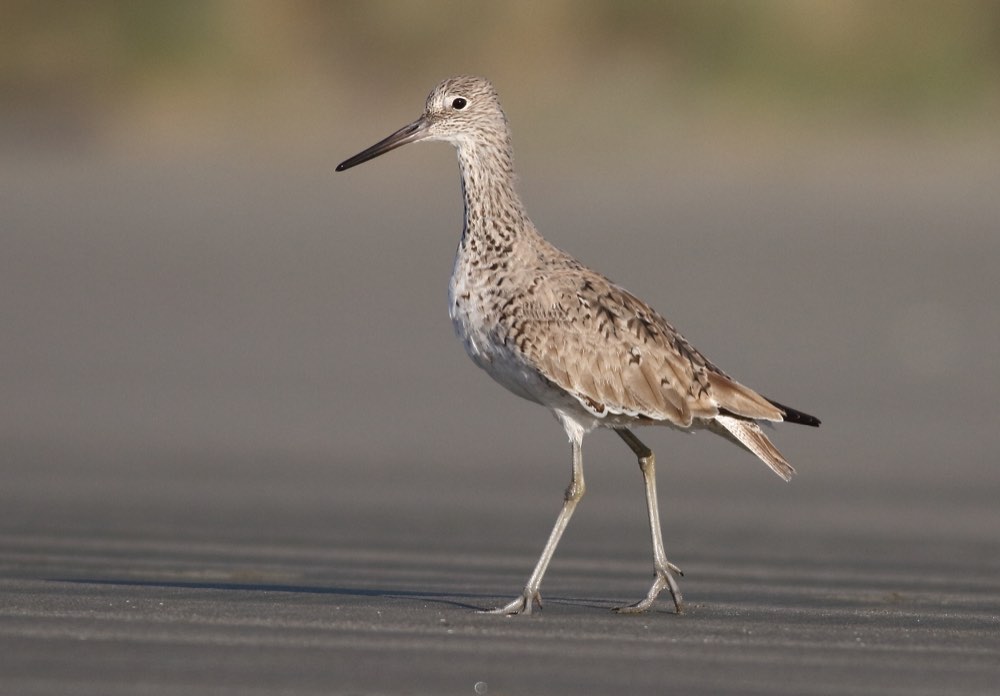
Gray-brown and nondescript when standing, with gray legs and a heavy straight bill; striking black-and-white wings in flight. Sexes look alike.
Female
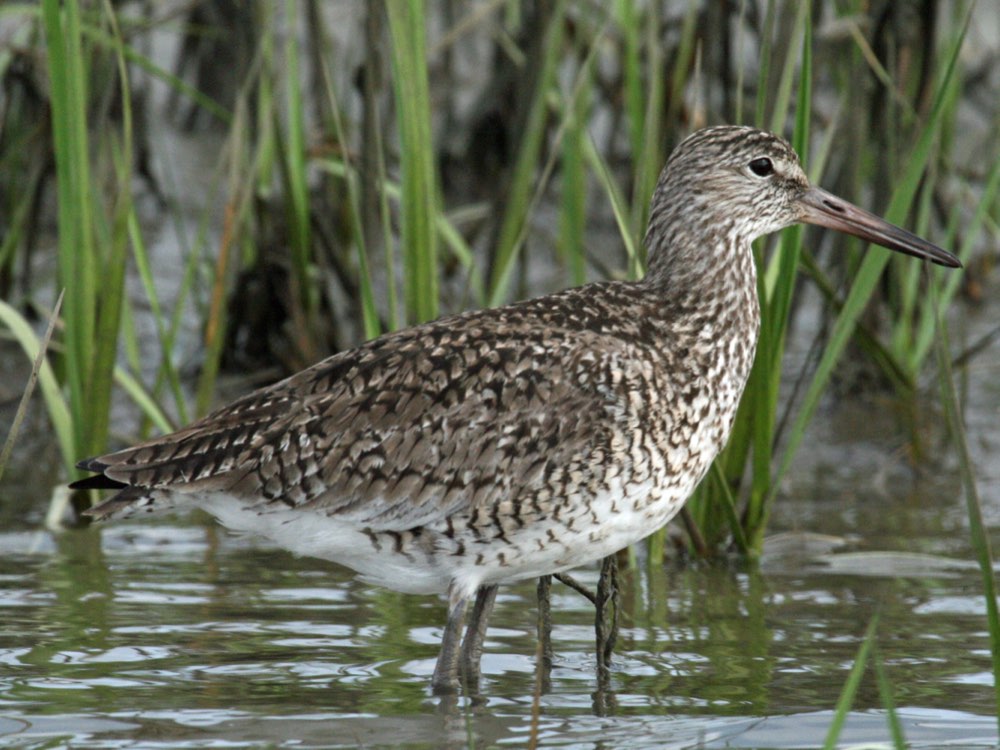
Identical to the male in the field.
Male photo: ADJ82 / Wikimedia, CC BY 3.0 · Second photo: Dick Daniels (http://carolinabirds.org/) / Wikimedia, CC BY-SA 3.0
Field marks
- Bold white wing stripe bordered black, visible only in flight
- Heavy, straight, thick-based bill
- Blue-gray legs
- Plain unmarked gray-brown body at rest
Similar species
What it sounds like
A loud, ringing, insistent "pill-will-willet", which is where the name comes from.
Behaviour that gives it away
Looks like the plainest bird on the beach until it opens its wings, and the pattern is so bold it can be identified at half a mile.
Habitat & range
Beaches, mudflats and salt marshes; prairie wetlands in the interior West in summer.
When you'll see it
Depending on where in North America you are, it is a summer visitor that arrives to breed and a winter visitor.
What it eats
Crabs, marine worms, molluscs and insects.
Did you know?
The eastern and western populations differ enough in size, voice and habitat that they may eventually be split into two species.
Spot one yourself?
Point your camera at any bird and Aviarist identifies it in seconds — then logs it to your life list.
Get Aviarist on Google Play
More backyard birds
_1APR2017.jpg)
_RWD4.jpg)
Other apps we make