How to Identify aGreater Scaup
Aythya marila · 15–22 in (38–56 cm)
Male vs. female
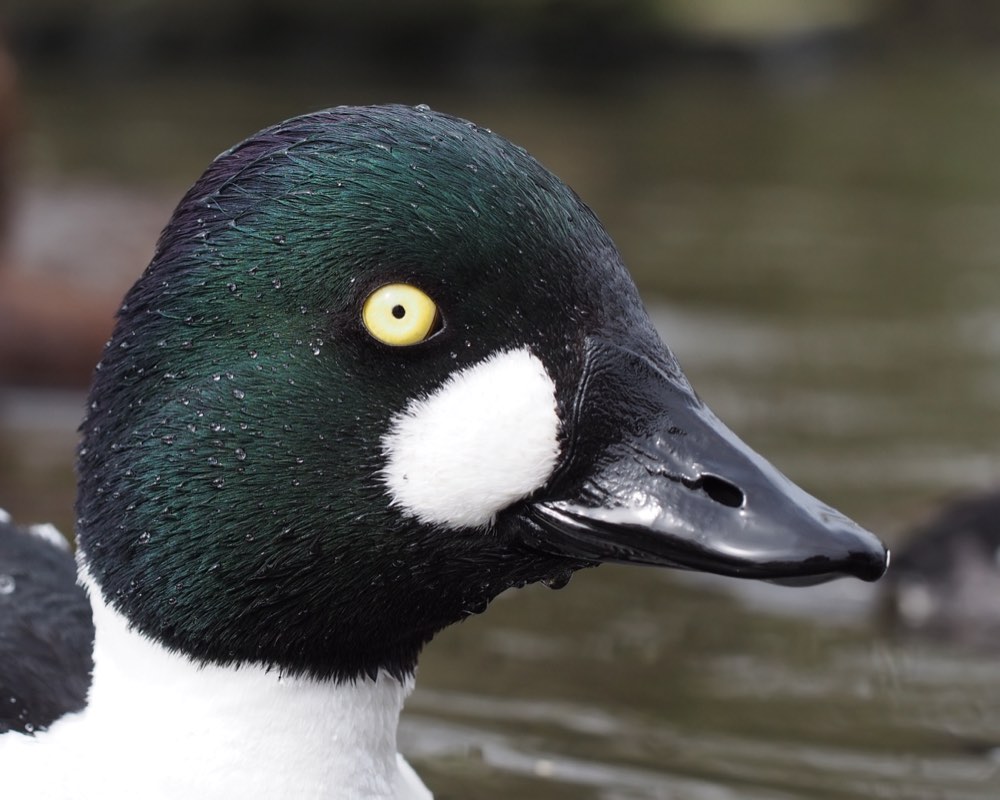
Male
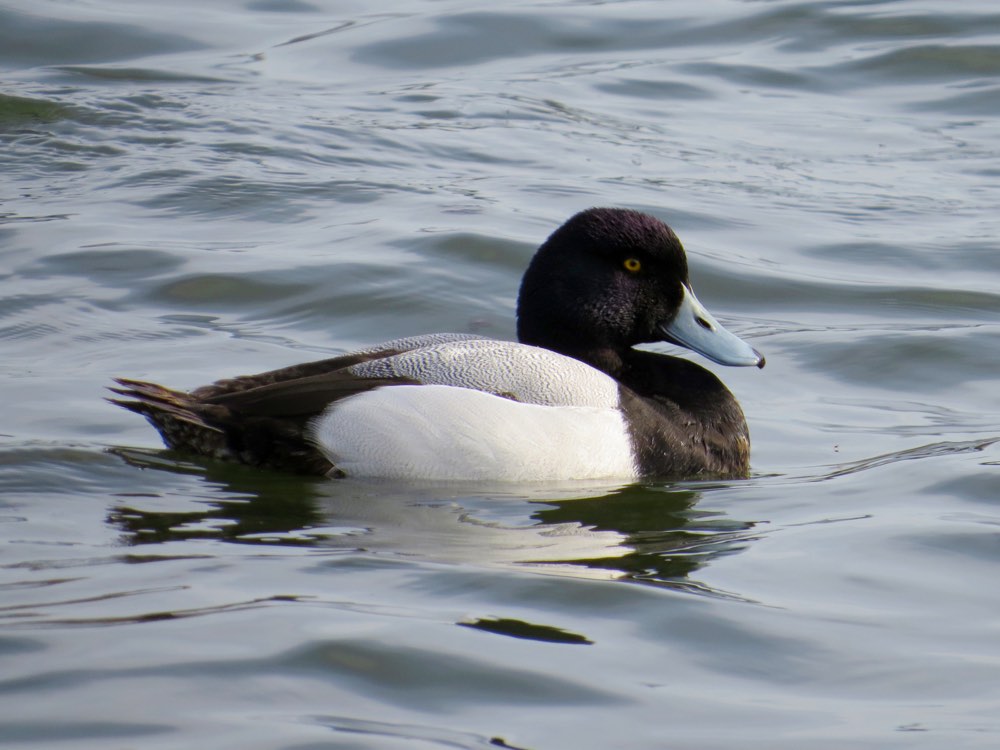
Black head with a green gloss, black chest and tail, very pale barred back and white sides; yellow eye.
Female
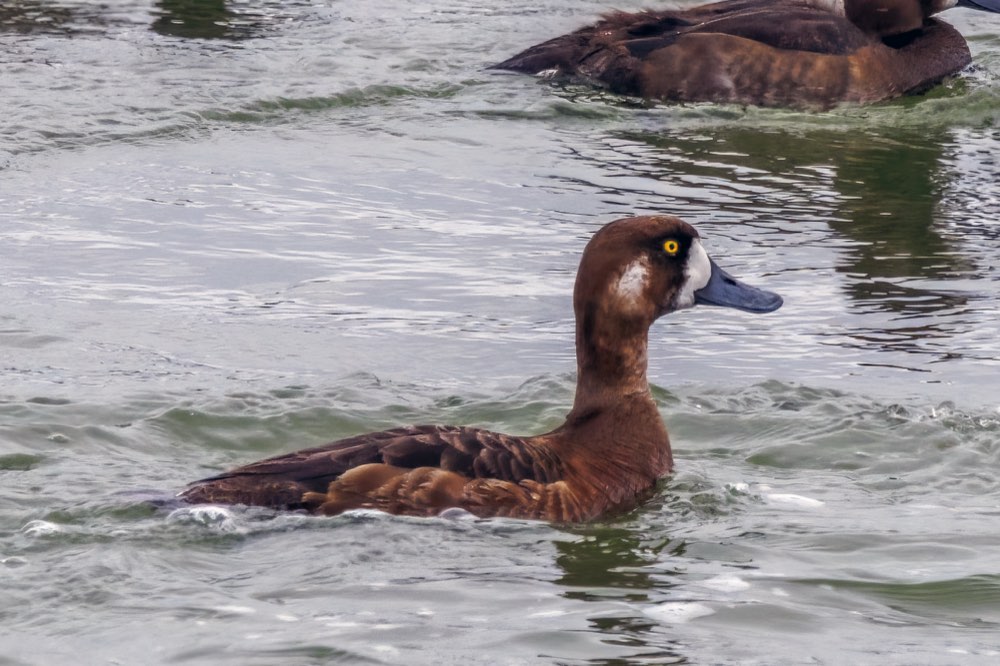
Dark brown with a large clean white blaze at the base of the bill.
Male photo: MPF / Wikimedia, CC BY-SA 4.0 · Female photo: Charles J. Sharp / Wikimedia, CC BY-SA 4.0
Field marks
- Smoothly rounded head, highest at the front
- Green rather than purple head gloss in good light
- Broad black nail across the bill tip
- Long white wing stripe reaching the primaries in flight
Similar species
What it sounds like
Largely silent away from courtship; low growls and soft whistles.
Behaviour that gives it away
Winters in huge rafts on open salt water, further from shore than most freshwater ducks.
Habitat & range
Arctic tundra ponds in summer; coastal bays, estuaries and the Great Lakes in winter.
When you'll see it
Depending on where in northern, eastern and western North America you are, it is a winter visitor and a passage migrant, seen mainly in spring and autumn.
What it eats
Molluscs, especially clams and mussels, plus aquatic insects and plants.
Did you know?
It is the only North American diving duck that regularly winters in large numbers on open salt water far from land.
Spot one yourself?
Point your camera at any bird and Aviarist identifies it in seconds — then logs it to your life list.
Get Aviarist on Google Play
More backyard birds

_female_Laxa.jpg)
Other apps we make