How to Identify aLesser Scaup
Aythya affinis · 15.3–18.1 in (39–46 cm)
Male vs. female
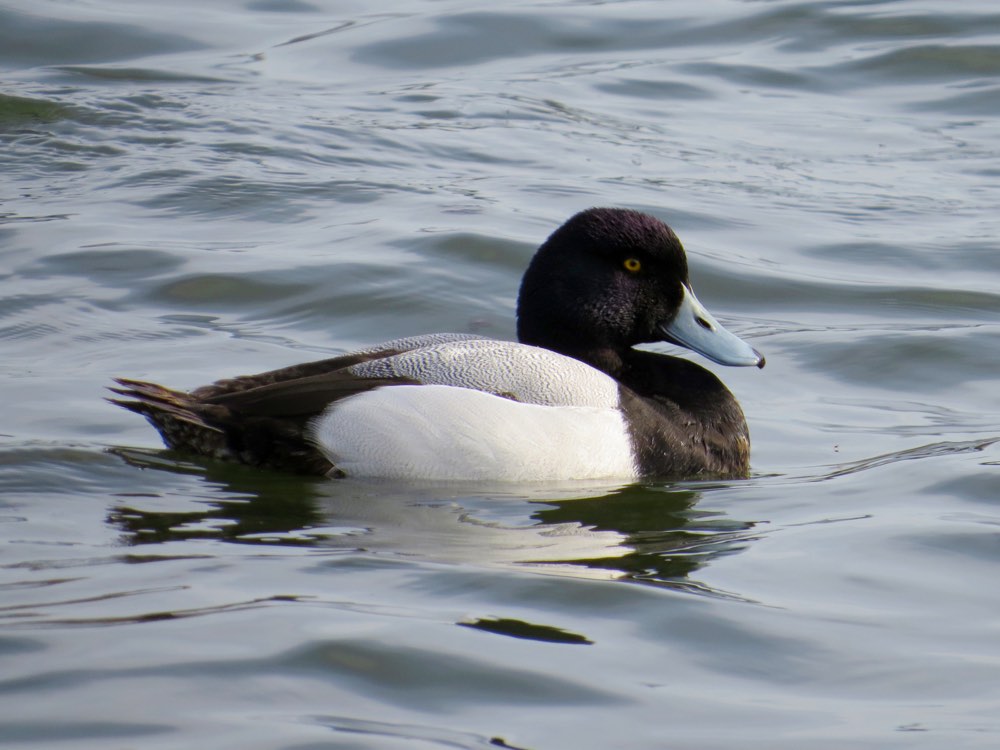
Male
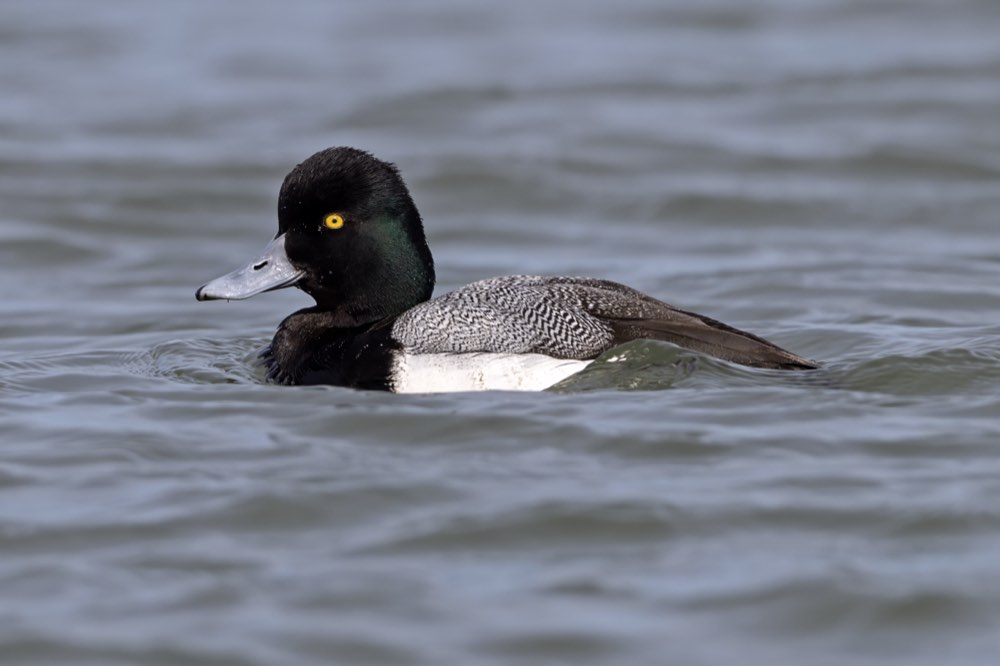
Black head glossed purple, black chest and tail, finely barred pale gray back and white sides; yellow eye.
Female
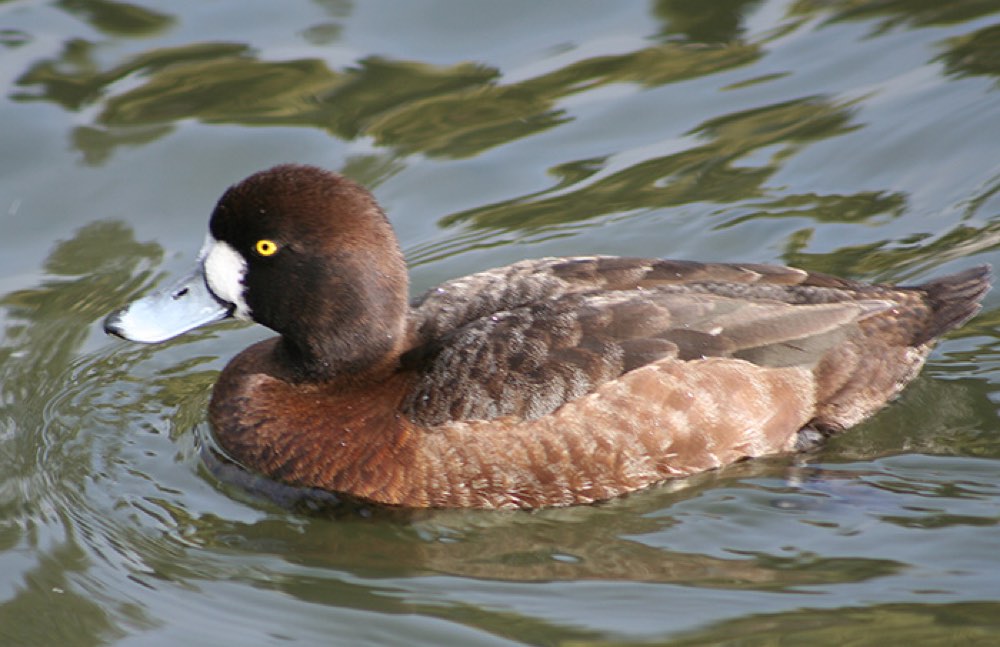
Dark brown with a bold white patch at the base of the bill.
Male photo: Chuck Homler d/b/a Focus On Wildlife / Wikimedia, CC BY-SA 4.0 · Female photo: Calibas / Wikimedia, Public domain
Field marks
- Head peaked at the rear rather than smoothly rounded
- White sides between a black chest and black tail
- Bright yellow eye
- Small blue-gray bill with a tiny black nail
Similar species
What it sounds like
Usually silent; a soft whistle from males and a low growl from females.
Behaviour that gives it away
Gathers in dense rafts of thousands on open water, all diving and surfacing in loose waves.
Habitat & range
Boreal ponds and prairie marshes in summer; lakes, reservoirs and sheltered bays in winter.
When you'll see it
Depending on where in North America you are, it is a winter visitor and a passage migrant, seen mainly in spring and autumn.
What it eats
Aquatic invertebrates, especially amphipods, plus seeds and plant material.
Did you know?
It is among the most numerous diving ducks in North America, yet its population has fallen sharply since the 1980s.
Spot one yourself?
Point your camera at any bird and Aviarist identifies it in seconds — then logs it to your life list.
Get Aviarist on Google Play
More backyard birds
_Barengat_Inlet,_New_Jersey,_USA.jpg)

Other apps we make