How to Identify aHorned Lark
Eremophila alpestris · 6.3–7.9 in (16–20 cm)
Male vs. female
Male
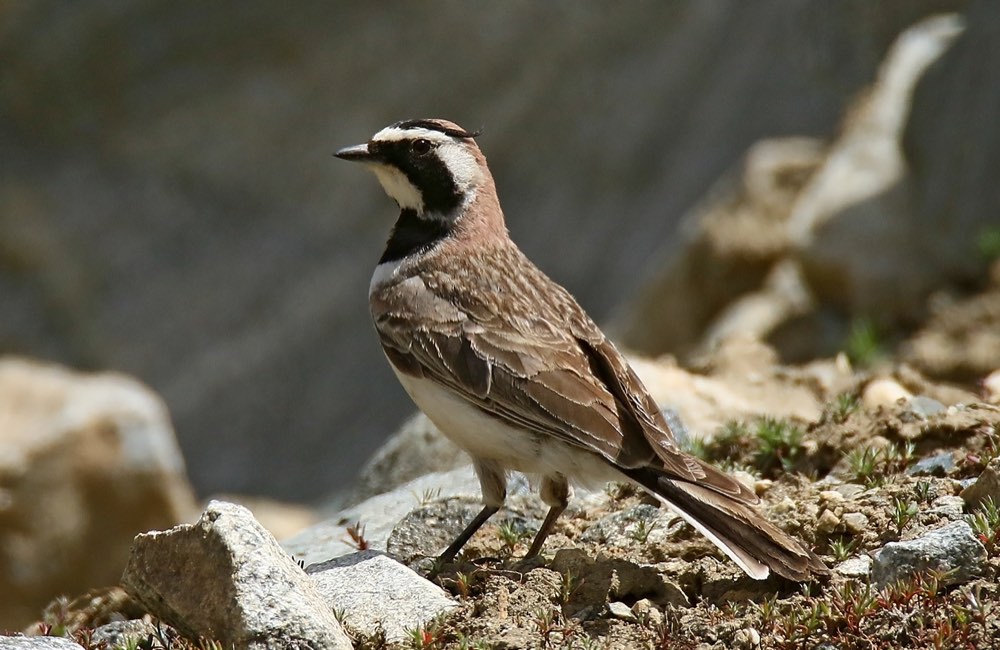
Sandy-brown above with a pale yellow face, a black mask and chest band, and two small black feather tufts on the crown.
Female
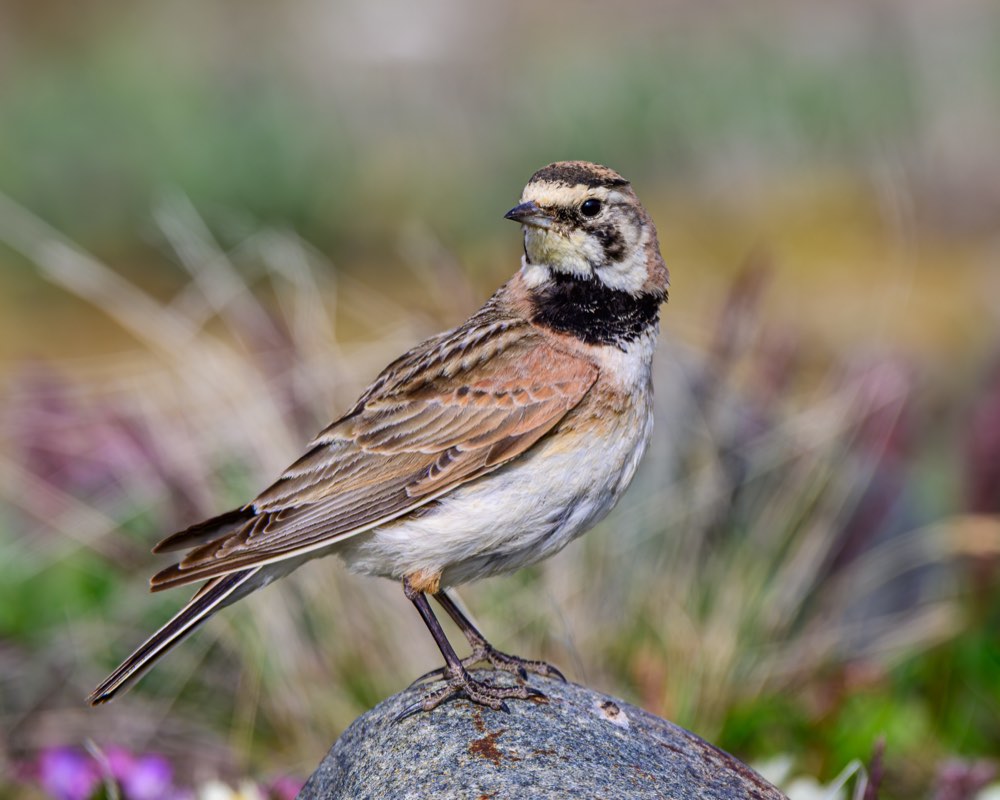
Similar but duller, with a fainter mask and usually no visible horns.
Male photo: Imran Shah from Islamabad, Pakistan / Wikimedia, CC BY-SA 2.0 · Second photo: Stephan Sprinz / Wikimedia, CC BY 4.0
Field marks
- Small black horns on the crown, often flattened
- Black mask curving below the eye
- Black band across a pale chest
- Walks rather than hops on bare ground
Similar species
What it sounds like
A thin, high, tinkling series of notes, often given from high in a display flight.
Behaviour that gives it away
Prefers ground so bare that it seems empty — ploughed fields, airports and gravel flats — and walks rather than hops.
Habitat & range
Bare ground — ploughed fields, prairie, tundra, airports, beaches and gravel lots.
When you'll see it
Depending on where in North America you are, it is present all year and a winter visitor.
What it eats
Seeds and waste grain, plus insects in summer.
Did you know?
It is the only true lark native to North America, and often nests while snow is still on the ground.
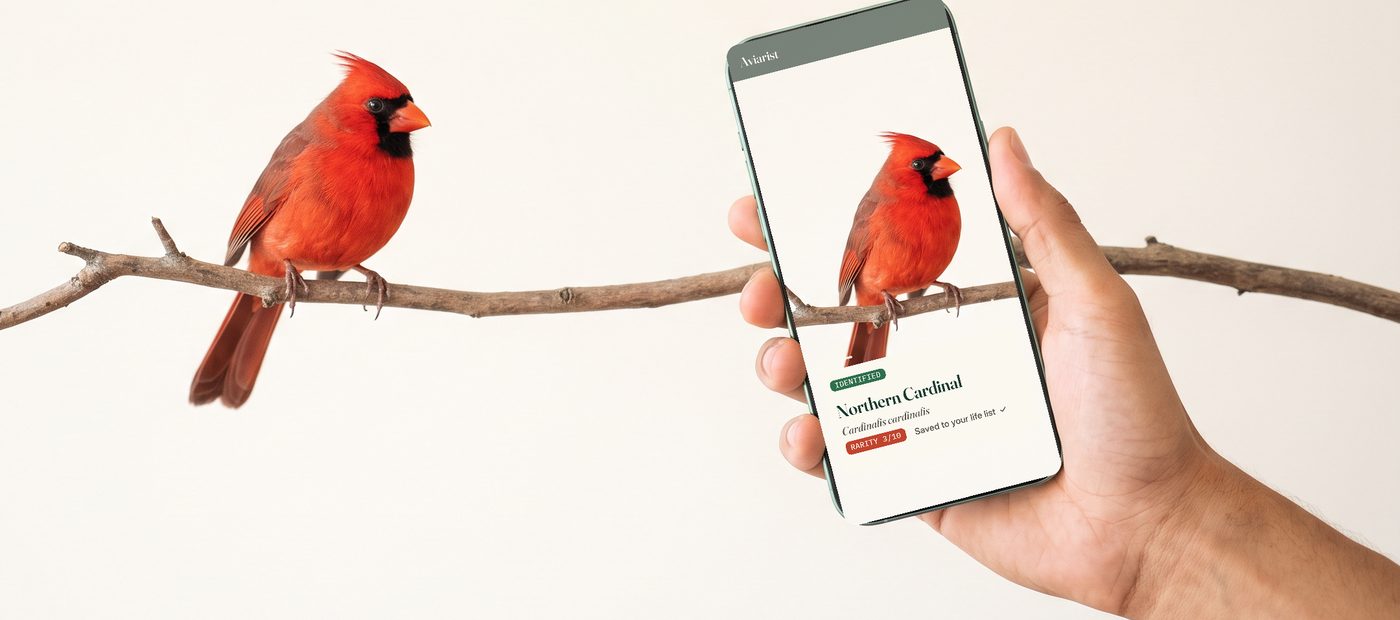
Spot one yourself?
Point your camera at any bird and Aviarist identifies it in seconds — then logs it to your life list.
Get Aviarist on Google Play
More backyard birds
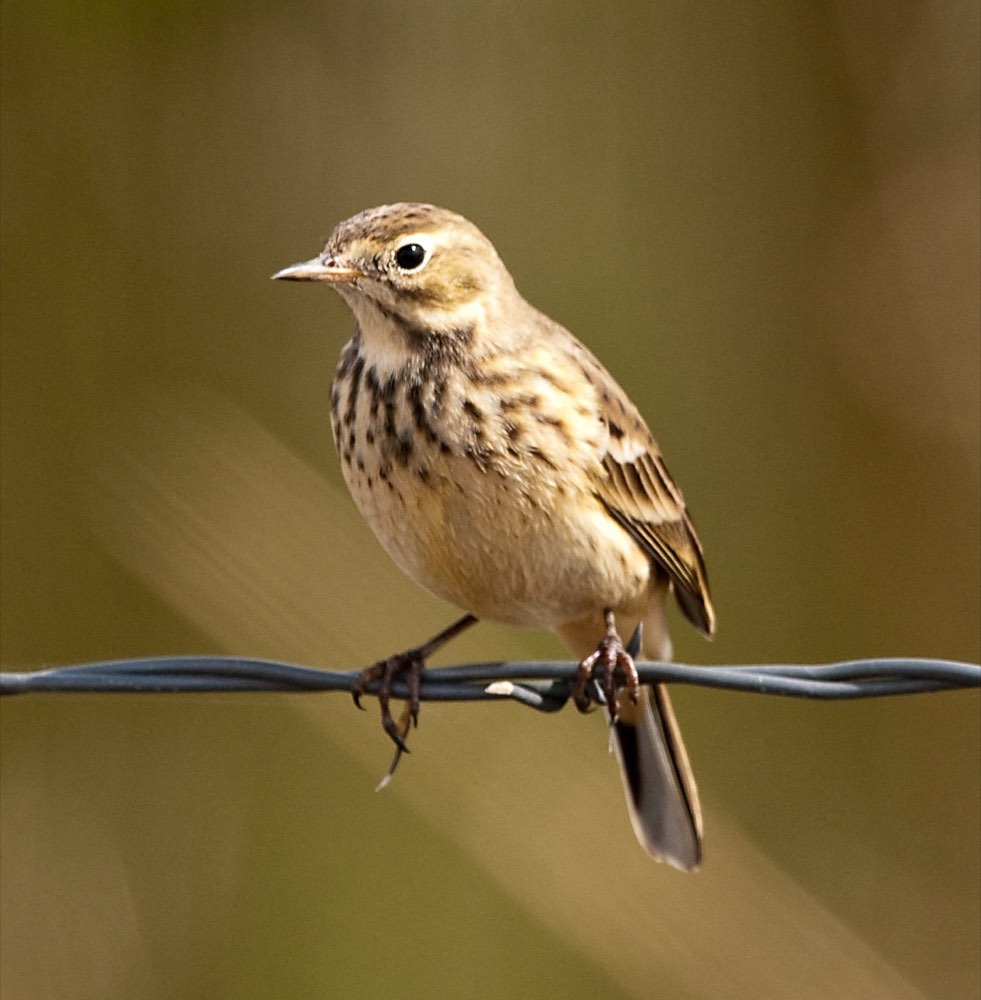
_(29093743195)_(cropped).jpg)
_01.jpg)
Other apps we make