How to Identify aAmerican Pipit
Anthus rubescens · 5.9–6.7 in (15–17 cm)
Male vs. female
Male
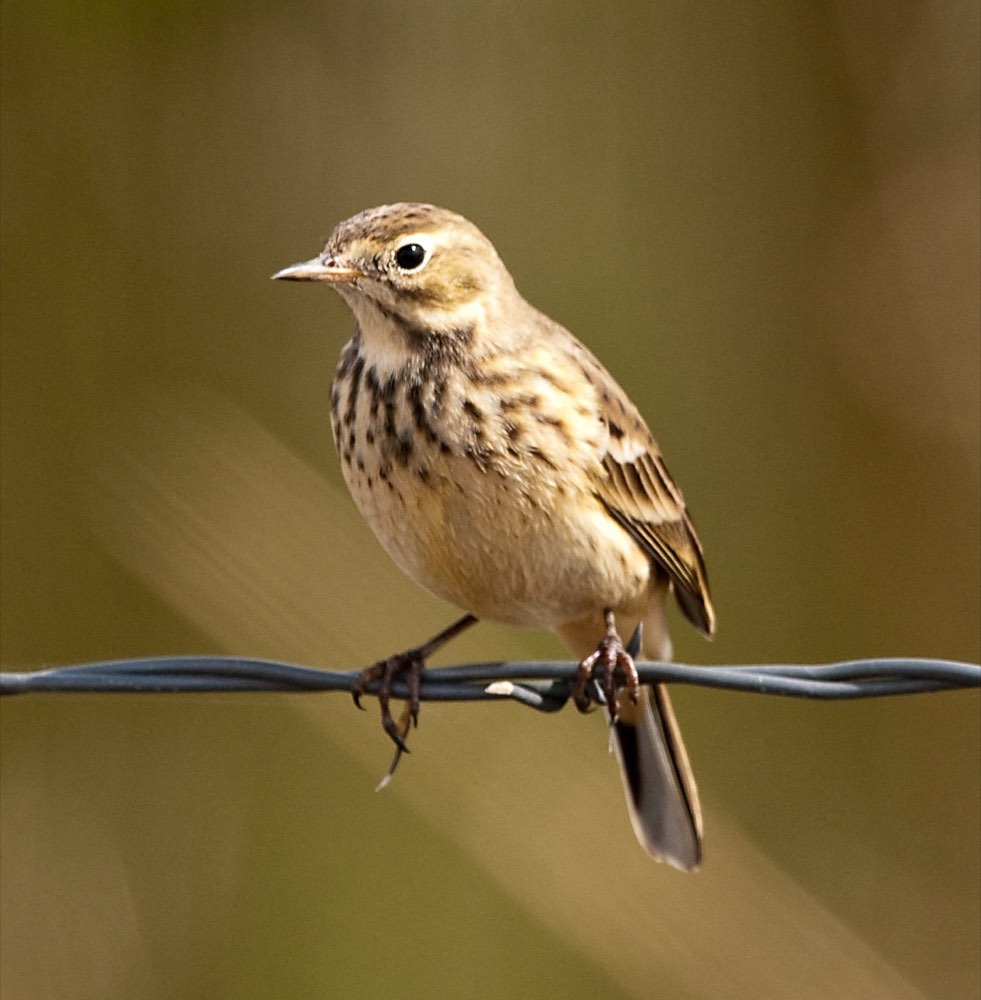
Gray-brown above, buffy below with variable streaking, with white outer tail feathers and thin dark legs. Sexes look alike.
Female
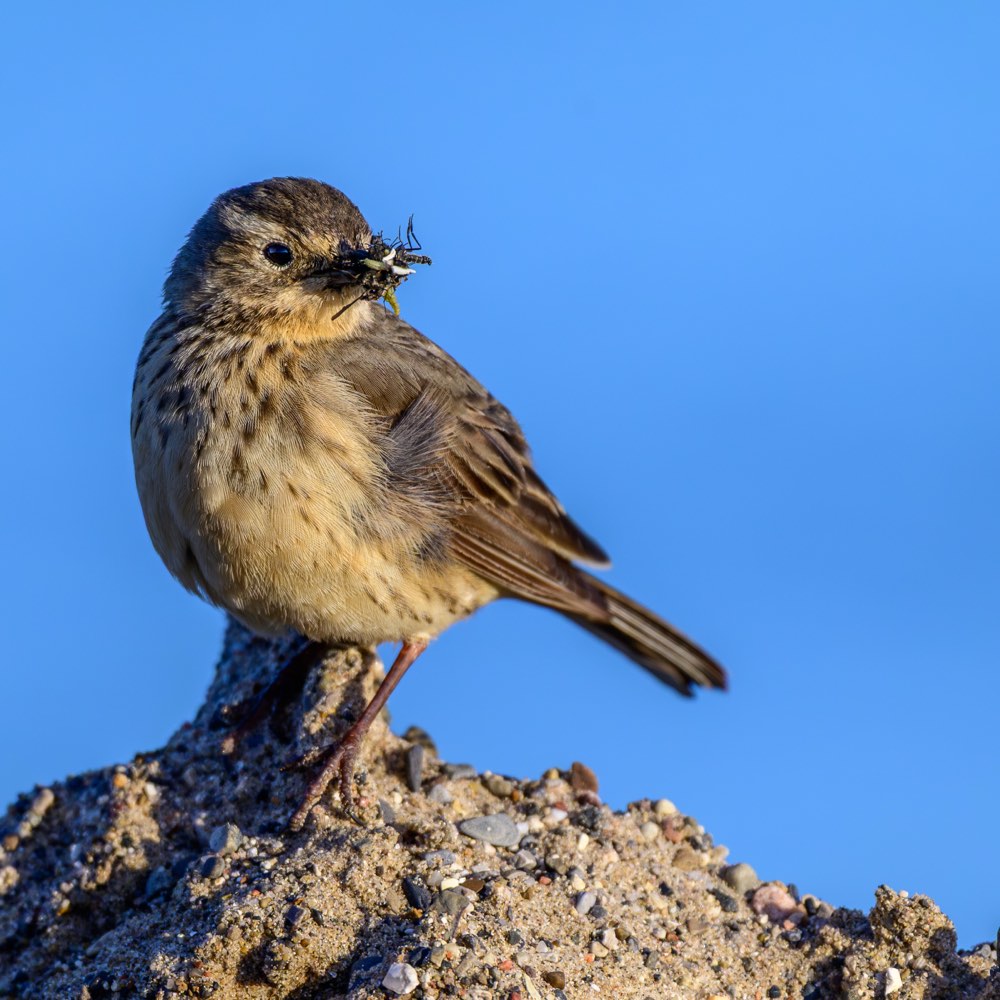
Identical to the male in the field.
Male photo: Kathy & Sam from Beaverton OR, USA / Wikimedia, CC BY 2.0 · Second photo: Stephan Sprinz / Wikimedia, CC BY 4.0
Field marks
- Constant tail-bobbing while walking
- Thin pointed bill, unlike a sparrow’s conical one
- White outer tail feathers in flight
- Walks steadily rather than hopping
Similar species
What it sounds like
A sharp, thin, two-note "pip-it" given in flight, which is where the name comes from.
Behaviour that gives it away
Walks rather than hops and bobs its tail continually, which separates it from every sparrow sharing the same field.
Habitat & range
Alpine and Arctic tundra in summer; ploughed fields, mudflats and shorelines in winter.
When you'll see it
Depending on where in North America you are, it is a winter visitor and a passage migrant, seen mainly in spring and autumn.
What it eats
Insects and seeds picked from bare ground.
Did you know?
It nests on alpine tundra above treeline and on Arctic tundra, then winters in flooded farm fields at sea level.
Spot one yourself?
Point your camera at any bird and Aviarist identifies it in seconds — then logs it to your life list.
Get Aviarist on Google Play
More backyard birds

_01.jpg)
Other apps we make