How to Identify aKentucky Warbler
Geothlypis formosa · 5.1 in (13 cm)
Male vs. female
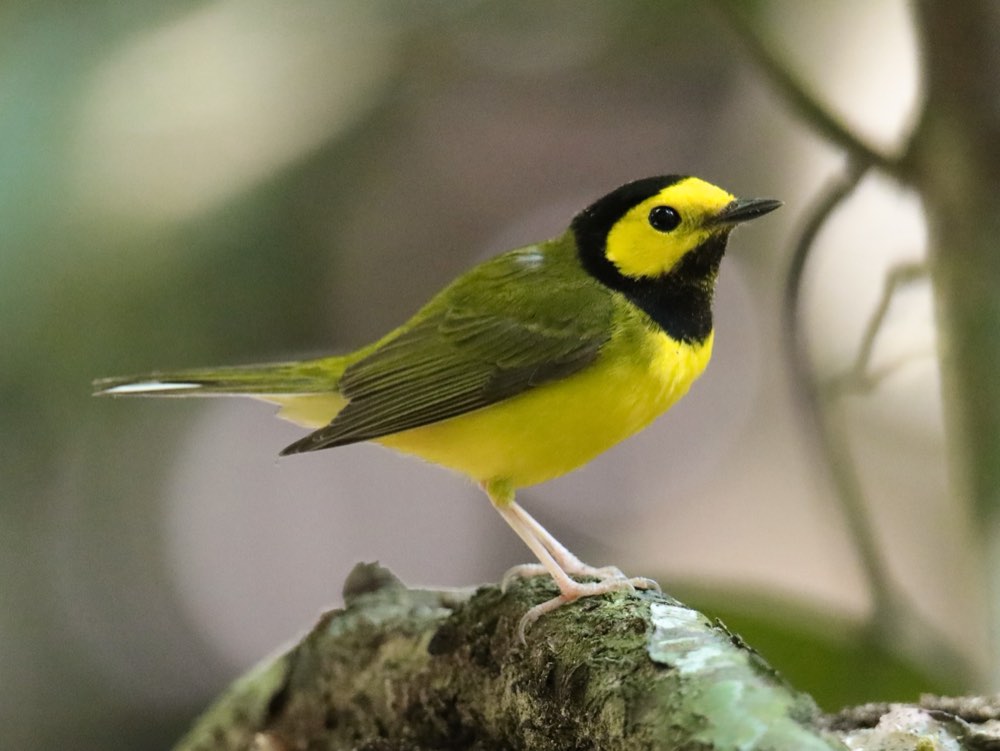
Male
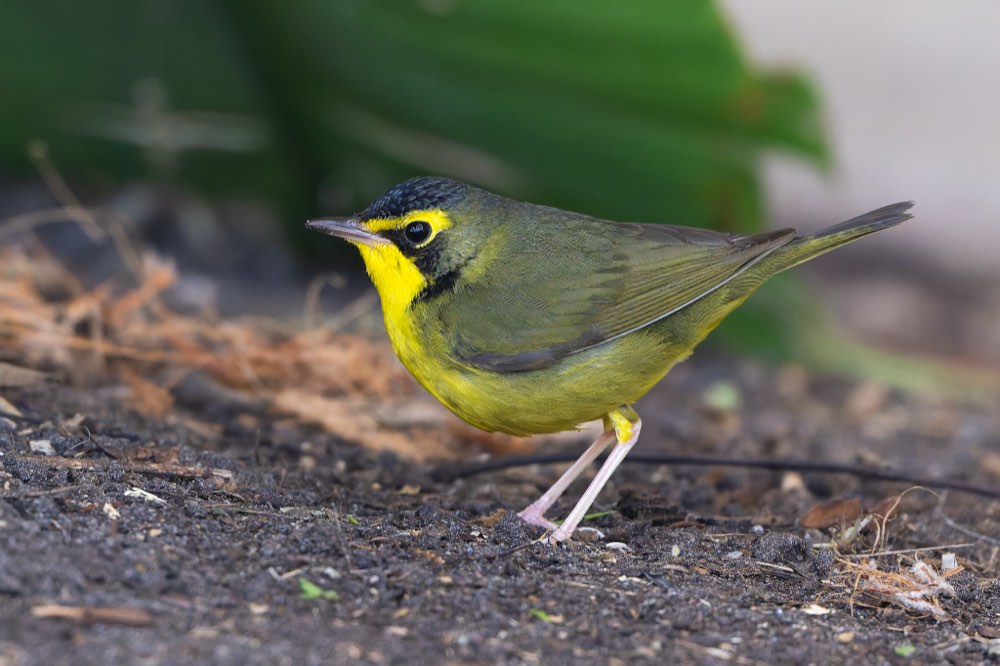
Olive-green above, brilliant yellow below, with a black crown, black mask running down the side of the neck, and bold yellow spectacles.
Female
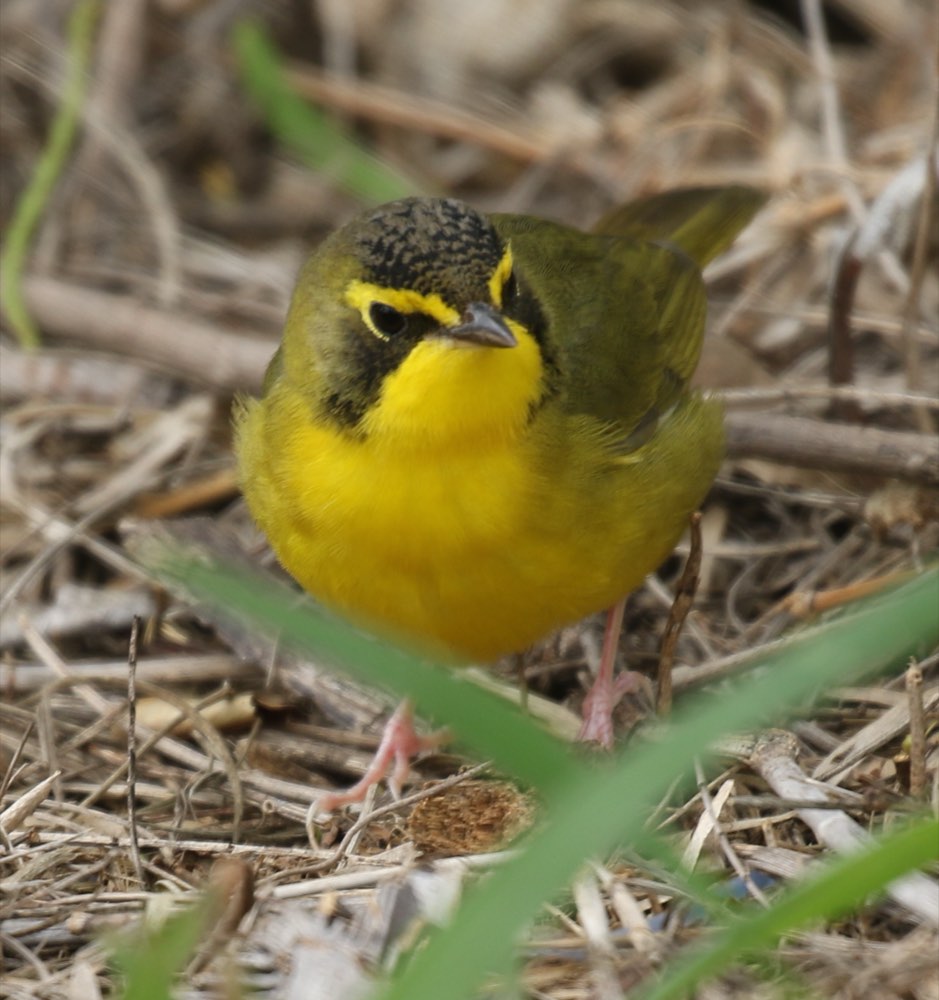
Similar but with less black on the face and crown.
Male photo: Adam Jackson / Wikimedia, CC0 · Second photo: TonyCastro / Wikimedia, CC BY-SA 4.0
Field marks
- Bold yellow spectacles around the eye
- Black sideburns dropping below the eye
- Entirely unmarked bright yellow underparts
- Walks on the forest floor rather than hopping
Similar species
What it sounds like
A rolling, churring "chur-ry chur-ry chur-ry", easily confused with a Carolina Wren.
Behaviour that gives it away
Feeds on the ground in deep shade, flicking leaves aside, and is far more often heard than seen.
Habitat & range
Moist deciduous forest with dense understorey, often near streams.
When you'll see it
A summer visitor that arrives to breed in southeastern, eastern and central North America.
What it eats
Insects and spiders taken from the forest floor and low foliage.
Did you know?
Its song is so like a Carolina Wren’s that many are overlooked entirely in areas where both occur.
Spot one yourself?
Point your camera at any bird and Aviarist identifies it in seconds — then logs it to your life list.
Get Aviarist on Google Play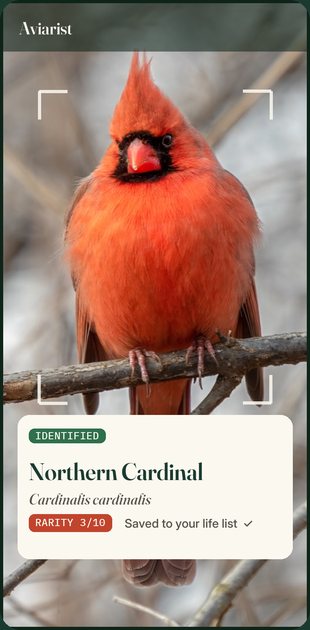
More backyard birds
_in_the_United_States.jpg)

Other apps we make