How to Identify aWilson's Warbler
Cardellina pusilla · 3.9–4.7 in (10–12 cm)
Male vs. female
Male
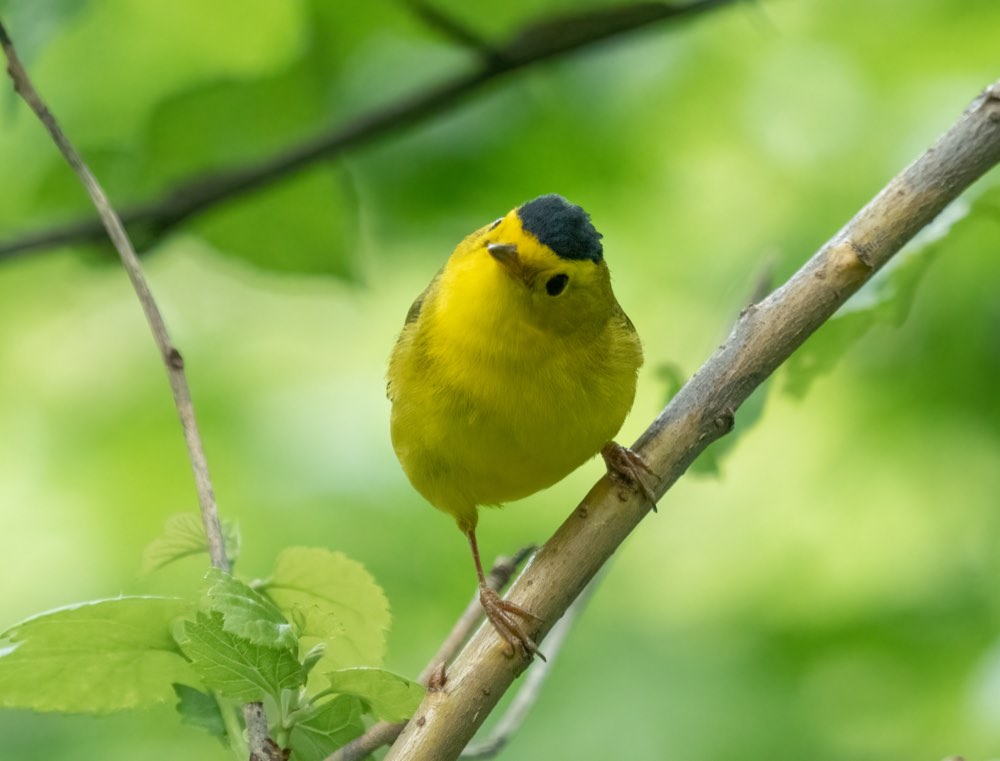
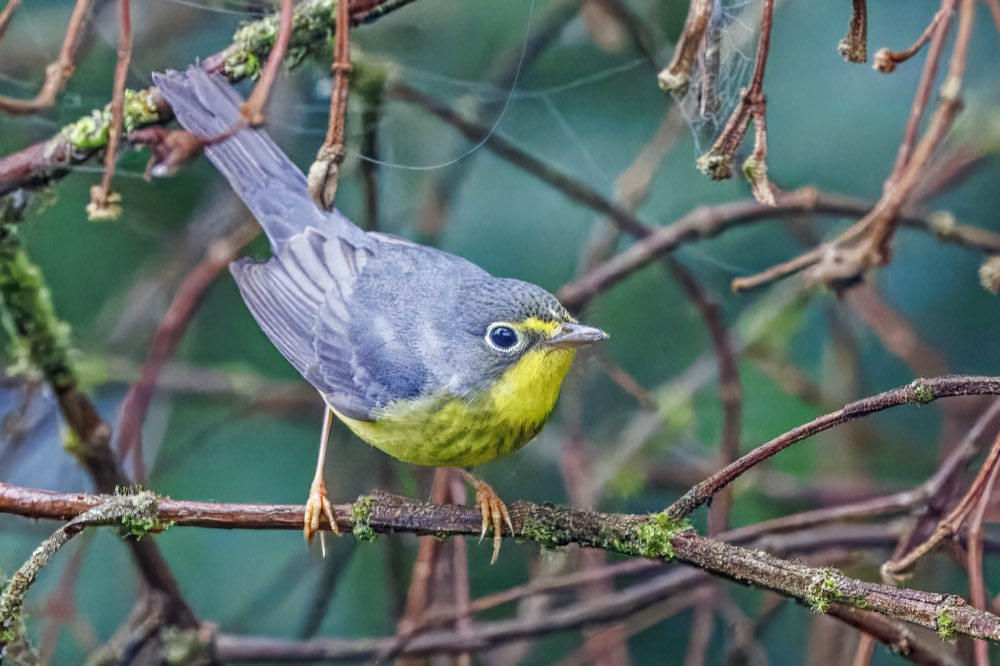
Bright yellow face and underparts, olive-green above, with a crisp round black cap.
Female
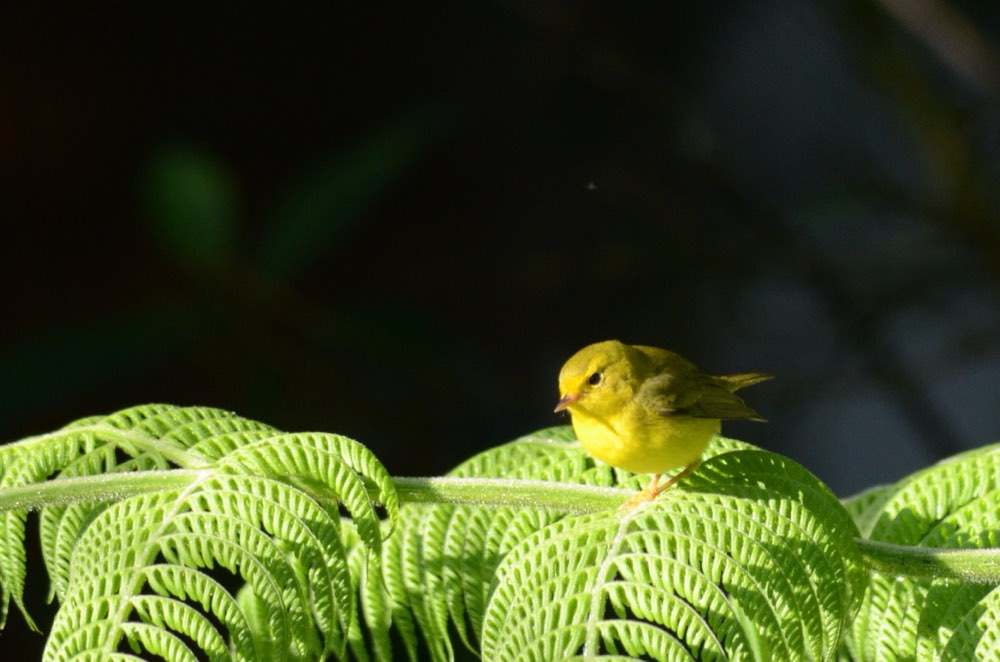
Like the male but with the cap reduced to an olive smudge or absent.
Male photo: Rhododendrites / Wikimedia, CC BY-SA 4.0 · Female photo: Amado Demesa from DF, México / Wikimedia, CC BY-SA 2.0
Field marks
- Round black cap on the male, like a skullcap
- Plain yellow face with a large dark eye
- No wingbars, no streaking, no tail spots
- Constantly flicks its tail in circles
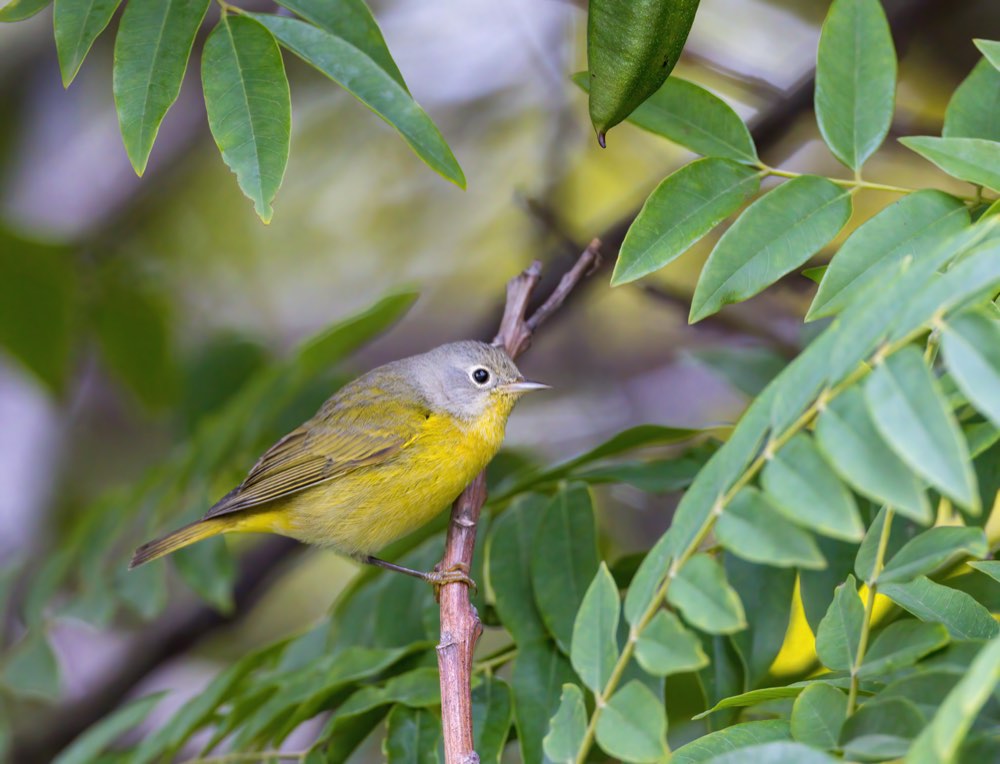
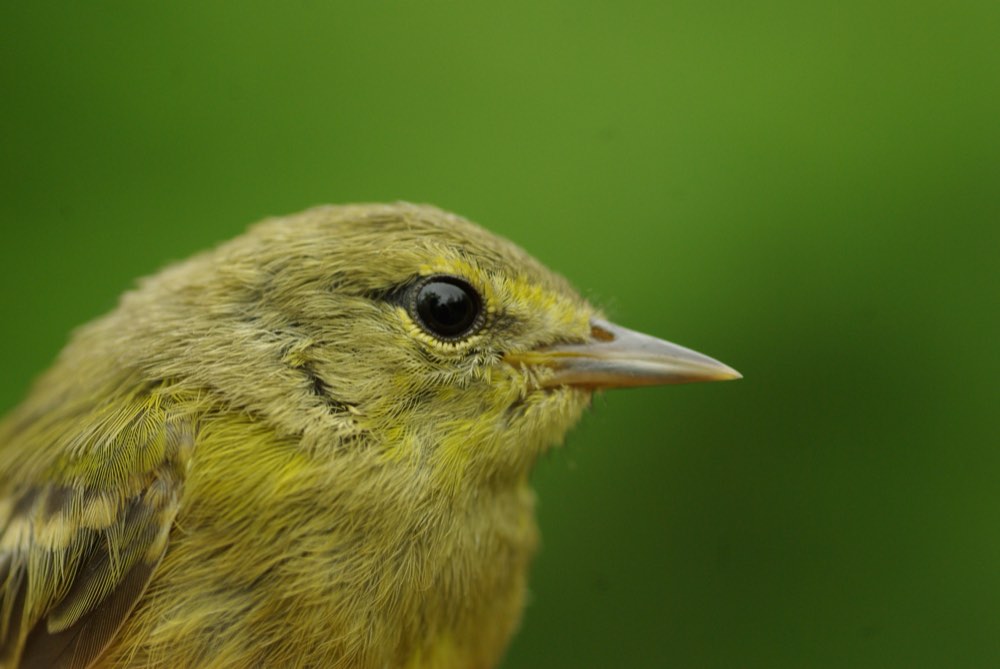
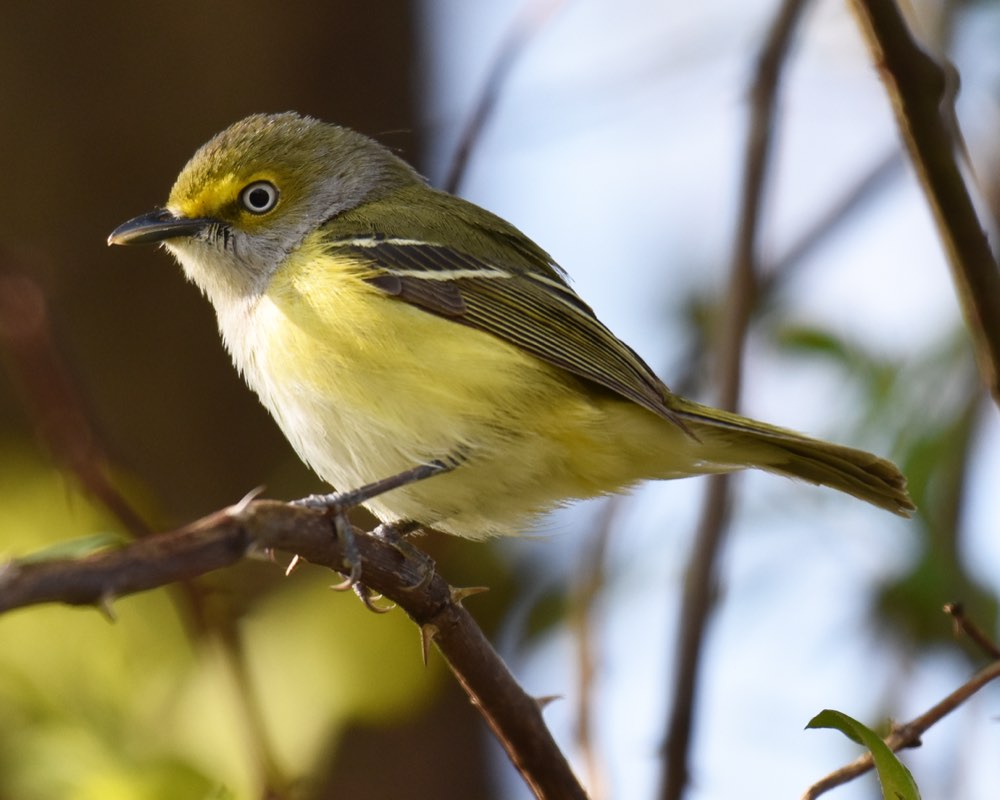
Similar species
What it sounds like
A rapid, chattering series of "chi chi chi chi" notes that drops in pitch at the end.
Behaviour that gives it away
Never still — it flicks its tail in circles and darts after insects, hovering and snatching them from leaf tips.
Habitat & range
Willow and alder thickets, streamside shrubs and moist woodland edges.
When you'll see it
Depending on where in western, northern and eastern North America you are, it is a summer visitor that arrives to breed and a passage migrant, seen mainly in spring and autumn.
What it eats
Insects and spiders taken by gleaning and hovering.
Did you know?
Both this bird and Wilson’s Snipe honour Alexander Wilson, the Scottish weaver widely called the father of American ornithology.
Spot one yourself?
Point your camera at any bird and Aviarist identifies it in seconds — then logs it to your life list.
Get Aviarist on Google Play
More backyard birds
.jpg)
.jpg)
Other apps we make